The FIA reveals Ferrari’s veto on engines
For once, the FIA has decided to publicly reveal the veto used by Ferrari to block a proposal for a maximum price for engines. It is therefore considering launching a tender for customer engines in 2017.

Under normal circumstances, F1 is used to business being conducted behind closed doors, away from prying eyes and ears. It is this culture of deals among friends that led Sahara Force India and Sauber to file a complaint with the European Commission to protest against a profit distribution system they find unfair.
One of the main topics of discussion at the moment is the issue of engines and their costs. At the heart of the problem is the situation in which Red Bull and Toro Rosso find themselves, still without engines due to the disagreement with Renault.
In consultation with Bernie Ecclestone, the FIA decided to demonstrate that its efforts towards cost reduction had not succeeded due to Ferrari’s refusal to comply with an engine price cap: « The FIA studied measures to reduce costs for teams participating in the Formula 1 World Championship, which did not succeed: an overall cost cap, cost reduction through technical and sporting regulations, and increased standardization of parts. At the last Strategy Group meeting, the FIA, in agreement with the FOM, proposed the principle of setting a maximum price for the engine and gearbox for customer teams. »
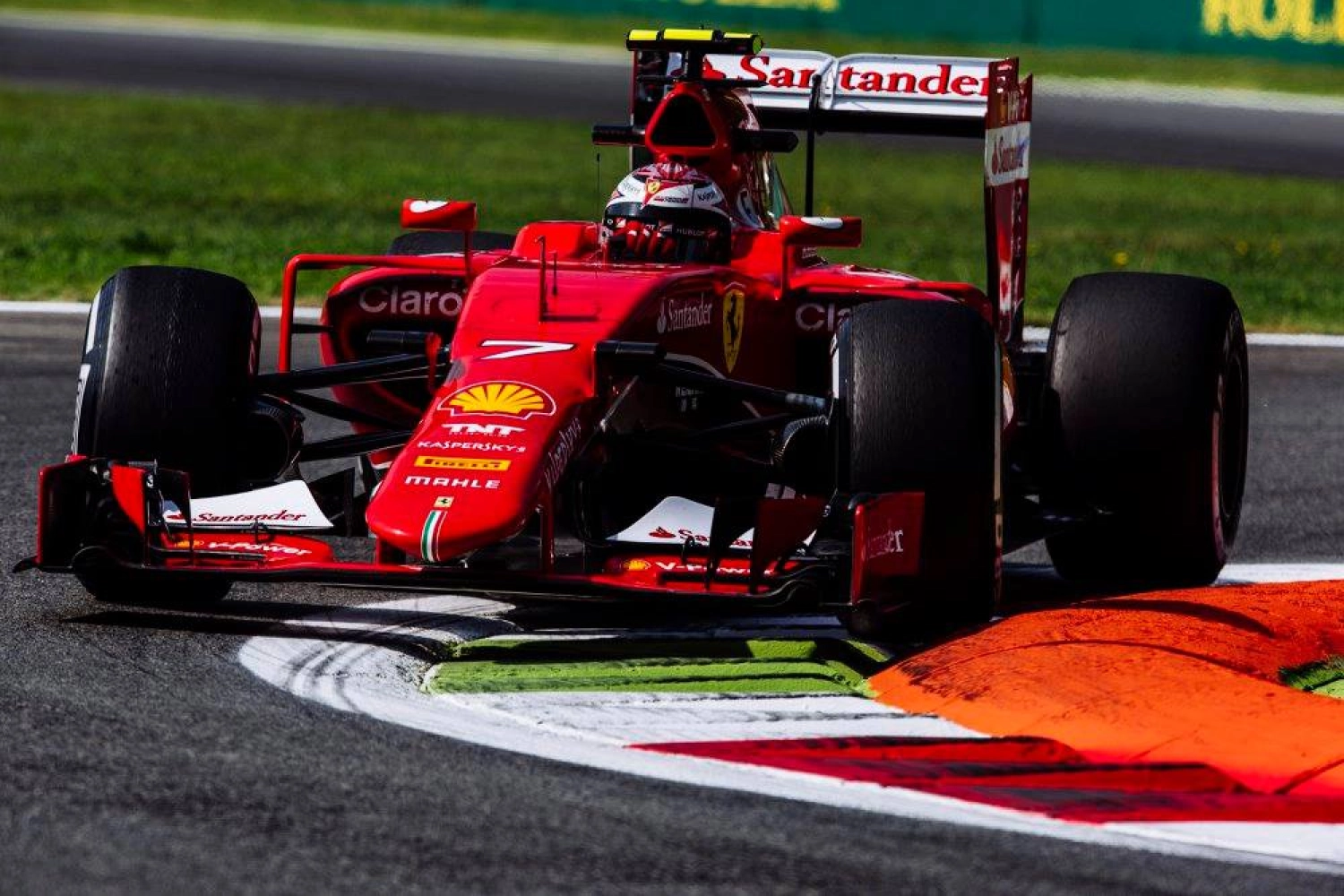
Even more surprisingly, the Federation decided to specifically point fingers at Scuderia for going against the will of the majority of its competitors, thanks to its special status that allows it to have a veto right over Formula 1 sporting regulations: « *These measures were submitted to a vote and adopted by a large majority. Nevertheless, Ferrari SpA decided to oppose them and exercise the veto right that has long been recognized by the agreements governing Formula 1 governance. In the interest of the Championship, the FIA chose not to legally challenge this implementation of its veto right by Ferrari SpA.* »
Nevertheless, it is still important to recall the voting structure in this famous Strategy Group: the FIA and FOM each have six votes, while the six represented teams have one vote each. Therefore, it only takes the two bodies being joined by at least one team to form a majority. We can thus say that at least Red Bull leaned in this direction since it is the only team in this group, along with Sahara Force India, that no longer holds the status of a factory team with an engine manufacturer.
The institution at Place de la Concorde has therefore unveiled its new weapon to offer a low-cost solution: « Consequently, the FIA will launch a consultation with all stakeholders with a view to the potential introduction of a customer engine that would be available from 2017. Following this consultation, a call for tenders for this future customer engine, whose cost will be significantly lower than the current engine, could be decided. »
There is already talk of possible candidacies from Ilmor or Cosworth, which had left F1 when hybrid V6 engines were introduced because the development cost was too high for a modest structure. The solution proposed by the FIA would therefore be 2.2 liter twin-turbo V6s compared to the current 1.6 turbo engines.
This would therefore lead to a system of equivalence, similar to what exists in the WEC, where different LMP1s have different regulations with equivalences to level out performance differences.
But such a threat could mainly serve as a bargaining chip to force Ferrari to agree to reduce the bill for its customer teams by brandishing the threat of an even cheaper engine, which could appeal to a number of its clients.
With the participation of www.racingbusiness.fr