Towards Creating a Title for Young Drivers?
As the season has just concluded with the young drivers' tests at the Yas Marina circuit, one might wonder if F1 would benefit from creating a title rewarding young drivers at the end of the season. Both to reward them and to ensure its future.

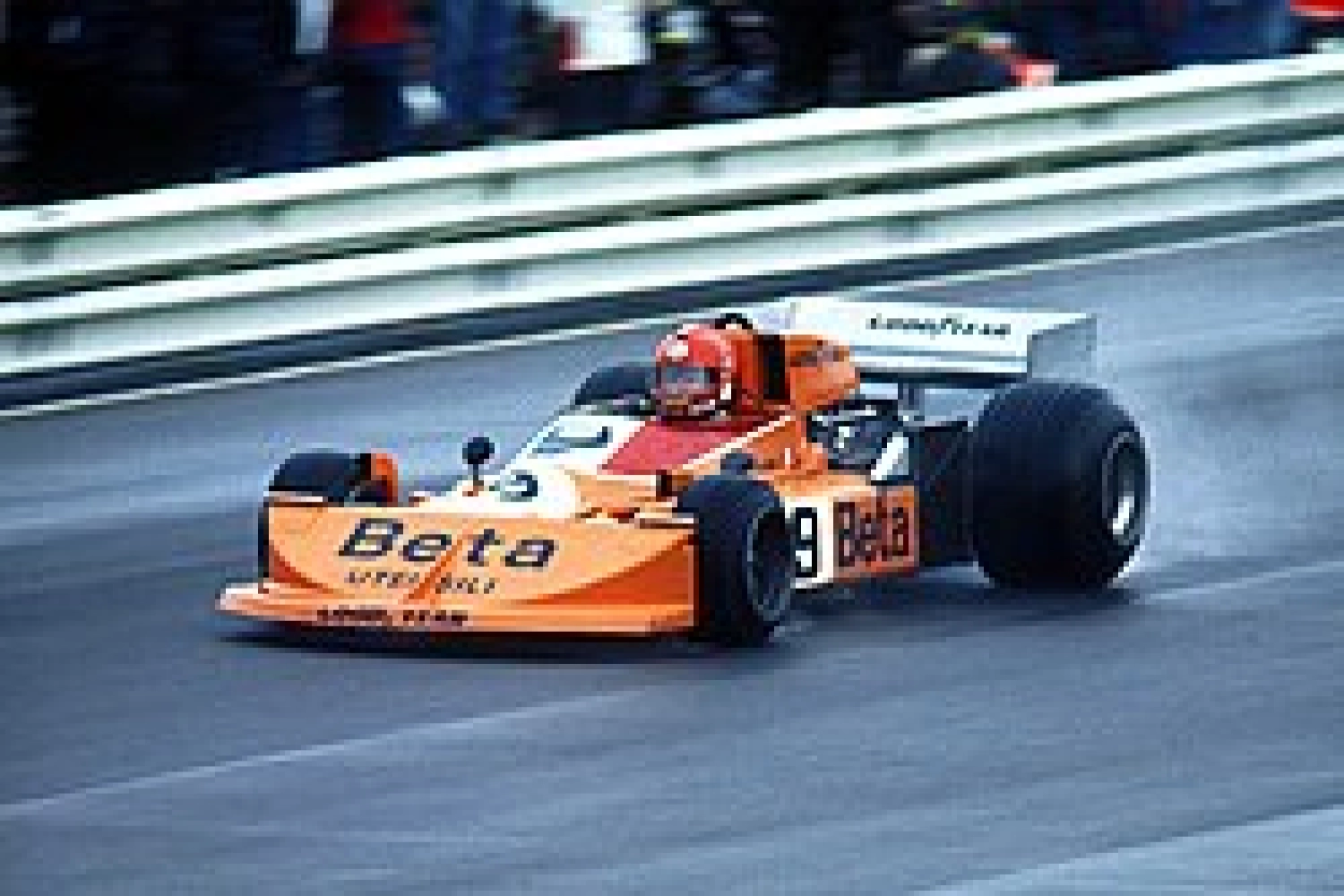
For a few seasons now, commentators have gotten into the habit of openly criticizing young drivers who arrive with bags full of cash. This is said to harm the quality of the field, with talented drivers being sidelined due to a lack of money… Such statements ignore the fact that these kinds of practices are not new. The older generation will remember that a certain Niki Lauda made his entry into F1 thanks to his significant financial backing. This did not prevent him from winning three world titles.
Moreover, it should not be forgotten that all the drivers on the grid this year were not amateurs lapping 10 seconds off the pace, as has been seen in the past. They have all come through the promotion formulas and have had at least acceptable results there.
The case of a driver like Felipe Nasr is symbolic of this situation. Many have expressed their views on the millions he will bring to Sauber next season. However, it should not be forgotten that the young Brazilian has just finished on the podium of the GP2 championship, which demonstrates his abilities behind the wheel.
But the fact that he managed to gain massive support from Brazilian investors is also a sign of his talent (or that of his team) at the negotiating table. Indeed, he was able to convince businessmen accustomed to PowerPoint presentations on returns on investment that he represented a real opportunity for these companies from a commercial standpoint.
There are therefore many cases that show that financial support is just a stepping stone to F1. For example, Jules Bianchi was supported throughout his career by Ferrari, which allowed him to make his debut with Marussia. Yet no one questions his undeniable talent. Similarly, it was the support of Flavio Briatore and Renault that enabled Fernando Alonso to reach F1 via the modest Minardi.
Yet these well-supported drivers are simply indispensable to the survival of their teams since the distribution of F1 revenues means that the oldest teams take the largest share of the revenues, regardless of their success on the track.
If we look at the 2015 grid (not yet completed), we can see that a title rewarding, for example, drivers who are not yet 25 years old as of January 1, 2015, would allow for competition among drivers like Max Verstappen (Toro Rosso), Felipe Nasr and Marcus Ericsson (Sauber), Sergio Pérez (Sahara Force India), and even Kevin Magnussen (if McLaren confirms him alongside Fernando Alonso). Jean-Eric Vergne could have been part of the list if Toro Rosso had decided to keep him. And this doesn’t even take into account the survival potential of Caterham (where Will Stevens could make his place) and/or Marussia.
This means that such a championship could involve six drivers spread across five teams. However, most of these teams occupy the middle of the pack, rarely televised. By introducing this new championship, FOM would thus allow these teams to receive more airtime since the sporting stakes would be higher.
A simple way to make them even more visible would be, for example, to organize a separate podium for the “Juniors” after the end of each race and to establish a different points system. These teams would therefore increase their market value with sponsors, who would also benefit from greater media exposure. This would reduce the financial pressure on these teams. Consequently, they would have even more freedom in their choice of drivers…
Another idea circulating this week, against the backdrop of meetings in Switzerland of the Strategy Group and the F1 Commission, is to prioritize giving 2014 cars to young drivers in 2015. Such a priority would have the financial consequence of reducing costs by using well-tested cars that already exist. They would mechanically cost less in operation since they have already been amortized in the teams’ accounts partly last year and this season. This would justify a different, separate championship for purely economic reasons. There would then be the “Low Cost” F1 for young drivers in training and the “Premium” F1, with new cars, for world champions and drivers over 25 years old. We would therefore have a championship mainly concerning the biggest teams, generally supported by major manufacturers, while another championship would reward those that don’t have the same resources, generally half as much (150 to 200 million pounds maximum instead of 300 or 400 million pounds per year, according to Autosport).
However, this clear distinction would only affect the drivers and not the teams. Thus, it seems unlikely to create a so-called Constructors’ Championship and another for Teams, as this solution does not seem to appeal at all to the smaller teams. There would therefore only be two categories of single-seaters: brand new ones for the big teams and last year’s, slightly improved thanks to enhancements accepted through a consensus among the concerned teams (2014+ specifications for chassis and engine).
Now remains to be seen if such a virtuous circle could emerge in a paddock that is more divided than ever…
With the participation of www.Racingbusiness.fr