Double points in Abu Dhabi: why not elsewhere?
The regulations for the 2014 season stipulate that the points awarded during the last Grand Prix of the 2014 season will be doubled. In this case, it's the Abu Dhabi Grand Prix. Why Abu Dhabi? Why not elsewhere? The editorial team is asking the question and poses the question to you.

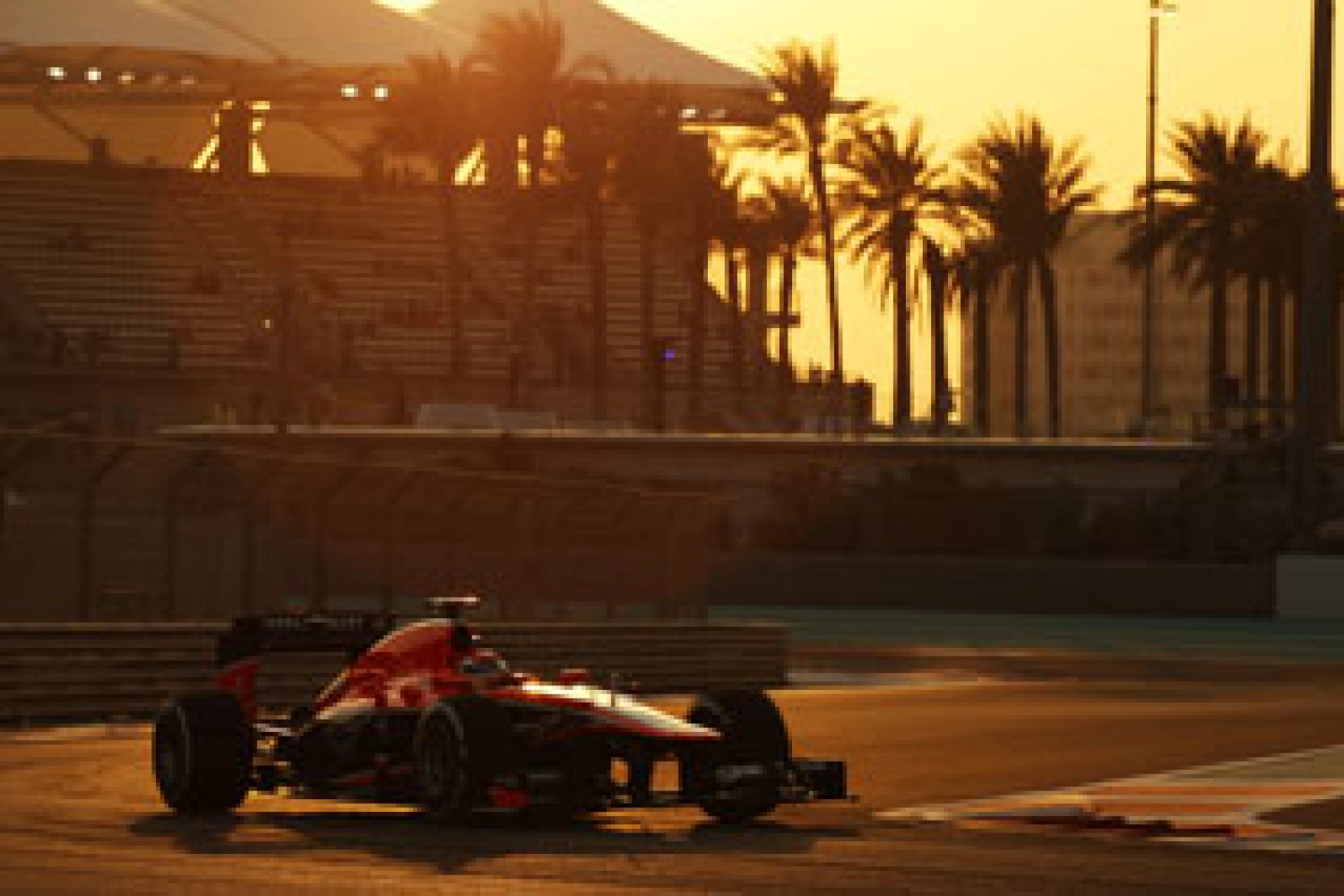
The 2014 Formula 1 sporting regulations stipulate that the last Grand Prix of the season – the Abu Dhabi Grand Prix – will count double this year. Officially, this will allow Abu Dhabi to represent a greater stake at the end of the season in case a team or driver has taken too much of a lead in the championship. This would allow for the suspense to be reignited or maintained.
This solution is causing controversy in the paddock. Indeed, beyond reviving suspense at the end of the season, this announcement will also have a commercial impact. This Grand Prix, which could therefore have twice as much sporting interest, should also be more followed, more publicized, and consequently, generate better revenue.
The question that many are asking is why the Abu Dhabi Grand Prix deserves so much honor while other events struggle to fill their stands. However, the aim of this new rule is not directly related to the financial aspect of a Grand Prix. We need to look further.
Why accept this rule of double points:
If the championship is unbalanced at the end of the season, this rule could help revive it since the winner, by scoring 50 points, would reclaim at least 14 points from the leader. In this scenario, it means that a gap of more than 50 points would nullify the effect of this rule, but if the season is relatively close, the uncertainty would remain until its conclusion.
Why not accept this rule of double points:
This rule implies a trade imbalance for Grand Prix events that will generate more interest from the public and therefore will see their stands better filled and their broadcast around the world better secured.
Gaps between the first and second in the championship before the last GP:
2013: 145 points
2012: 13 points
2011: 119 points
2010: 15 points
As a result, in the last four championships (all contested with the current scoring system), this rule applied could potentially have changed things twice. It would still require, in those cases, that the leader before the race is not the one who wins the final race. And when the championship is dominated by a driver and their car, such a rule proves to be unnecessary. The idea is commendable but might therefore not bear fruit. Could we go further?
Discussions are still ongoing within the FIA and the teams to find common ground as this new rule has sparked controversy. The last Grand Prix of the season will still see its points doubled. However, this rule could also apply to other Grand Prix during the season.
In this case: is it better to prioritize a Grand Prix with low commercial returns? Is it better to favor a Grand Prix that often lacks spectacle or, on the contrary, a race usually rich in action and overtaking? Is it better to prefer the penultimate or the first Grand Prix of the season?
The editorial team does not take sides but leaves it to you to judge. It’s up to you to vote and choose which Grand Prix deserves, in your opinion, to have its point system doubled – in addition to that of Abu Dhabi 2014.