The FIA will enhance the safety of marshals
Charlie Whiting, safety delegate and race director within the FIA, has stated that the governing body of Formula 1 will take action to improve the safety of track marshals working on circuits to prevent another tragedy like the one that claimed the life of Mark Robinson in Canada.

In order to prevent another accident like the one that claimed the life of track marshal Mark Robinson in Canada, Charlie Whiting, the safety delegate at the International Automobile Federation, revealed that the FIA has advised the various Grand Prix organizers to help them improve the safety of their marshals.
« The accident in Canada was terribly unfortunate. Things are going to change in that regard. Since that accident, we have briefed everyone, if you use this kind of JCB-type vehicles [mobile cranes] to lift a car, you should never walk in front. It kind of goes without saying, » Charlie Whiting stated at the Autosport International show.
Whiting also revealed that the different F1 race officials could take inspiration from the best systems used by one another: « The Brazilian Automobile Federation has a system that attaches two ropes to the car to hold it [when it is being evacuated], preventing it from swinging so no one is needed to stabilize it. We are trying to make everyone aware of this kind of system to minimize the number of people needed to evacuate a car. That’s the key. »
Still on the occasion of this British show, Charlie Whiting – who is also the FIA race director – spoke again about the DRS and notably the criticisms that this system makes overtaking too easy: « I am a big fan [of the DRS]. I know some people are opposed to it and think it is no longer pure [sport]. I totally disagree with this view. It still requires incredible skill from the driver. It’s not like you turn, overtake, leave and it’s done. »
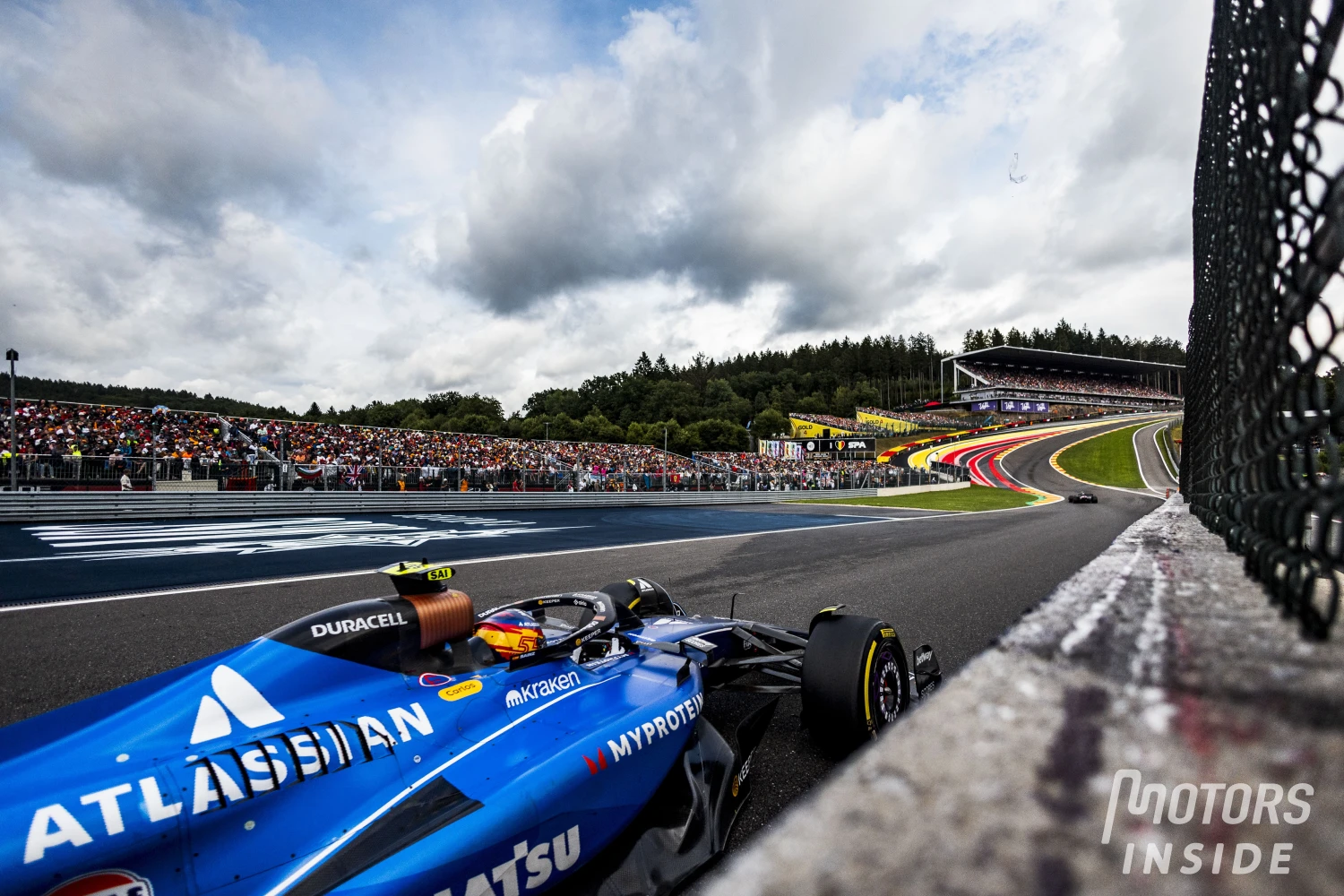
If some observers or fans think things seem too easy like at Spa-Francorchamps on the Kemmel straight, Charlie Whiting believes that this is not the case and that overtaking remains primarily an effort from the driver: « Sometimes it seems like that [too easy], but Spa is an example of the fact that if you arrive at Eau Rouge a bit quicker than the car in front and deploy the DRS, it’s easy. But it’s only because of the car’s corner exit speed. If the cars are at equal speed, a driver would need to be three-tenths behind the car ahead, which is no small feat in itself. But if they are going at the same speed at the start of the DRS zone, they will be side by side at the braking point. That’s the whole theory of DRS. You have to assume that the cars are going at the same speed but you have no idea at what speed they do that. If you understand the reasoning on this and what is really needed to overtake, it still requires a lot from the driver. »
The FIA race director also revealed that the governing body did not plan to change the operation of the system which will remain limited to certain sections of the circuit but will not be limited in its usage time as is the case, for example, in Formula Renault 3.5: « We feel that it should only be allowed on certain sections of the track. Before last year, drivers could use it at any time in practice and qualifying, and this led to several incidents where drivers used it too early. Therefore, for last year, we only allowed them to use it in practice at the places where they could use it in the race. We believe it is important that it is used only in certain places, not for a maximum duration of time. »
Still concerning the FIA, following the introduction of the 1.6L Turbo V6 engine, the single-seaters will, in 2014, carry a new fuel flow measurement sensor used by the engine to ensure compliance with regulations in this area – a maximum of 100 kilograms per car and per race. According to *Auto Motor und Sport*, the company Gill Sensors, which provides these sensors, is currently working to improve the accuracy of the sensor, which currently has a margin of error of 1.5%.
« [The fuel sensor] was approved by the FIA [for 2014]. It meets the FIA’s accuracy requirements. We are delighted that the FIA is confident in the performance and durability of our ultrasonic fuel flow meter, » stated Mike Gill, the company’s boss.