Belgium: Figures and Technical Data
A brief overview of the technical constraints imposed by the Spa-Francorchamps circuit on the chassis, engine, and tires of Formula 1 cars.

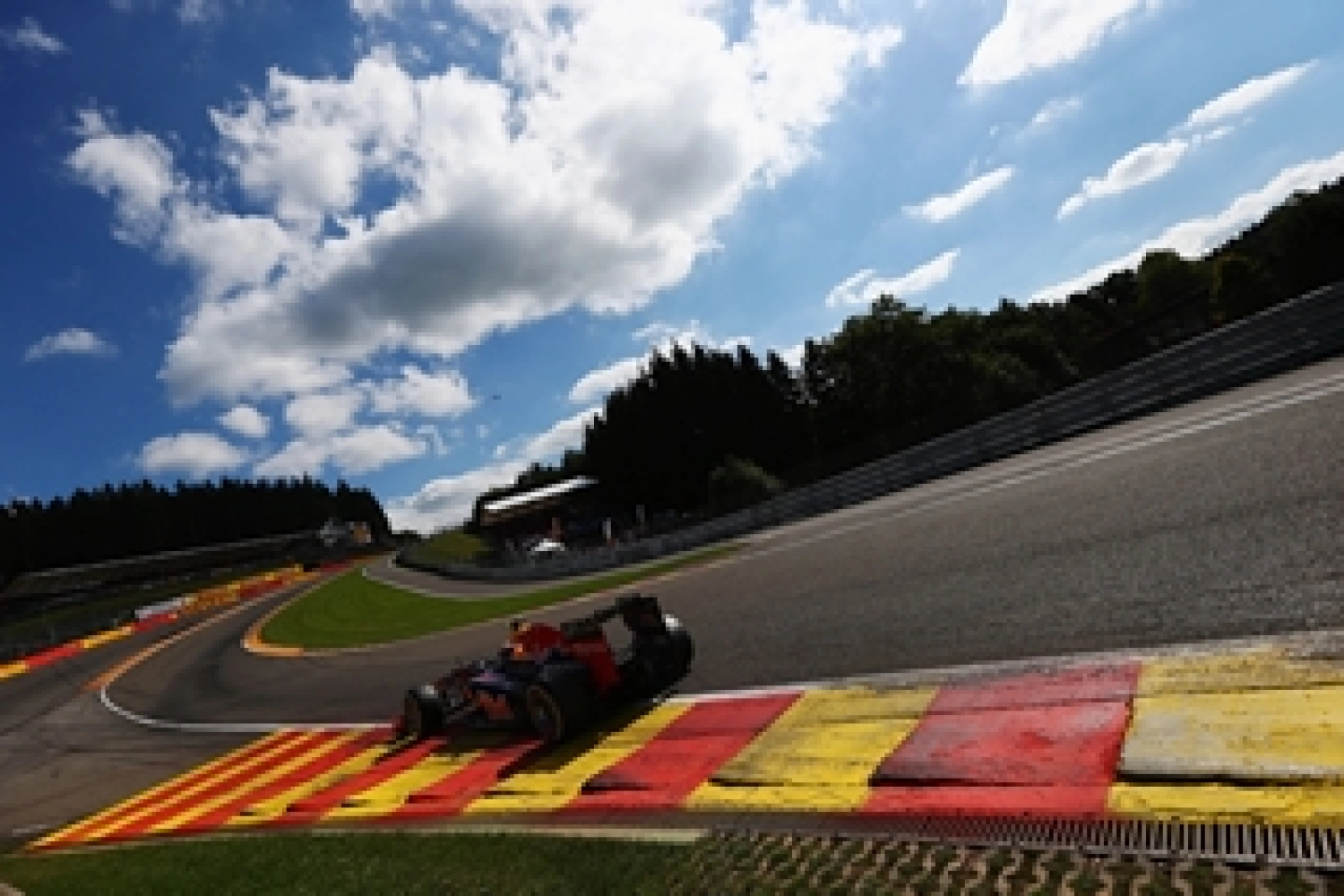
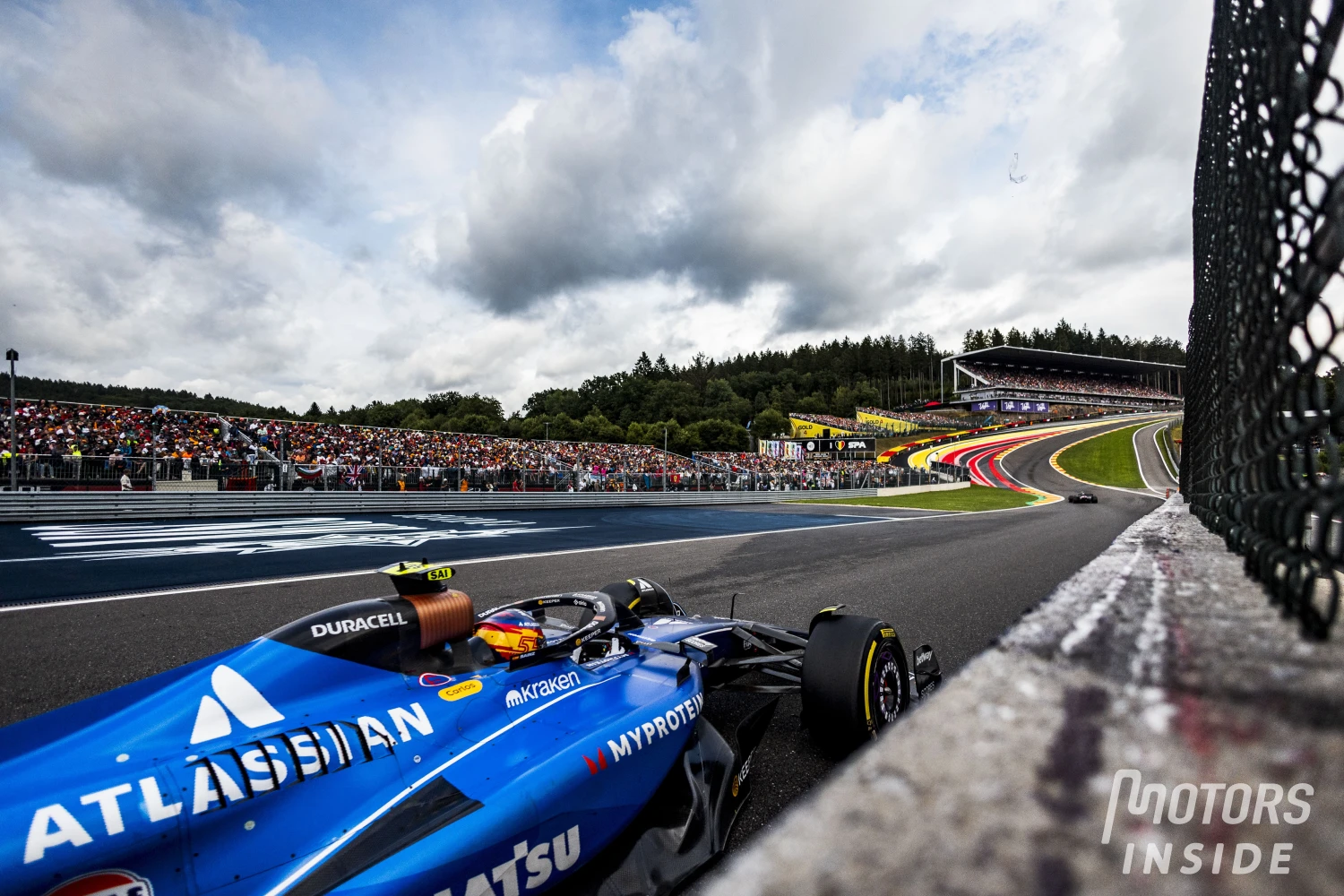
After four weeks without a Grand Prix, Formula 1 is back this weekend in Belgium on the legendary Spa-Francorchamps circuit. All the drivers are thrilled to return to competition, especially on a track like Spa.
One of the biggest fans of this circuit was Michael Schumacher, who excelled in the Ardennes – he holds the record for victories with 6 wins. It was on this track that he made his F1 debut in 1991, and it’s also where he claimed his first F1 victory in 1992. He also won in 2001, marking his 52nd F1 victory, which allowed him to surpass Alain Prost in the ranking of drivers with the most Grand Prix wins. Last year, Spa marked another key milestone in the Kaiser’s career as he celebrated his 300th Grand Prix there.
On the team side, Ferrari has had the most success in Belgium, with 16 wins. They are ahead of McLaren, which has 14 victories. However, both teams are tied when it comes to the number of wins achieved on the Spa-Francorchamps circuit, with 12 each.
This year, the FIA has decided to implement two DRS zones – whereas there was only one last year. On the stewards’ side, it’s Derek Warwick who will serve as the driver steward.
The weather often plays an important role at Spa-Francorchamps and that could be the case again this weekend. Indeed, while Friday is expected to be dry, Saturday and Sunday could be disturbed by rain, even though the risk of precipitation is currently low. With the proximity of the forest around the circuit, anything is possible.
Spa-Francorchamps chassis side
Tom McCullough, Head of Track Engineering at the Sauber F1 Team:
Spa-Francorchamps is one of the favorite circuits for many engineers and drivers because the track conditions are different from most of the tracks we go to. The efficiency of the circuit penalizes high levels of drag, so the rear wings will return to medium downforce levels. As always, we will have to keep an eye on the weather forecasts as it often influences the race weekend at Spa-Francorchamps. The track is mainly composed of medium and high-speed corners with significant flat-out sections.
Spa-Francorchamps engine side
Rémi Taffin, Track Operations Director of Renault Sport F1:
We end the summer break by heading to the most challenging of circuits. Spa-Francorchamps is a compilation of superlatives. It is the longest track of the season – with potentially very variable weather – but from our perspective, this event is the most exciting because of the challenge it presents.
No less than 70% of the seven kilometers are covered at full load, or nearly 5.5 kilometers, the length of a standard F1 circuit. During one lap, the engine runs at full throttle for more than 75 seconds. It’s a ruthless test for the mechanics. The delivered power and top speed are crucial, and each gain will be twice as effective as on a less demanding circuit like Monaco. Almost all of our partner teams will use new engines for this race to benefit from as much power as possible.
Although the RS27 spends more time at full throttle at Monza, it is the combination of long periods at maximum revs, compressions, and elevation changes that make it such an exceptional circuit. Finding the right balance between reliability and power remains the fundamental equation to solve, and we use this layout as one of our benchmarks on the test bench. In fact, the Power Unit Energy-F1 2014 is currently being tested based on the characteristics of Spa.
Defining the right mapping, which allows enough flexibility in case of variable weather, is an additional challenge. With such a long track, it’s not uncommon to have rain at one end of the circuit while it’s sunny on the other side. We therefore try to provide as much flexibility as possible without compromising power and acceleration.
Given the workload induced by these characteristics – more than double compared to other races – winning at Spa-Francorchamps is as rewarding for an engine manufacturer as winning at Monza.
Spa-Francorchamps tire side
The tires available for the drivers at Spa-Francorchamps are as follows:
- Mediums (white sidewalls) ;
- Hards (orange sidewalls) ;
- Intermediates (green sidewalls) ;
- Wet (blue sidewalls).
Paul Hembery’s opinion, Pirelli Motorsport director:
Spa is not only a legendary circuit, but it is also one of the greatest challenges for our tires due to the very significant energy loads passing through them, both vertically—due to major compressions like at Eau Rouge—and laterally, like in Blanchimont. Regularly, the tires are subjected to forces pushing in different directions simultaneously, thus increasing the workload on the tire. Preserving the tire casings will therefore be very important, particularly on such a long lap. This means that a wide variety of strategies will be possible at Spa, with a lot of time to be gained by choosing the right strategy. Nevertheless, any strategy must be very flexible due to the changing weather, which often makes Spa a fascinating race.
Conditions can change extremely quickly, and the use of intermediates and wets by the teams can be the key to success, as we have often seen in the past. Our two wet track compounds have proven their performance levels in previous races: intermediates, in particular, have shown how well they adapt to irregular conditions and drying tracks. There are numerous overtaking opportunities, and the performance and durability levels offered by our tire allocations should increase these chances this weekend.
Opinion of Jean Alesi, Pirelli ambassador:
Spa is a circuit that everyone talks about and over the years, I have never heard anyone say anything other than it is a superb track! It is so fast and demanding! But one of the main characteristics is its length. Therefore, it is never monotonous, and you do very few laps compared to other circuits. Managing the tires requires special skills: there are many fast corners, and the length of the track, along with temperature variations, means the tires can cool down after the first sector of the circuit. However, if you start the qualifying with tires that are too hot, you won’t get the maximum performance throughout the entire lap.
There is a huge level of possible variation in terms of settings as well. Some teams add downforce to have more grip in the middle part of the lap, and this also influences how the tires operate.
The most important characteristic is surely the high probability of rain. You can find a completely dry turn, then a fully soaked track a few curves later. In the rain, the surface is still quite abrasive and offers good grip, so you can still drive. The biggest problem is the rivulets that suddenly zigzag across the track. You need to know where they are to avoid getting caught out with aquaplaning. There is also a lot of spray at Spa when it rains, which makes visibility very difficult to manage in wet conditions.
Spa-Francorchamps in numbers
| Length of Spa-Francorchamps circuit | 7.004 km |
| Number of turns | 19 (9 right and 10 left) |
| Average speed | 226 km/h |
| Top speed | 313 km/h |
| % of a lap at full load | 70 |
| Fuel consumption | 3.15 liters per lap; 64 l/100km |
| Lap record | 1:47.263 (Sebastian Vettel, Red Bull, 2009) |
The 2012 Belgian Grand Prix
Pole position.
Jenson Button (McLaren) in 1:47.573
Podium
1 – Jenson Button (McLaren)
2 – Sebastian Vettel (Red Bull)
3 – Kimi Räikkönen (Lotus)
Fastest lap in the race:
Bruno Senna (Williams) in 1:52.822
[i][Based on press releases published by FIA, Pirelli, Renault Sport F1, and Sauber F1][/i]