Richard Phillips, the director of Silverstone, answers our questions
We take advantage of our presence at Silverstone to exclusively interview Richard Phillips, the director of this legendary circuit.

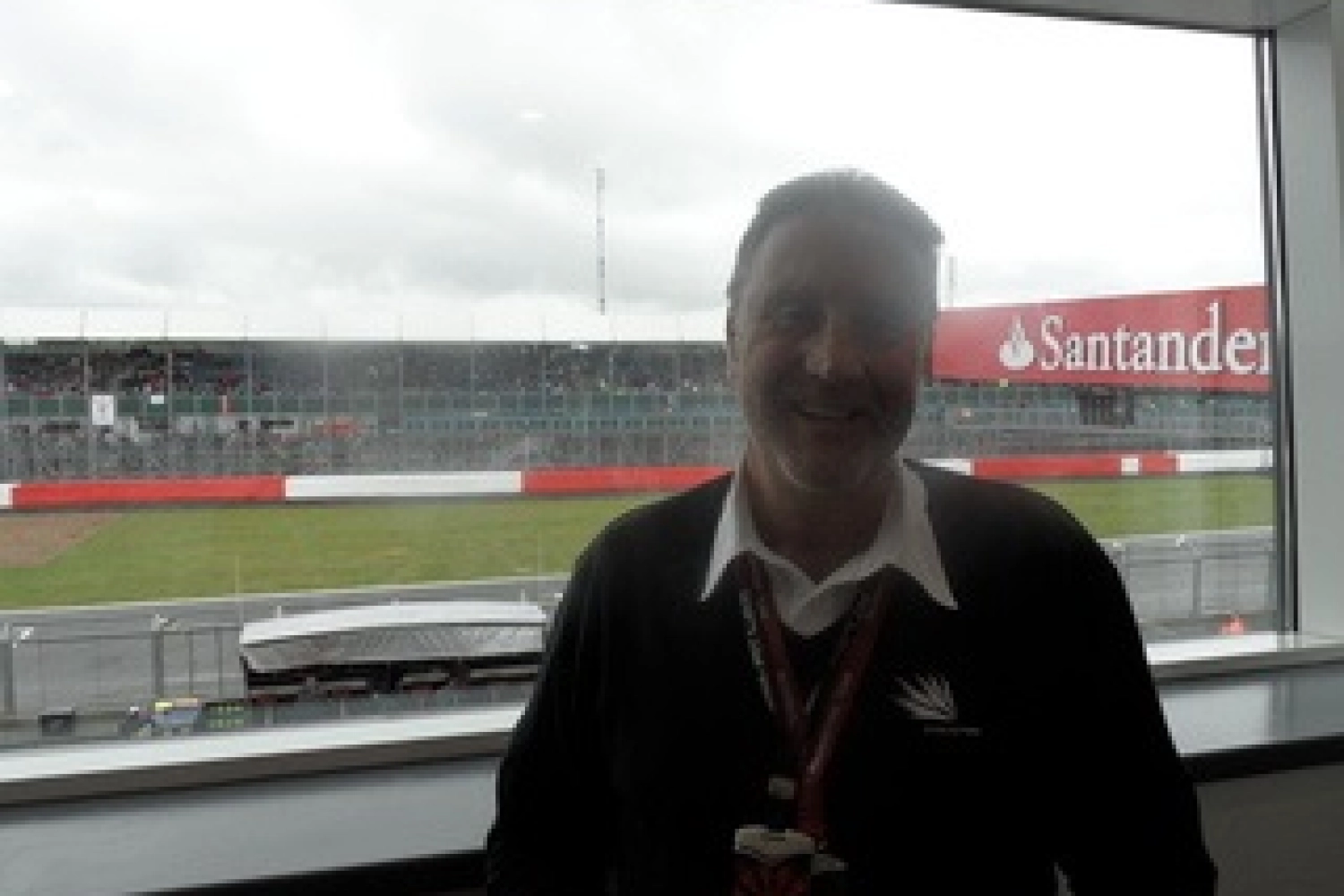
The first free practice session this morning was marked by heavy rain, which prevented the cars from running for a good part of the session. Unfortunately, this reminds us of last year, which was marked by torrential rain. It severely damaged the designated parking areas around the circuit and caused massive traffic jams. As a result, you had to ask nearly 10,000 spectators not to come to the circuit during qualifying to preserve the grounds for the race the next day. What financial impact did this have on Silverstone?
Last year was a difficult year. With all the rain that fell in the days leading up to the event, the parking lots couldn’t cope. Therefore, we had to ask 10,000 people not to come on Saturday, but that didn’t stop us from attracting a very large crowd. Because even after subtracting those 10,000 people who didn’t come on Saturday, we nearly attracted 300,000 spectators over the three days. We were happy that the event could take place. It was a very good performance on our part.
At the time, we didn’t know if we were insured for such events or not. Fortunately, we were. So over the following three months, we set up a reimbursement process for people who couldn’t make it to the track, and the insurance covered a large part of it. Not everything, but the majority because we were touched by the unfortunate people who were left out. And this year, we are again with a crowd of 300,000 people. So what we did last year worked. What we noticed is that people bought their tickets much later than usual, but sales accelerated significantly over the last six weeks. So everything is fine.
What measures and investments have you taken this year to prevent such an event from happening again in the future?
« We considered many different things. The first thing we focused on was the groundwater table. If the groundwater table is too high, the water can no longer seep in, and you’ll quickly have major problems. So, we made significant drainage efforts to lower the groundwater table. We also put a lot of effort into surface drainage. We drained over 400 hectares and did a whole range of things like deepening wells to improve the situation.
We have also worked a lot on how people get to Silverstone. We now have many more people coming by bus or train. Last year, our Park and Ride program worked very well and has never been as popular as it is this year. It worked so well that we now have space in our parking lots!
We have also moved towards more regional management than before. We now have zone managers who oversee their parking areas and communicate with each other. So when a zone comes under pressure, we are now able to relieve that zone by directing people to other areas. We are learning from our mistakes. I don’t think we’ll find ourselves in the situation of last year, but you never know what might happen. So we will continue to work well and see how it goes.
In recent months, you have made several announcements regarding a decrease in ticket sales to spectators. Earlier this week, you even announced that tickets would still be available on the day of the event to allow spectators to make a decision at the last minute.
« In fact, it is mainly related to the fact that we now have space in our parking lots. So now we can afford to have people come and buy tickets directly on site. In fact, the capacity of Silverstone is limited by the way you get here because it’s a very large place. In the past, we never sold on site because we weren’t convinced that people would find parking space and then everyone would suffer.
So as we have more confidence and people now tend to buy later, we have opened these sales. Even yesterday, we had many requests. So we told ourselves that for the few people who would come to buy on site, we would have something for them.
How many tickets are still available?
« It is only a few hundred tickets, not thousands. »
What are your sales estimates for the 2013 race, compared to the total of 297,000 spectators over the three days in 2012?
Last year, we would have been well above that if we hadn’t had people who couldn’t make it to the circuit. So, in fact, for this year, we expect to do a bit more than last year. They will be better distributed over the three days but we should still be around 300,000 people, which remains an excellent performance.
Yes, especially compared to the years 2008-2009, when the British Grand Prix was supposed to be held at the Donington circuit…
« Yes, in 2008-2009, we had the threat of the British Grand Prix moving to Donington. In 2010, we started this new long-term contract. We modified the layout and our capacity for accommodating guests. »
This new 17-year contract with Bernie Ecclestone guarantees Silverstone’s presence on the calendar until 2027. This has given you the visibility to implement a comprehensive investment plan.
« Yes, we have invested very significant amounts of money to improve, first of all, the track itself but also in this building, The Wing, which is very impressive. We have invested a lot now in the motorsport section. Now, we are going to start investing more in the public reception areas, in the experience that people have when coming to Silverstone. It’s not that it’s bad currently, but we can always improve and we must compete against other forms of entertainment. »
Such a long contract has allowed you to implement an investment plan to secure the future of the circuit, with The Wing being the most striking symbol. However, this contract includes an annual increase in fees paid to the FOM, which translates to higher ticket prices for spectators. What measures are you implementing to address this, in these times of economic crisis?
« We have a rather complicated business model. It breaks down into a number of categories. We analyze our prices based on demand. We have found that premium tickets are more in demand than cheaper tickets, which is quite interesting. Basic tickets, those that allow entry into the circuit, are also extremely popular. But it’s the middle tickets, those for the other stands, that don’t move as quickly as the other two categories. So we look at the demand curve in the different categories and then we lower certain tickets, keep others at the same price, and increase others. »
Beyond the circuit, Silverstone has led a diversification program within the Silverstone Group entity: launching Silverstone Auctions in 2011, opening a Lotus dealership, Silverstone Business Park, and also a technical university specializing in motorsports… What revenue do you derive from these ancillary activities?
« If you look at our profits, organizing events like Formula 1 or MotoGP represents about 32% of our earnings. The rest comes from our other activities. We have to do it. Even if we make money with Formula 1, the fixed costs around it are enormous. Therefore, we need to amortize these fixed costs over other activities, and that’s what we are doing with our diversification program that we started nearly ten years ago. In the future, we will try to diversify even more by moving further into leisure activities. We thus have an event management company operating across three continents.
We therefore have many ideas to move forward and to ensure that motorsports can remain important at Silverstone. It is important to maintain this resilience because motorsports may remain profitable in the future, due to the way costs are developing. So if we diversify, the business will be resilient, and we will be able to stay.
You also launched a technical university. Did you feel a need for training to meet the staffing expectations of the Motorsport Valley that surrounds you?
We have received authorization to build up to nearly 560,000 square meters as part of our development program. It must meet high-performance technologies as well as leisure activities. What we have tried to do here is to ensure that the necessary expertise is present in the region to make sure that the right people go towards the right kind of activities. This should allow us to maintain the level of expertise we have developed in the region.
So we developed this school. We already have a program that educates children from 5 to 13 years old. This represents about a thousand children per year. The subjects involved are English, mathematics, and science. Now we have this school for ages 14 to 19. Here we focus on high-performance technologies as well as event management. We want to ensure they have the right expertise to go and work in high school and university.
Silverstone is entirely owned by the British Racing Drivers’ Club. Explain to us what makes it a unique circuit on the calendar.
I believe that we are the only circuit to be independent and not receive any public subsidies. We are managed by a club, a truly unique club. There is really an enormous amount of passion among the people here. But we have to balance this passion. That’s why we are diversifying and engaging in other activities. We have managed to remain like this until now. So with new investments, we hope to continue this way.
For some time now, you have stated that you are looking for new investors alongside the BRDC. Why do you need new financial partners? How are your discussions going to find the right partner? When do you expect to conclude the discussions?
« It’s an interesting process. We have been involved for two years. The problem is finding the right people to come invest here in Silverstone. They obviously need to have deep pockets, but they must not want to cut everything into pieces. We need to find someone who takes everything. We want to remain a circuit. We don’t want to become a logistics center or a shopping mall. The challenge is finding the right investors. This process is still ongoing.
On the other hand, what we managed to do is secure a bank loan to improve our infrastructure, bringing electricity to other parts of the estate. We have succeeded. We are now in a position to bring in people who might be interested in coming to our property to develop.
Last January, Derek Warwick, the new president of the BRDC, announced that he would like motorsports and Silverstone to also benefit from national lottery funds, as was done for the 2012 Olympics. How are your discussions with the government progressing? Are you hopeful about achieving your goal?
« There were two rounds in the application for the national lottery. We passed the first round concerning the Heritage Center for Silverstone. We are now in the second round, which will take place in 2014. It’s a big project. We are talking about twenty million pounds. Ten will be funded by the lottery and ten will be funded by us. It concerns both aspects: high-performance technologies and leisure. The goal is to bring people to Silverstone to help them understand what motorsports are. We hope that these people will then take a greater interest in motorsports. »
Precisely on July 7th, you have Go Motorsport Live! (an event to promote motorsport) that will take place at Silverstone. Why are you organizing this event?
« It is primarily to maintain the level of interest that people have in motorsports. It’s not just about selling tickets. It’s about investing to create passion among people to ensure that we will have drivers who will break through. They will then become the heroes of the future, allowing us to sell tickets. Everything is connected. »
What is the occupancy rate of Silverstone during the year?
« We are open all year round. We have four different tracks and a rally circuit. From the end of March to the end of October, our occupancy rate is almost 100%. Outside this period, we’re around 40%. So our tracks are very busy and we’re even considering adding new ones. »
From our special correspondent in Silverstone