F1 revives its stock market listing plans
After having had to abandon during the 2012 season, CVC Capital is determined to relaunch its process of taking F1 public.

The introduction of F1 on the stock market has been an idea persistently considered since the mid-1990s without ever materializing. This time, the main difference is that its principal shareholder is an investment fund, CVC Capital, present in the capital since 2005.
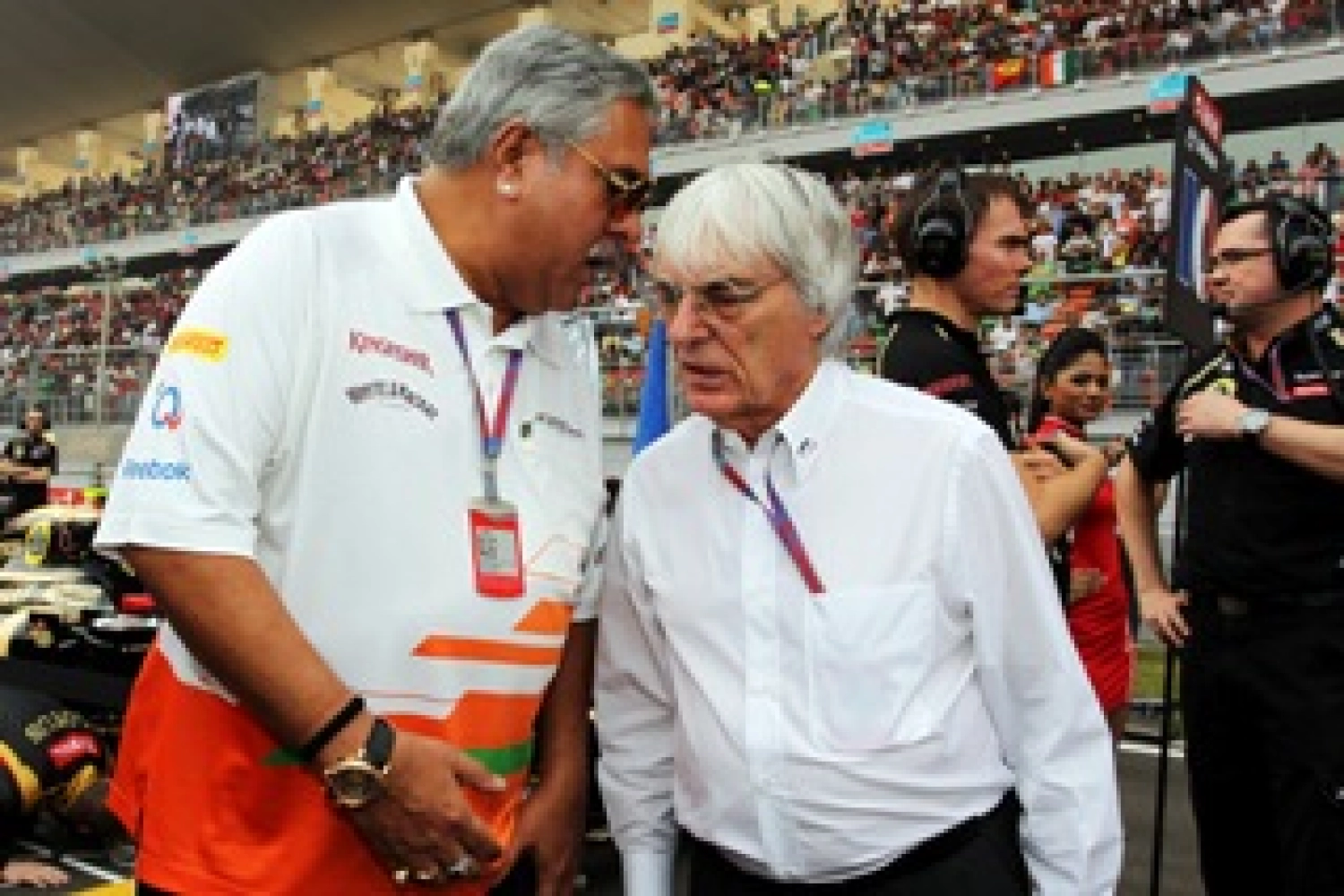
Bernie Ecclestone has therefore confirmed to the British daily The Telegraph that the final decision has been made: « We have agreed to do it. It will happen this year. CVC is working on it and putting everything in place to make it happen. »
More favorable conditions
However, the way an investment fund operates is precisely to enter and exit a company within five to six years to maximize its capital gains and the rotation of its funds. If it had decided to abandon its project in the summer of 2012, the main reason was that the Gehrard Gribkowsky trial was in full swing, which cast significant doubts on the future of F1. Now that the former banker has been sentenced to eight and a half years in prison for accepting a payment of 44 million dollars from Bernie Ecclestone, the situation is somewhat more favorable, even though CVC and the chief financier are still facing charges in the United States.
The conditions in the financial markets are also more favorable as they have increased by 10 to 15% this year. The reason for this improvement is the reduction in fears regarding an implosion of the Eurozone compared to the situation last June. At the time, it was this widespread fear that CVC highlighted to justify the withdrawal of its project.
Two banks mandated
The investment fund has therefore mandated two banks, UBS and J.P. Morgan, to conduct a new roadshow with institutional investors who may be interested in acquiring shares of F1. It should be noted that Goldman Sachs is no longer part of the banking pool responsible for the operation. Indeed, the American bank had been mandated by News Corp during the attempted takeover of F1. The media conglomerate, after attempts to partner with Carlos Slim and then with FIAt, had tried to force CVC to sell its shares by forming a coalition of teams and circuits threatening to withdraw. After the failure of such a strategy, CVC logically excluded Goldman Sachs from the new process.
As for the presence of UBS, it is logical due to the ties that unite F1 and the bank. Indeed, UBS has been one of the official sponsors of the sport since the summer of 2010, allowing it to display its logo on circuits worldwide. It is also the title sponsor of the Chinese Grand Prix, further maximizing its visibility. But the major interest for CVC Capital is that despite its name, Union des Banques Suisses, UBS is 6.4% owned by the government of Singapore. The investment fund plans to introduce Formula One to the stock exchange of the city-state, as the transparency obligations are less restrictive than in other markets.
A different distribution of rewards to the teams
One of the major differences compared to previous months concerns the commercial agreements made with the teams. Williams revealed having received 9.4 million pounds to ensure its presence between 2013 and 2020. However, the big teams managed to negotiate even more advantageous conditions. Notably, the oldest team, Ferrari, managed to negotiate a heritage bonus of nearly 120 million euros guaranteed.
But Bernie Ecclestone took advantage of HRT’s bankruptcy at the end of the 2012 season to tighten the conditions for teams at the back of the pack. Thus, the eleventh team will no longer receive a lump sum payment of 10 million dollars, which was negotiated at the time when the three new teams entered. The F1 great treasurer has therefore confirmed that he did not have an agreement with Marussia, eleventh in the past season: « They do not have a commercial agreement because they are not in the top 10. We pay the top 10 and that’s it. For three years, we did something different because we had an agreement with Max (Mosley) but from now on, we will pay the top 10 and that’s it. »
The entirety of these agreements thus allows CVC Capital to present stable revenue growth prospects (funds provided by circuits and sponsors) and expenses (funds paid to teams are its largest expenses), which is likely to reassure investors. However, the fundamental problem of going public is the required transparency with the precise publication of accounts. To withdraw, CVC Capital might ultimately favor a direct sale to other investment funds, as has been the case since last year.
With the participation of www.Racingbusiness.fr