Renault Sport F1 unveils its V6 for the 2014 season
MotorsInside was at the heart of the Viry-Chatillon factory to discover the first edition of the V6 turbo that will be used in Formula 1 starting in 2014.

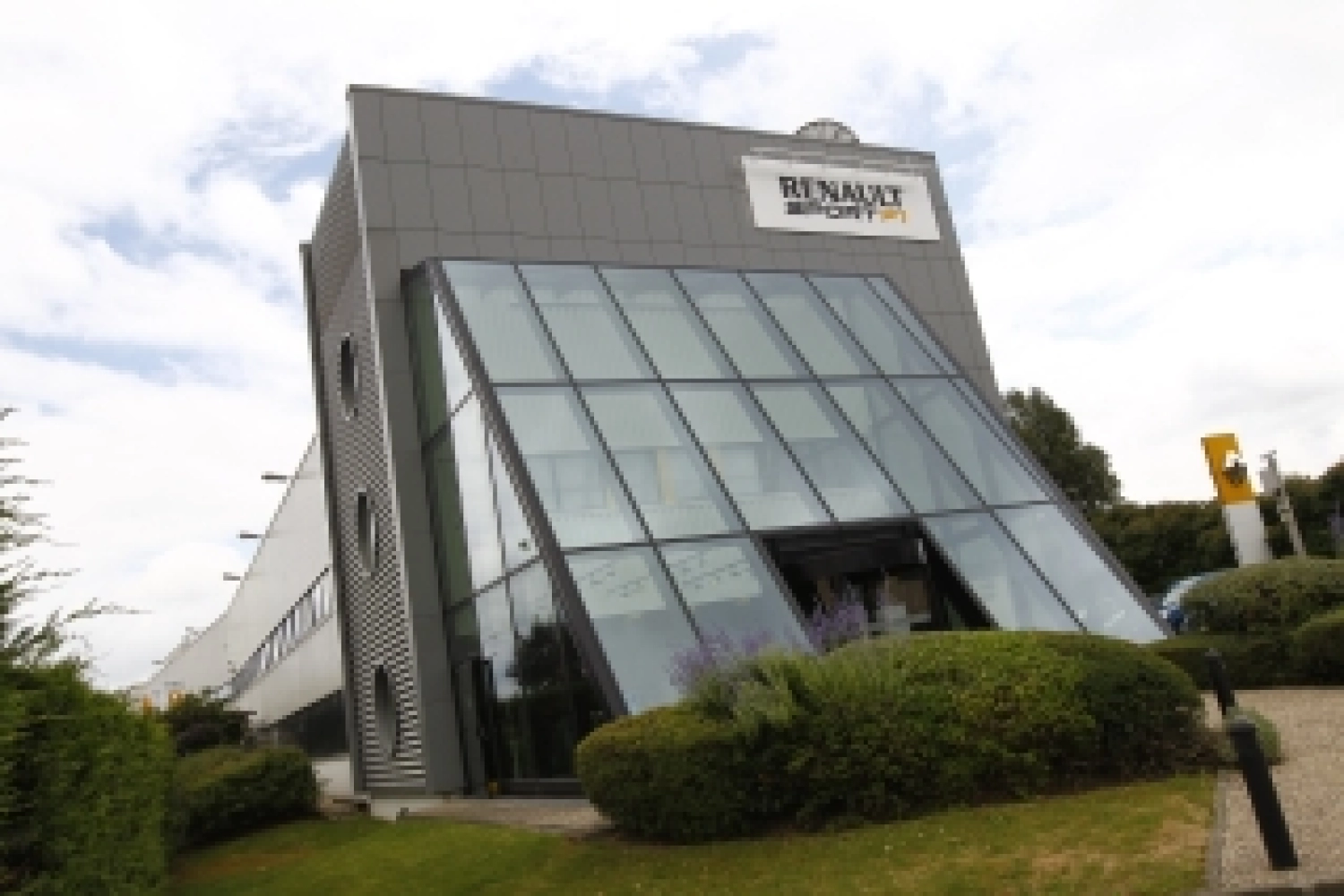
As part of the season kickoff, Renault Sport F1 invited a portion of the press, including casinoenlignefrance.eu.com, to discuss the major change in technical regulations that will take place in 2014 and, as a bonus, the first sounds of its new V6.
During this press conference, present were Jean-Michel Jalinier, CEO of Renault Sport F1, its marketing director Olivier Gillet, its technical director Rob White, as well as its famous ambassador, the four-time F1 world champion Alain Prost. Gaspar Gascon, the director of mechanical engineering at Renault, was also in attendance to demonstrate the synergies between the competition program and that of production vehicles.
This combined presence aims to start the education on the revolution awaiting the teams and engine manufacturers in 2014, with the new engine regulations. First of all, it will no longer be simply about an engine but about a power unit or “unité de puissance” in French. Indeed, besides the V6 engine block, there will now be a KERS and a HERS. While the first element will be an evolution of what is currently done, the second is a completely new concept. This system of energy recovery from exhaust heat aims to lower the exhaust gas temperature to convert the heat into mechanical energy. Rob White thus states: “Unlike what is usually done on a typical turbocharger in automobiles, where the turbine on a classic turbo is sized to drive the compressor, this time, this turbine is oversized.”
We can clearly feel that it is therefore the one on which the various engine manufacturers are focusing in the development process. One of the reasons is that it currently has no restrictions regarding its storage capacities, nor its usage during the race. It is also an entirely new technology, which explains why Rob White, when questioned on the subject, refuses to give too precise information, which could provide clues to his competitors: « At the moment, I prefer not to give any details about the power of this machine or the battery technology used. However, it is true that teams currently equipped with a KERS have, over several seasons, managed to master this energy storage technology via lithium-ion batteries in a particularly complex environment. »
Things are now much more structured regarding the KERS since it will be twice as powerful, reaching 120 kW, equivalent to 160 horsepower. The main difference compared to the current generation is that its use will be much greater than it is now: instead of the six to seven seconds per lap allowed in 2012, drivers will be able to use it much longer as the limit will be set at 33 seconds per lap! Olivier Gillet comments: « While today, a driver can still win even without KERS, in 2014, it will be simply impossible. »
Another reason for this inability to succeed without this technology will come from the consumption of vehicles and the amount of fuel that single-seaters can carry. Until now, they were unlimited but practically 160 kilos; in 2014, they will only be able to carry 100 kilos, which is a drastic drop of 40%. Similarly, the authorized fuel flow will see a dramatic decrease, dropping in practice from 170 kilos/hour to just 100. This represents a 35% decrease compared to current practices. This will obviously have a significant impact on the way these driving aces operate, as Alain Prost emphasizes: “Of course, we’ll see what happens as soon as the new engines are in the cars, but what is clear is that the work required of the drivers will be different again. People often ask me about the difference compared to my generation. Yes, we were asked different things. But now they will be asking something else from the drivers, namely energy management, particularly everything that will be generated by electrical energy. Depending on the circuits, even the course of the race, if you are in the slipstream, there are many parameters, some of which we may not even know today, to consider. The driver who can best manage his energy but also understand what he has at his disposal will be ahead. He will therefore have to work much more in places like here in Viry to understand with his team how it works to optimize everything. So I think the most intelligent, curious, and involved driver will be able to make a difference.”
Another major difference in the engine manufacturer’s operations is that engine freezing is not on the agenda for its first seasons. Unlike the current situation, Renault and other engine manufacturers will be able to continue development: the 2014 engine will thus only be a first step and will therefore be different from the 2015 one. Olivier Gillet told us: « We are very enthusiastic because in recent seasons, the difference was made thanks to the chassis, aerodynamics, and the driver! Now the engine becomes essential and differentiating again. This is Renault’s reason for being in F1 in the medium to long term. We have been involved in the discussions from the beginning to move towards a logic similar to that of production vehicles, with smaller but equally powerful engines that consume less. »
At the end of this press conference, we were invited to a world first, namely the presentation of the first demonstration bench of this V6 engine, at the heart of the Viry-Chatillon factory. Although this bench is only an initial draft and not yet the finalized race version, it gives a first idea of what the sound of F1 will be like starting in 2014. Don’t count on us to let you hear the first cries of Renault’s new baby since very strict safety instructions logically prevented us from bringing any electronic device near the bench, as expert competitor ears could take advantage of such information. While the sound was very muffled by the protective glass, it is clearly different from what is currently being done, without justifying the strong criticisms made from the beginning by Bernie Ecclestone. The reason is that the maximum engine speed still climbs very high, reaching 15,000 revolutions per minute compared to the current 18,000 in effect. At this level, fans have no concerns to worry about.
If you want to learn more about Renault’s F1 strategy, we invite you to read our exclusive interview with Jean-Michel Jalinier, the CEO of Renault Sport F1.