The survival of F1 will depend on “greener” engines according to Whitmarsh
The FIA is increasingly recognizing the importance of ecology in motorsports, and Formula 1 is no exception. With the introduction of 1.6L V6 Turbo engines in 2014, a significant step will be taken to reduce the CO2 emissions of each single-seater. Nevertheless, Martin Whitmarsh, director of the McLaren team, believes that efforts will need to be even greater to sustain Formula 1 over time—despite the costs involved.

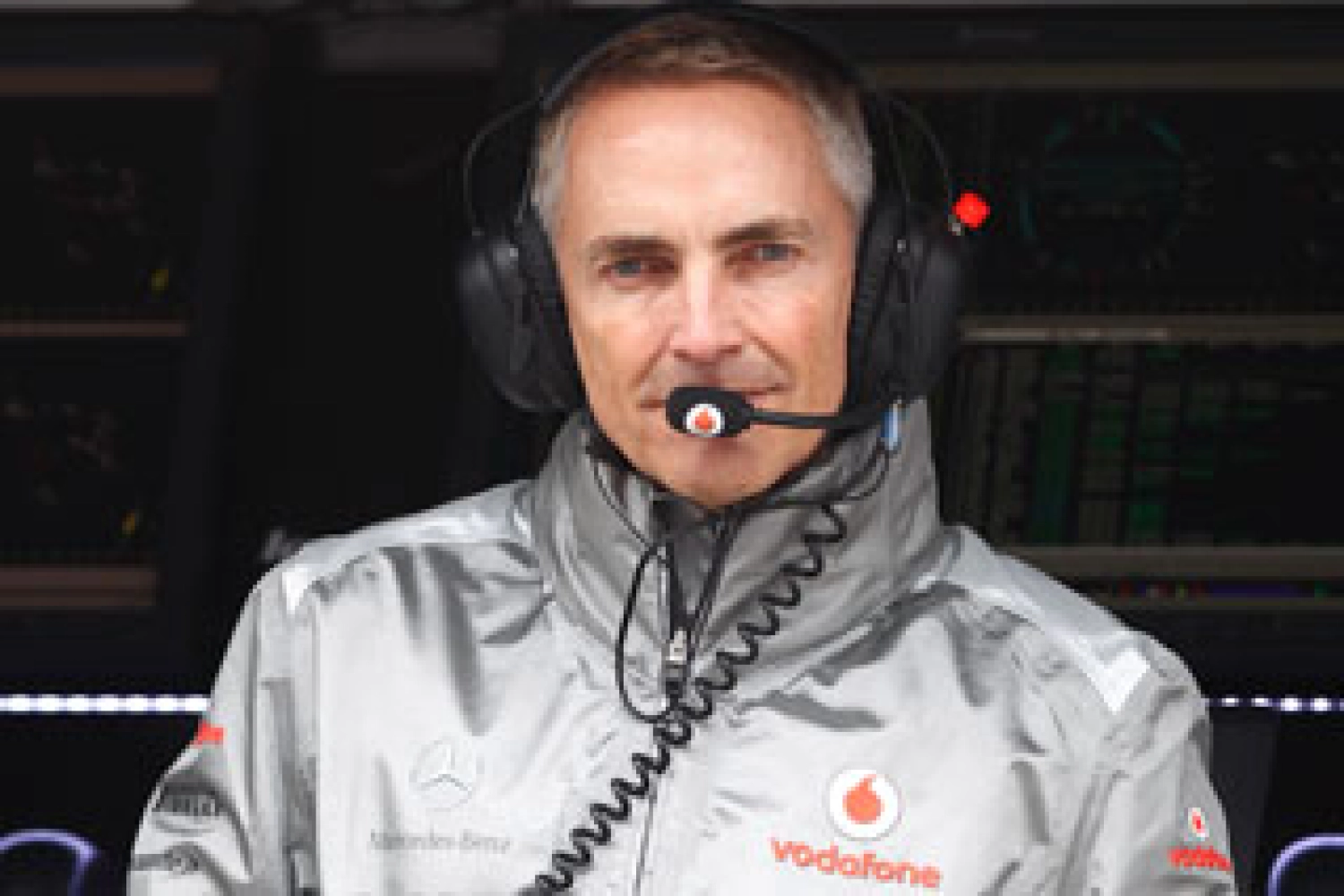
For Martin Whitmarsh, negotiating the ecological shift for Formula 1 well will be crucial to its survival. The Briton, head of the McLaren team, already sees the 2014 regulations as an important step forward, but probably not sufficient.
For several months, engine manufacturers like Renault, Ferrari, Cosworth, and Mercedes have been working on developing the engines for the 2014 F1 season. With the regulations having changed, the current V8 engines will be replaced by Turbo V6 engines, which are closer to production cars but also less fuel-hungry. The current engine regulations have been in place since 2006, the year when the V10s were replaced by V8 engines (V12 engines having been banned since 1996).
This regulatory change may prove paradoxical in light of the increasing cost reduction desired by the FIA – Fédération Internationale de l’Automobile – and the F1 teams. Indeed, the development and optimization costs of these engines will be directly distributed to the customer teams of the manufacturers, who are expected to pay 20 million Euros per year to have V6 engines from 2014 onwards.
To limit the financial impact of these research and developments, the major F1 players and engine manufacturers have agreed on certain measures, such as reducing the number of engines per season and increasing the maximum number of customer teams for the same engine manufacturer starting in 2015.
« We ask engine manufacturers to adapt their engines to the new regulations and we expect them to be reliable and efficient. We must respect these manufacturers and therefore be aware of the costs this entails. It’s the name of the game. » Whitmarsh explains to the microphones of English journalists from Autosport.
« If you change the rules to make a sport more attractive, there will inevitably be an additional cost. We have to be careful and do things properly, be fair. If I were in one of the more modest teams in the pitlane, I would like to have free tires and engines… because not all of us can afford to cope with the changes. But these changes are important for Formula 1. A sport as popular as F1 must reflect today’s society. »
Adapting F1 to societal constraints is a way to remain attractive to the general public, according to Martin Whitmarsh. The Englishman prefers to anticipate criticism and constraints and allow for change while there is still time. He believes that the problems society faces will need to be addressed by F1 in the future.
« If F1 is perceived as a sport that wastes and does not take into account the strong environmental constraints on mobility needs today, then we have missed our goal. Once signed, the cost reduction agreement will allow us to tackle new challenges; it will no longer be enough to know how to make our car faster, but we will have to make it faster while optimizing our efficiency, our performance, and finding increasingly innovative solutions. »
According to a 2007 study by the University of Liège, with V8 engines, an F1 car emits on average more than 2000g of CO2 per kilometer, which is 10 times more than a standard production car. V6 engines should help reduce this CO2 emission by half, notably thanks to the use of Turbo.