Canada: Figures and Technical Data
Overview of the technical constraints imposed by the Gilles Villeneuve circuit on the chassis, engine, and tires of Formula One cars.

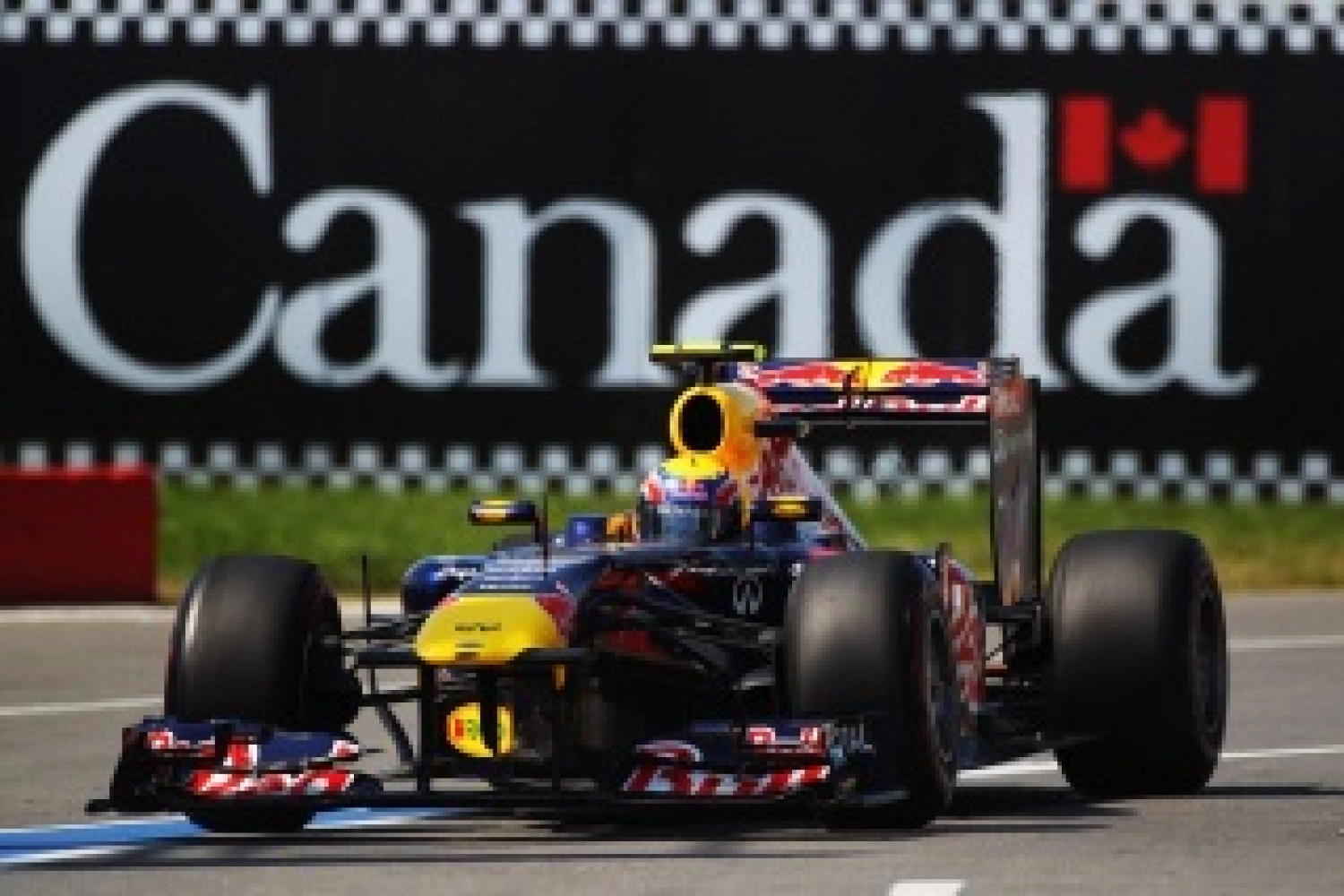
The Circuit Gilles Villeneuve hosts the Canadian Grand Prix this weekend, the seventh round of the 2012 Formula 1 season. The Canadian circuit could make history if a seventh driver were to win this seventh race of the year – Michael Schumacher, for example, who showed competitiveness in Monaco and holds the record for the most victories on this track (7).
The Montreal circuit is a unique track, notably because it was built on an island, Île Notre-Dame. The track presents numerous challenges for drivers, engineers, and the single-seaters. There are several straights, which forces engineers to apply minimal aerodynamic downforce on the single-seaters. But the challenge is to find the right compromise with slow corners, like those in Monaco.
The Circuit Gilles Villeneuve, with its various straights leading to heavy braking, will be a test for the brakes. All teams will try to optimize their cooling to ensure they are fully effective throughout the race.
Another factor to consider in Canada is the curbs. To save time, drivers need to drive over the curbs, so they require a car set up for this purpose. Notably, this year, all the curbs and boundary lines of the Montreal circuit have been painted with non-slip paint to prevent issues in the event of heavy rain, as experienced in 2011.
The weather could be a factor this weekend, even though it might disrupt the practice sessions. According to early forecasts, the race should mostly, if not entirely, take place in dry conditions. This will likely put a strong strain on the tires, which generally degrade very quickly in Montreal as the track is a temporary circuit, with some roads open to the public for the rest of the year.
The Canadian Grand Prix generally offers interesting races for fans and viewers, especially because it is relatively easy to overtake. This may be why the FIA decided to have only one DRS zone in Montreal, unlike last year when there were two.
Montreal from the window frames side
Gianpaolo Dall’Ara, Technical Director of the Sauber F1 team:
The Montreal track is narrow with walls very close in some places. It offers interesting challenges. The first is finding the right aerodynamic balance because the level of downforce and drag is lower than on most other tracks. The time spent in the straights requires maximizing speed, while the slow-speed corners are characterized by changes of direction. Therefore, the car must be well-balanced under braking, needs good traction, and must be responsive.
The other interesting challenge involves Pirelli, which has decided to provide us with Super Soft and Soft tires, as we had in Monaco. We don’t expect to encounter any problems with the Super Softs in qualifying, but afterwards, the most difficult part will be finding the right race strategy to get the most out of the tires.
Montreal Engine-Side
Rémi Taffin, Head of Track Operations at Renault Sport F1:
The circuits of Monaco and Canada have very different layouts. Montreal is one of the tracks that highlights engine power the most. It is even a determining factor. The time spent at full throttle is not as significant as at Monza or Spa, but the long straights demand high-rev power over long distances.
With large braking zones at the hairpin and chicane, the RS27 must also provide effective engine braking. It is not without reason that this track is known for being “engine-breaking.” There’s no time to rest! The challenge is to find the right balance between maximum performance and 100% reliability. As in Spa and Monza, the risks we might take must be justified by tangible progress.
With Australia, the amount of fuel at the start is one of the largest of the season. This parameter also depends on the race strategy and the weather which, as we saw last year, can change suddenly. Montreal may not be as specific as Monaco in terms of preparation, but good settings can make the difference between the front and the middle of the pack. Especially during a season as tight as the one we are experiencing right now!
Montreal on the Tire Side
The opinion of Paul Hembery, Pirelli Motorsport director: « We are moving from Monaco to Canada, two of the most spectacular races of the season. Montreal is not only a fantastic place to host a race; it is also a splendid circuit. The Soft and Super Soft tires should highlight their natural characteristics even more than in Monaco, where drivers were kept at low average speeds without being able to really push the tires for performance. However, this allowed them to achieve very long runs with the Super Softs, which will not be the case in Montreal, where the tires have to work harder.
Tires have traditionally played an important role in this race, particularly in the case of rain. We saw how putting on the right tires at the right time allowed Jenson Button to win the Canadian Grand Prix last year, even after six pit stops. This race was far from typical, but we have not yet run the super-soft under normal conditions in Canada. Testing will be vital for the teams to allow them to understand exactly how the tires work, particularly with full tanks. We expect to see different strategies at play, with some teams possibly adopting different strategies on the two cars to cover all possibilities.
The opinion of Jaime Alguersuari, Pirelli test driver: « Canada is a fantastic circuit and I had a great race there last year, starting from the pitlane and finishing eighth. Tires are absolutely crucial there: we run with very low downforce to achieve good top speed on the straights, which requires much more mechanical grip than aerodynamic grip. As a result, and due to the track surface, I expect to see a lot of sliding from all the cars during the weekend, which also increases tire wear.
The combination of Super Softs and Softs will be very appropriate for Montreal: temperatures are generally quite low and grip levels are also low. Taking care of the rear end is particularly important. If driven correctly, however, one can find an advantage: there are clearly good overtaking opportunities in Montreal and I’m sure it will be a very exciting race.
Montreal in Numbers
1:13.622: This is the lap record, set by Rubens Barrichello driving his Ferrari in 2004. For comparison, Sebastian Vettel secured pole position in 1:13.014 last year, but with a race disrupted by rain, the fastest lap in the race was done in 1:16.956 by the winner, Jenson Button.
3.6: This is the maximum number of G-forces endured by drivers on the Circuit Gilles Villeneuve.
4 hours 4 minutes and 39.537 seconds: This is the duration of the 2011 Canadian Grand Prix, the longest race ever in the history of the Formula 1 World Championship. Following this event, the FIA decided to impose a maximum duration of 4 hours for Grand Prix.
7: This is the number of victories won by Michael Schumacher in Canada, the seven-time world champion holds the record for the most wins at the Gilles Villeneuve circuit.
66: This is the percentage of the lap (according to McLaren) during which drivers are at full throttle, making the Canadian track rather demanding for Formula 1 engines.
324: This is the maximum speed that drivers are expected to reach on the Circuit Gilles Villeneuve according to McLaren.
1995: It was the year when Jean Alesi achieved his first and only win in Formula 1, at the Canadian Grand Prix in Montreal. The Frenchman’s Ferrari broke down during the cool-down lap, and he was “given a lift” by Michael Schumacher driving his Benetton Renault.
[From the press releases published by the FIA, McLaren, Pirelli, Renault Sport F1, and Sauber F1]