The FIA will consider solutions to protect drivers in case of extreme heat like in Qatar
The FIA is concerned about the safety of Formula 1 drivers after the Qatar Grand Prix, held at night but under extreme heat conditions, showed the limits of human bodies. Solutions will undoubtedly be taken during the winter to provide concrete responses.

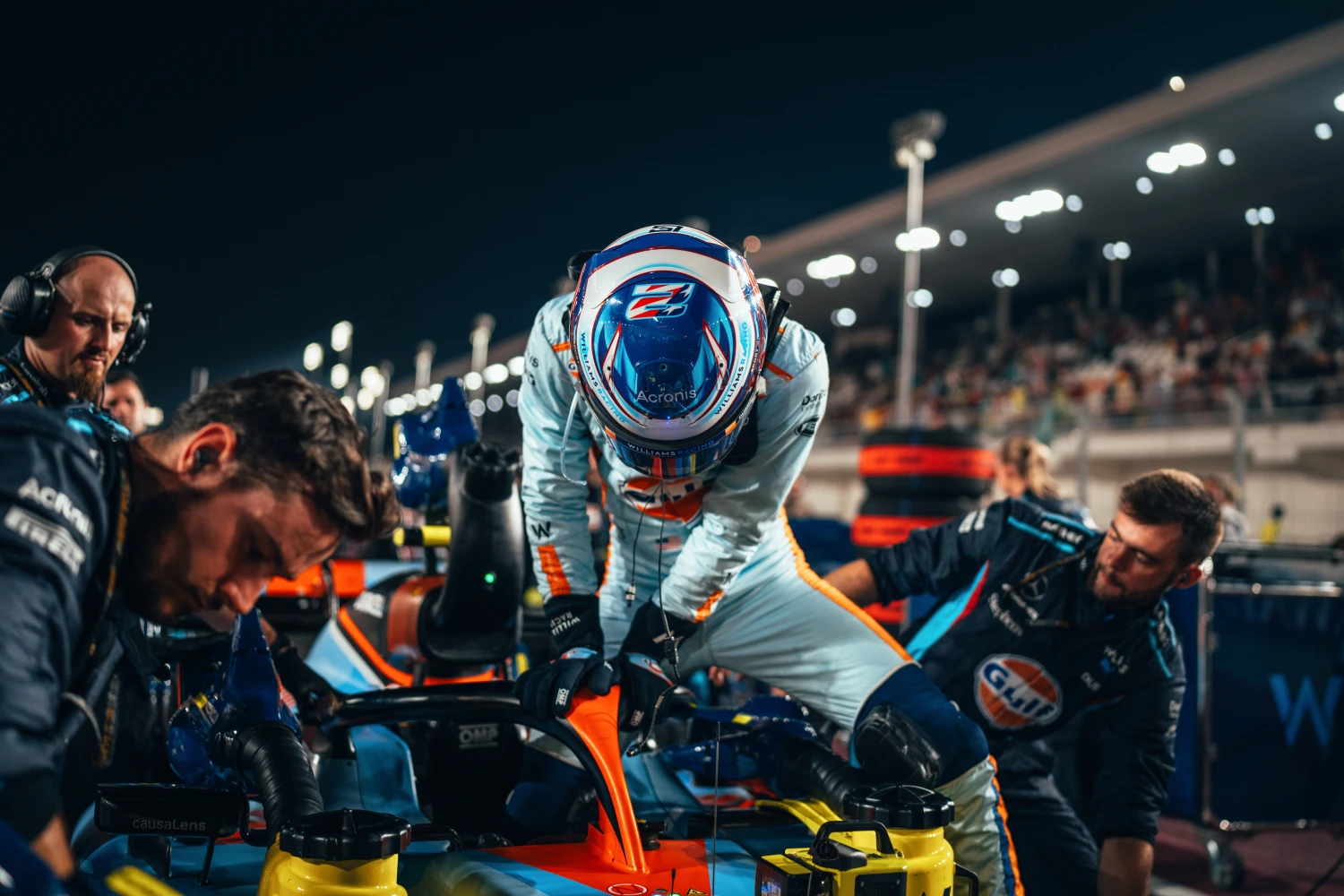
The Qatar Grand Prix 2023, listed on the Formula 1 calendar, was the scene of a particularly heated episode, both on the track and off. Several drivers were notably taken care of by the medical team at the end of the race on Sunday, and Logan Sargeant notably had to abandon during the race.
The International Automobile Federation (FIA) has expressed concerns about extreme racing conditions, marked by exceptional temperatures and humidity, which heavily weighed on the well-being of the drivers. Although the race was taking place at night, it was still nearly 40 degrees at 8pm on the track, a furnace.
« The FIA notes with concern that the extreme temperature and humidity during the 2023 Qatar Formula 1 Grand Prix had an impact on the wellbeing of the drivers. Although they are high-level athletes, they should not be made to compete in conditions that could endanger their health or safety. The safe driving of cars is, at all times, the responsibility of the drivers, however, as with other issues relating to safety such as the circuit infrastructure and car safety requirements, the FIA will take all steps to establish and communicate the acceptable parameters in which the competitions take place. »
An in-depth analysis of the situation in Qatar was initiated by the FIA to provide applicable recommendations for future scenarios of extreme weather conditions. While next year’s edition of the 2024 Qatar Grand Prix is scheduled later in the year, a period when temperatures are expected to be lower, the FIA still prefers to take concrete measures right now to avoid a repetition of this scenario.
« Several measures will be discussed at the next medical commission meeting in Paris. » the statement details. Among the possible measures are: supplying guidelines for competitors, seeking modifications for more efficient airflow in the cockpit, and recommendations for changes in the schedule to align with acceptable weather conditions, among others. Research from other series, like off-road events in extreme climates, will be considered for potential applications to circuit events.
Motor sport, in its essence, is a constant challenge where the driver and the machine are put to the test. However, it is imperative to find a balance where this challenge does not encroach on the safety and well-being of the actors involved. Notably, during the Grand Prix we could see Alonso’s Aston Martin make several mistakes, or Logan Sargeant slowing down dangerously on the circuit at the time of his retirement.
The drivers already have many devices to improve their comfort in the single-seater. Particularly in very hot races, the fact of wearing a refrigerating vest equipped with ice packs. However, after several laps, this system heats up and can become penalizing. A possible solution could be the introduction of air inside the cockpit. Indeed, the cockpits are protected from the air flow to direct the air mainly in the air intakes above the helmet or on the pontoons to primarily cool the mechanics. The FIA could therefore request the implementation of an air flow redirected towards the driver during extreme conditions like in Qatar.
Note that Qatar is not the only place concerned. The 2022 French Grand Prix had been particularly hard on the body with temperatures in direct sunlight also well exceeding 40 degrees.