Italian GP: The temple of speed opens for the weekend
The Italian Grand Prix at Monza is certainly the most severe test of the season for Formula 1 cars. No other circuit is as demanding on the engine and brakes. The teams must also design a specific aerodynamic package for this unique event. While the track itself may seem simple, in truth, it is not, […]

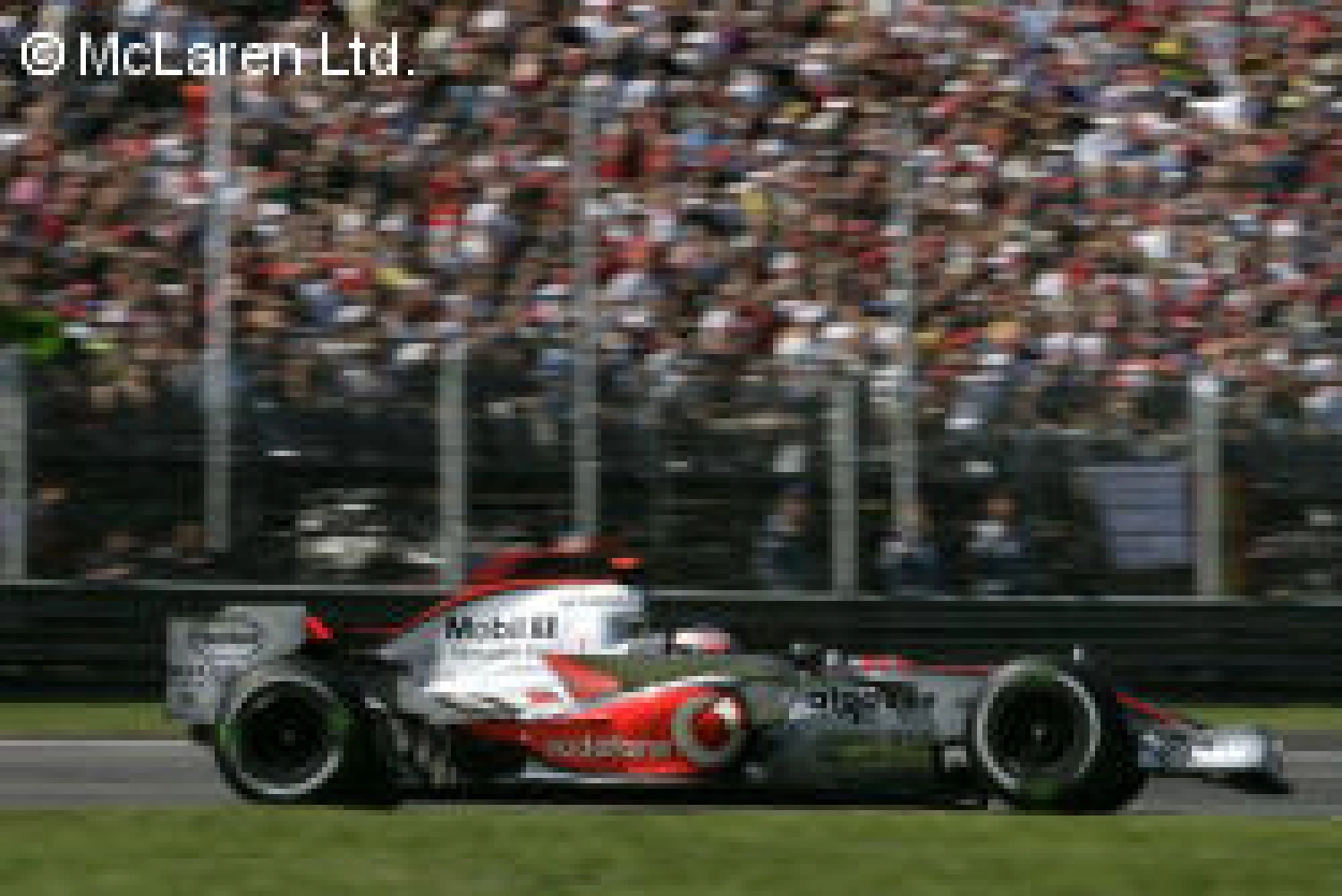
The Italian Grand Prix at Monza is certainly the most severe test of the season for Formula 1 cars. No other circuit is as demanding on the engine and brakes.
The teams must also design a specific aerodynamic package for this unique event. While the track itself may seem simple, in truth, it is not, and it takes time to find the limit on this legendary circuit that requires skill and finesse!
Chassis
Aerodynamics: Monza is the fastest circuit on the calendar with an average speed of 250km/h. If the team uses relatively low downforce elsewhere in the season, especially at Spa, Monza requires the development of a specific aerodynamic package to achieve a sufficiently competitive maximum speed, around 340km/h. This package is generally referred to as an ultra-low downforce package, but the determining factor remains the drag, which is minimized here to gain in top speed. In the wind tunnel, teams focus on ultra-efficient wings whose design can vary significantly from one team to another. Naturally, these reduced drag effect wings also generate less downforce. At Monza, there is a loss of about 10% to 15% in downforce compared to the Spa-Francorchamps package.
Suspensions
The mechanical grip and the ability to negotiate curbs are the main setup parameters at Monza. Firstly, due to the lack of aerodynamic downforce, then because braking stability remains essential as drivers spend nearly 15% of the lap braking, and finally to ensure that drivers can aggressively tackle the curbs, an integral part of the ideal racing line. These different setup compromises must allow drivers to have a responsive car during direction changes at low and medium speeds while a good corner exit will also be crucial in slow corners. Similarly, it’s important to have good braking stability so that drivers can approach these critical areas with confidence. Engineers will therefore try to run the car with the ride height as low as possible to gain aerodynamic advantages. To avoid bottoming out at high speed, meaning when the car’s undertray scrapes the asphalt, rubber spacers are used to settle the car.
Fernando Alonso declared: « The Ascari chicane is one of the most enjoyable parts of the lap. You need to be aggressive on the braking and then very smooth with the steering and acceleration through corners 9 and 10. The key to being fast is to take the line as straight as possible, which isn’t easy because with the low downforce, the car feels light and tends to oversteer on the exit of turn 8. As with all chicanes at Monza, being quick out of turn 10 is important to not come under pressure approaching Parabolica. »
Brakes
The driver spends nearly 15% of the lap braking, which means it is an important parameter in the fight for a fast time. The mechanical setup aims to enhance drivers’ confidence when braking. The brakes are put under significant strain here at Monza, with the most important braking points of the season; this is especially true at turn number 1, where drivers experience deceleration forces close to 4.5G. The car then must handle four major braking points at over 320 km/h. Special attention will be given to brake cooling while trying to maintain aerodynamic efficiency. Special care is also given to the braking system itself.
Fernando Alonso added: « The most important braking zone of the lap is located at the first corner, it’s a very tricky place to negotiate: you have to decelerate from 340km/h to 60km/h. It is then relatively easy to lock a wheel during braking and go wide, which can cost quite a lot of time. You also need to use the curbs to get through as straight as possible. You can make an overtaking maneuver there if you are well positioned after the main straight. »
Engine
Performance: Monza has always been the ultimate test for Formula 1 engines. The engine runs at full throttle for 75% of the lap, well above the season average of about 62%. Additionally, the engine must offer a wide range of usage since the maximum speed reached in Italy is around 340 km/h on the main straight, while the minimum speed is 65 km/h in the first chicane. The longest time spent at full throttle is about 15.5 seconds, from exiting the Parabolica to braking for the first chicane. The engine mapping must provide drivers with a strong engine even at low revs and must deliver a progressive engine response for re-acceleration in corners, such as in the Parabolica.
Reliability
As if it wasn’t already demanding enough for the engine block, the chicanes represent an additional challenge for the engine in terms of reliability. Drivers seeking a few tenths have to attack the curbs quite aggressively, and there is a risk of hitting the rev limiter when the car is airborne and damaging the transmission upon landing. That’s why the auxiliary components are closely monitored.
According to a statement from the Renault F1 Team