Canadian Grand Prix: Introduction to a high-speed circuit
One year after its return to F1, Montreal once again hosts the Canadian Grand Prix. So here is everything you need to know about the Gilles Villeneuve circuit, one of the fastest on the calendar.
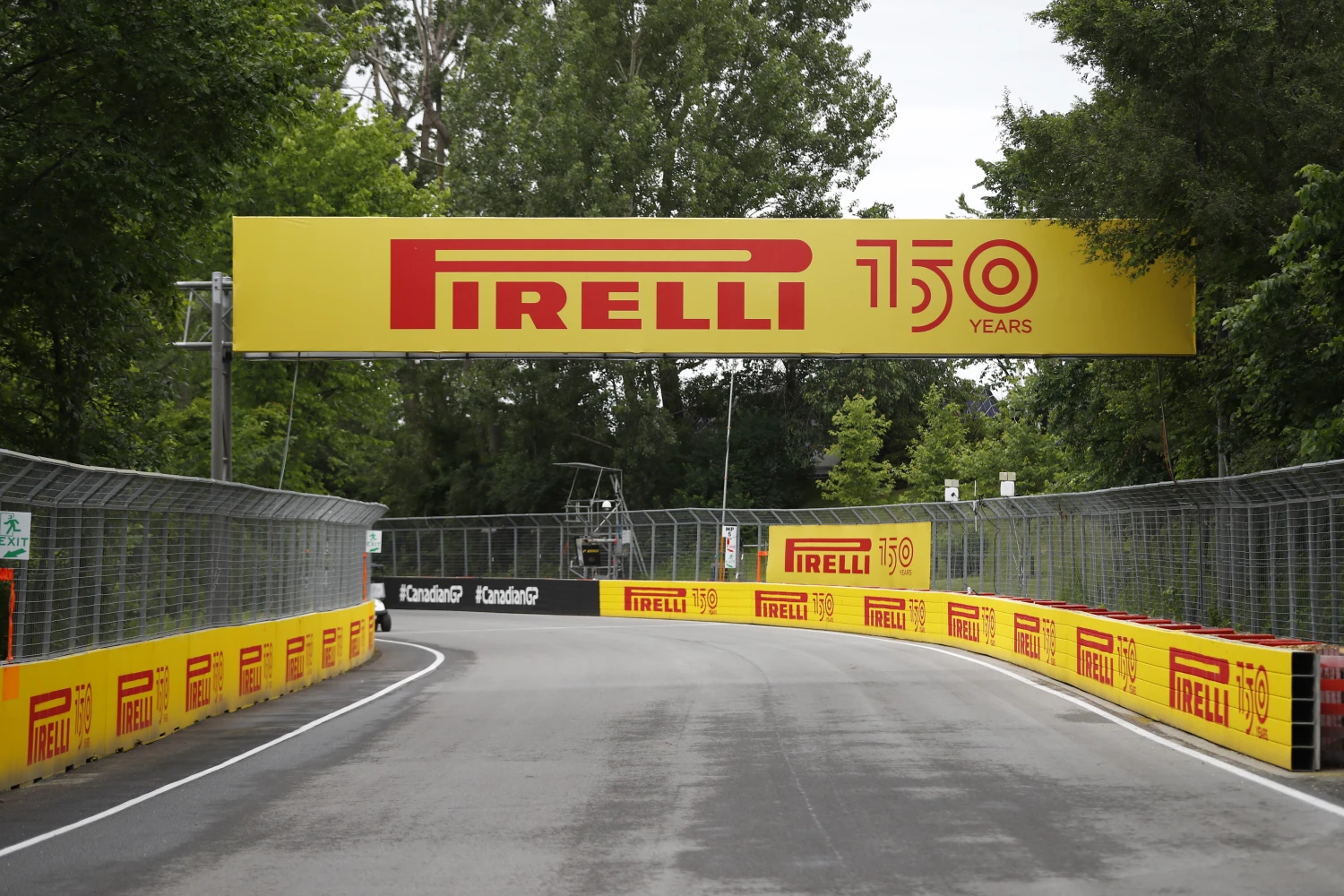
Since 1978, Formula 1 has been going to Montreal for the Canadian Grand Prix. A semi-permanent track, 4.361 km long, consisting of 14 turns. The drivers will cover 305 kilometers and complete 70 laps. Its main characteristic is the long straight just before the start line, measuring 1.06 km. Drivers usually reach speeds exceeding 330 km/h.
The rest is made up of a straight line that runs alongside the stands, another DRS zone, and above all a hairpin where drivers often try everything to overtake.
The track is particularly narrow. According to the data from last year, the average time for a pit stop is 18.5 seconds, despite having more than 400 meters of pitlane. The drivers who come into the pits cut the final chicane and skip the first turn, as the pit exit is already located at turn 2.
Its turns, particularly slow ones, lead to numerous overtakes and, consequently, cause the brakes and tires of the cars to wear out much faster. These peculiarities can result in frantic races, like in 2011.
Pirelli Tire Type
On the Pirelli side, the Italian manufacturer is making a complete change and bringing its softest tires for this weekend, namely the C3 for the hard compound, the C4 for the medium compound, and the C5 for the soft compound. The softest tire is usually only used in qualifying, as was the case last year when only the medium and hard compounds were used in the race.
The preferred strategy by most drivers was a two-stop strategy, but some opted for a single stop with a very long first stint on the hard tyre, especially those starting at the back of the grid like Charles Leclerc, who was penalized for an engine change.
The Gilles Villeneuve circuit is a circuit where the asphalt is not very abrasive, but the more the drivers race there, the more optimal the conditions become, which can result in a rather interesting qualifying session if it is held on dry track. As a reminder, last year Fernando Alonso finished second in Q3, just behind Max Verstappen, who won the following day.
A special wall where champions find their limits
The list of drivers who crashed into that famous wall at the last turn is impressive. But it’s in 1999 that the story takes a new turn. During the race, three drivers miss the wall. And not just any drivers. Damon Hill, Jacques Villeneuve, and Michael Schumacher all hit the wall of champions. It is therefore renamed the wall of champions since three titled drivers were caught in this trap that weekend.