Adrian Newey thinks that the F1 cars of 2026 will be slower than they are currently
As a new regulation is set to take effect in 2026, Adrian Newey believes that current Formula 1 cars will remain faster than the cars introduced in 2026, and this for some time.
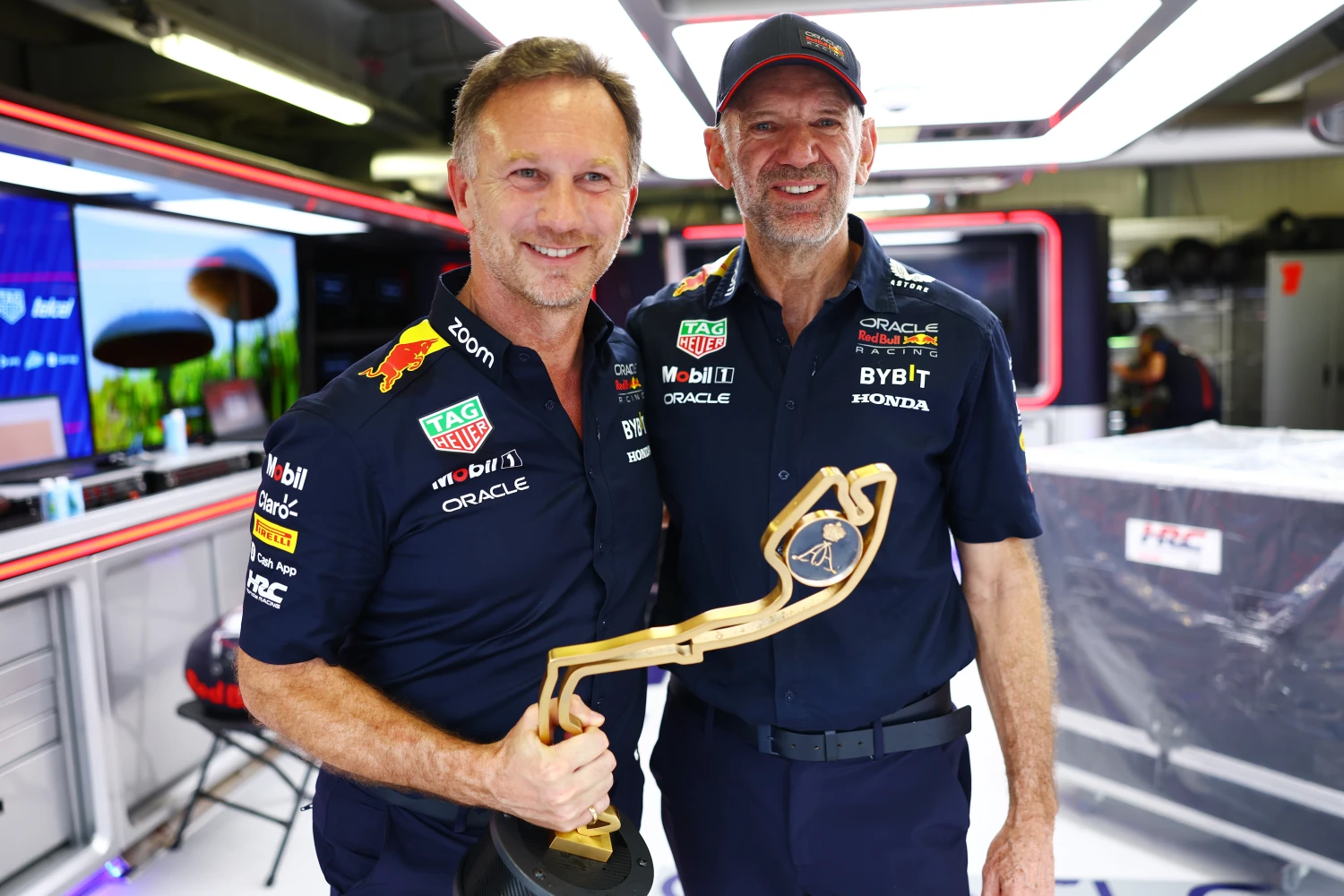
Adrian Newey, technical director of Red Bull, has warned Formula 1 fans that they should expect cars to be “much slower” when the 2026 regulations come into effect. He will surely still be present in F1 to build this car by 2026.
The legendary aerodynamicist believes that the current generation of Formula 1 cars could be the fastest we will see on circuits for some time, as the proposed modifications, which will come into effect in three years, will result in a decrease in speed.
“It is possible, for example, that the current generation of Formula 1 cars will be the fastest for a certain period of time,” explains Newey in the context of the Talking Bull Podcast from Red Bull. “Due to the regulations of 2026, as they are currently proposed, the cars will be much slower.”
Current F1 cars use 10% of biofuel. By 2026, the regulations plan to use 100% biofuel. Currently, the performance of this biofuel is lower, and engines are being developed accordingly to try to maintain the same power despite a different fuel. However, by 2026, research will have evolved to allow for more efficient biofuel and less fuel-hungry engines. In fact, F1 cars will have to consume a maximum of 70 kgs of fuel per race, compared to the current 100 kgs.
This reduction in consumption will inevitably require a reduction in speed. It remains to be seen by how much.
Here are the key points to know about the 2026 regulations
Suppression of the MGU-H
The MGU-H (energy recovery system via exhaust gases) will be removed. It is currently one of the three engines in the powertrain of Formula 1 cars, along with the MGU-K and the traditional internal combustion engine.
New eco-friendly fuel
The new power units will operate with fully sustainable fuels. Produced – no longer from oil extracted from underground oil fields, but from cereal crops such as Rapeseed oil. This ethanol, when burned, will generate CO2 which will be offset when it grows, thus giving a carbon-neutral balance to F1.
More powerful MGU-K
The electrical power will be improved on the MGU-K by tripling the electrical power of the current hybrid system, collecting more energy during braking and aiming to produce approximately 350 kW by 2026. This system will allow for the operation of a hybrid engine as we know it today in production cars.
Optimized recycling
Formula 1 intends to prioritize environmental responsibility by imposing recycling options for batteries and recycling materials such as cobalt at the end of the life cycle of MGU-K.
With these changes, F1 aims to remain the most technologically advanced and exciting championship while promoting sustainability and environmental responsibility.
Red Bull is already working for 2026
In the same Talking Bull podcast, Adrian Newey is interviewed about the progress of development in preparation for the 2026 regulations.
On the chassis side, not much, but on the engine side obviously yes. Within Red Bull Powertrains, the focus is on 2026.
However, the English engineer then specified the details of the development directions: « From a chassis perspective, we are considering different ways to integrate everything. Rob Marshall (Red Bull engineer) is taking care of it and he is doing an excellent job. But beyond that, we still don’t have a real regulation to rely on. There is no reason to spend too much time on it until we have more defined regulations. »