Max Verstappen’s talent: being able to handle more rear-end movement than other drivers
Max Verstappen is already a two-time Formula 1 world champion and could very well sign a third consecutive one if the season continues like this. Pierre Waché, technical director of Red Bull, explains that Verstappen's talent stems from his ability to manage the rear end, much more than other drivers.

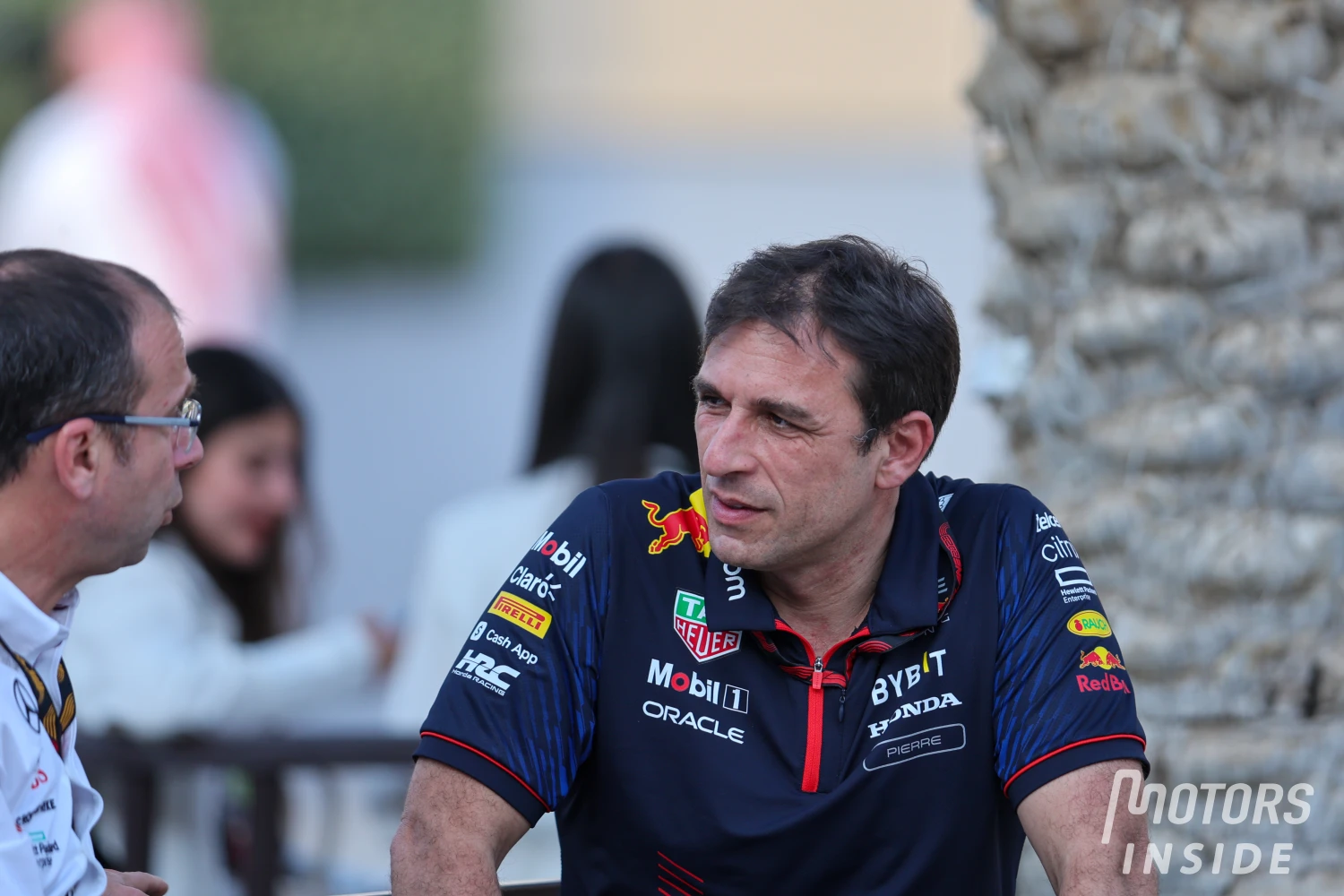
Interviewed by Yann Delpanques on the podcast “Dans la boîte à gants”, Pierre Waché went into more detail about the reasons that make Max Verstappen a talented driver and even more talented than the other drivers in Formula 1.
The driver at the heart of the development of an F1 car.
Technical Director at Red Bull, Pierre Waché admits that it took him some time to understand that the best car in F1 was not necessarily the fastest one in absolute terms, but rather the one that the driver could handle the best. This is truly one of the most problematic aspects that I have been able to develop through experience. But it’s not because of that I fully understood, but the experience you gain in F1 is that making the fastest car is actually making the car that the driver can use to go the fastest. It doesn’t necessarily have to be the one with the most potential. It took me a long time to understand that. It was difficult, but the driver is a big part of the performance and the way you can utilize the car.
It is the driver who, through his feedback in the car, allows engineers to work in a certain direction in order to make the machine more efficient. The feedback you have on the car can come from data and things like that, but then the driver must translate clearly and distinctly to his engineer what he needs, which limits him from going faster, and that’s part of the work on himself and on the transfer of information between him and us.
« The younger the driver you have, the harder it is for them. » Admit it, French. « Depending on the driver you have and their talent, even though all the drivers in F1 are very talented, they have a way of communicating the information they perceive and a way of maximizing the vehicle’s potential. Both are talents. When you have a young pilot, it’s always tougher. Just like when you have a young engineer, by the way. »
Max Verstappen accepts oversteering cars.
The oversteer is supposed to be more difficult to control for a driver because the car can be less predictable and when losing the rear, it becomes uncontrollable. This is not the case with understeer. When losing front grip, the car is more predictable. Reducing speed or giving a steering input in the direction of the slide easily allows for recovering the slide.
But what makes the characteristic of a very good driver, better than the others in F1 for Waché, is the ability of the driver to adapt to what the engineer can give him as a car, with its flaws.
« F1 drivers drive on dry roads, as if we, drivers at our level, were driving on ice. With the speed they have, it’s the limit of grip they have. So when you have a turn to take, if you feel the back starting to want to go in front of the front, you start to think that it’s going to go badly and generally you end up in the ditch. When you have a car where it’s the front that starts to go, it’s much easier to manage with the steering wheel and therefore your back is more stable and you feel much more confident. A Formula 1 driver is the same. The problem is knowing what limit they have (to accept an unstable rear end, editor’s note). »
Max Verstappen thus has the possibility to allow more sliding on the rear end. This means that the car can be adjusted to theoretically be more efficient.
It’s clear that the more talented the driver is, the more rear movement he can accept. After a certain level, all drivers can accept it, but some even more than others. It’s incredible. For an engineer, it’s exceptional because you’re getting closer and closer to the ultimate performance of the car. It’s quite remarkable.
The difference between two F1 drivers.
Max Verstappen, being able to handle a complicated car, clearly masks the abilities of other drivers, including his teammates who are used to driving a less oversteering car.
Sometimes there can be very little difference between two drivers with identical cars, 1 or 2 tenths of a second. But when you have someone like Max who can use the car at such an unstable level of stability, it hides the problem a bit because he can handle a lot. So inevitably, when you take another driver who is not used to it, you see a huge difference because they simply cannot use the car as it is. So you have to reduce the instability a bit so that they can reach their maximum. That’s where the relationship with their engineer is fundamental.