Red Bull preferred Ford over Porsche, but why?
Ford will make its return to Formula 1 in a plot full of twists. It will be a technical partnership with Red Bull Power Trains, the official engine supplier for Red Bull and AlphaTauri, starting in 2026. This partnership follows a complete failure in negotiations between Red Bull and Porsche. So why did Red Bull ultimately choose Ford?

Season 2022 starts, and the Volkswagen group announces with great fanfare its intention to enter Formula 1 with its Audi and Porsche brands – without giving any further concrete details. A few weeks later, the media learns that Porsche is in negotiations to sign an agreement with Red Bull. While the specifics are still unknown, it appears that Porsche’s arrival is much more than just an engine partnership. The acquisition of all or part of the Milton Keynes-based Red Bull team is at stake.
September 2023, Christian Horner declares to the media that Red Bull does not intend to sell its shares to Porsche. Indeed, during the negotiations, Red Bull estimated that the risks of losing control of the team and its independence were too significant.
The buyout of the capital was stopped by Red Bull, and Porsche did not wish to pursue the partnership. While the German manufacturer has not commented on its future in Formula 1 for now, there are still other candidates by 2026: Williams and Haas. AlphaTauri has been excluded since the arrival of Ford means that Red Bull’s second team will also be powered by Red Bull Ford Power Trains.
Audi, for its part, will announce later the acquisition of a portion of Sauber’s capital and will provide engines for the Swiss team starting in 2026.
If at first glance, not choosing Porsche and opting for Ford seems like a bad plan for Red Bull, it turns out that several reasons make this option more legitimate than it seems. Overview.
The Formula 1 audience is getting younger.
In a recent statement, Stefano Domenicali, CEO of Formula 1, expressed his happiness with the rejuvenation of the Formula 1 audience. Indeed, the average age has decreased from 35 two years ago to 32 today.
This rejuvenation of the F1 audience means that expensive brands are still a way to make dreams come true, but they don’t necessarily have a very effective conversion rate. The F1 audience won’t be buying a Porsche every day. Unlike Red Bull cans.
The economic model at Red Bull is based on youth.
Red Bull sells cans of energy drinks. The Red Bull group is recognized worldwide for their masterful marketing skills. By using the best athletes from each sport and aiming to generate maximum exposure, they are able to prosper primarily through the sale of energy drinks worldwide.
But Red Bull doesn’t just make money from energy drinks. Once launched, each activity of the group must become independently profitable. That’s why when Red Bull F1 wins, the entire ecosystem wins, including energy drink sales.
The young people are buying energy drinks.
The market for energy drinks is mainly focused on the 15-24 age group. Indeed, it is during university parties that we find the highest consumption of energy drinks. This is the case in France, but also abroad. The profile of Red Bull consumers is therefore young.
The American market prefers national brands.
The American market is very important for Red Bull. It is indeed the primary market with no less than 2 billion cans sold each year. Formula 1 is increasing its presence in the United States with three races in 2023 that are planned to continue in the long term. We are far from the 2010s with the complete absence of Formula 1 in the United States.
On its side, Ford is an American brand. It is therefore legitimate that Red Bull and Ford want to associate. Porsche also had significant appeal for the United States, as it is one of the largest markets for car sales for the German manufacturer. On this level, there is equality, even though the hearts of Americans will be more easily touched by a national brand.
The clientele of Ford vs that of Porsche.
Despite what one might think, the customer base for new Ford cars is not necessarily younger than that of Porsche. In fact, by combining several studies, the average age for purchasing a new Porsche is 49 years old, compared to 54 years old for Ford. However, the average shopping basket does have a significant difference.
If a Ford remains one of the most affordable cars, that is not the case for a Porsche. Porsche’s clientele therefore deviates from the typical profile of energy drink consumers. From a marketing standpoint, partnering with Ford for Red Bull seems more interesting on paper, although less prestigious.
Neither Ford nor Porsche are currently present in Formula 1.
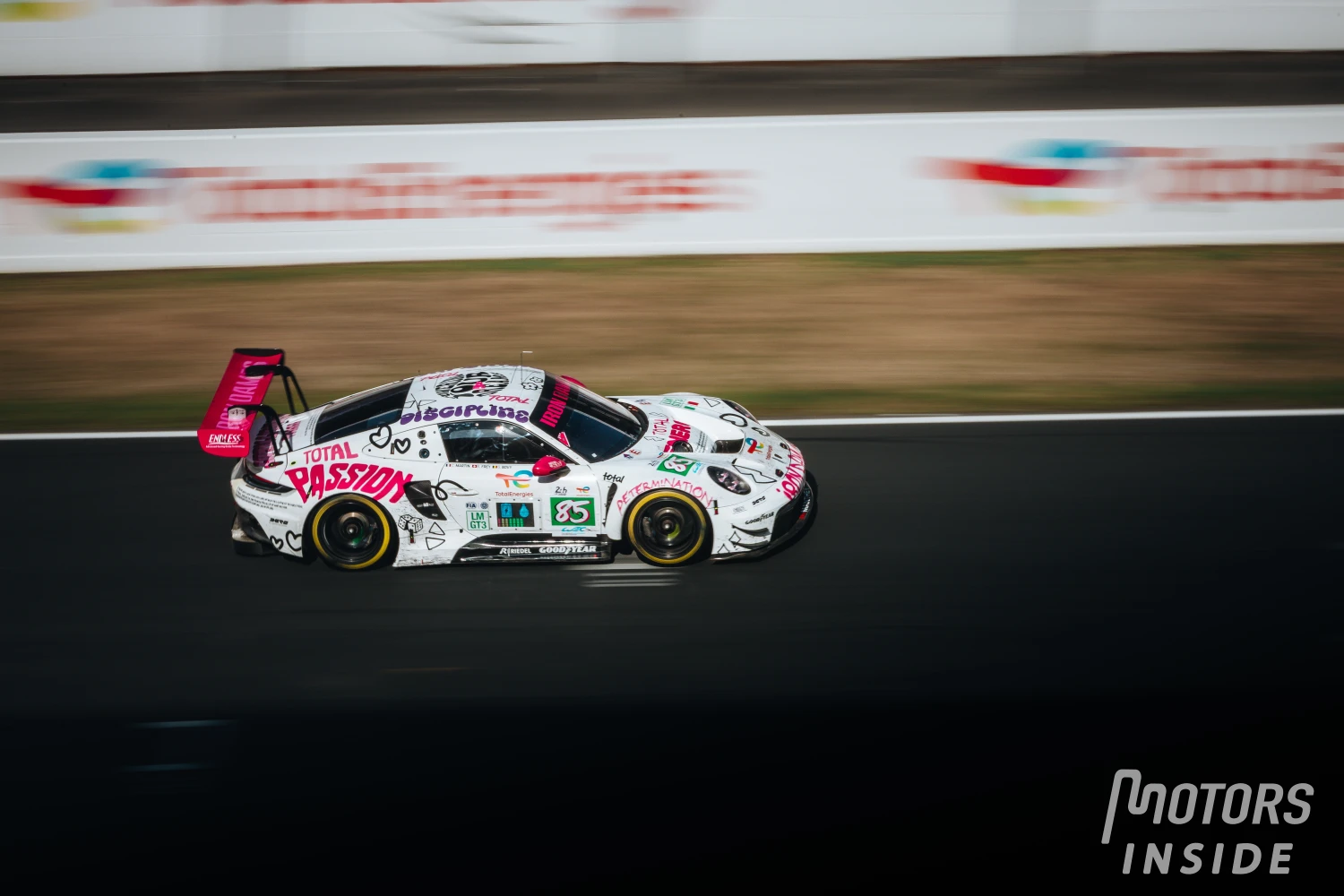
Ford, Porsche, same status. Both car manufacturers are involved in motorsport. While Porsche is active in endurance and GT racing, they have also recently entered Formula E. On the other hand, Ford is heavily involved in American motorsport (Nascar, Indycar) and has also been present in the WRC for several years.
Nevertheless, among these two brands, one has a significant history with Formula 1, marked by numerous victories. Ford indeed has one of the longest histories with F1 among all manufacturers. After Ferrari and McLaren, it is indeed the third brand with the most successful track record. Ford and Ford-Cosworth have held an important position in F1 for 43 seasons out of the 72 that Formula 1 has.
Ford and Red Bull have already been associated in Formula 1.
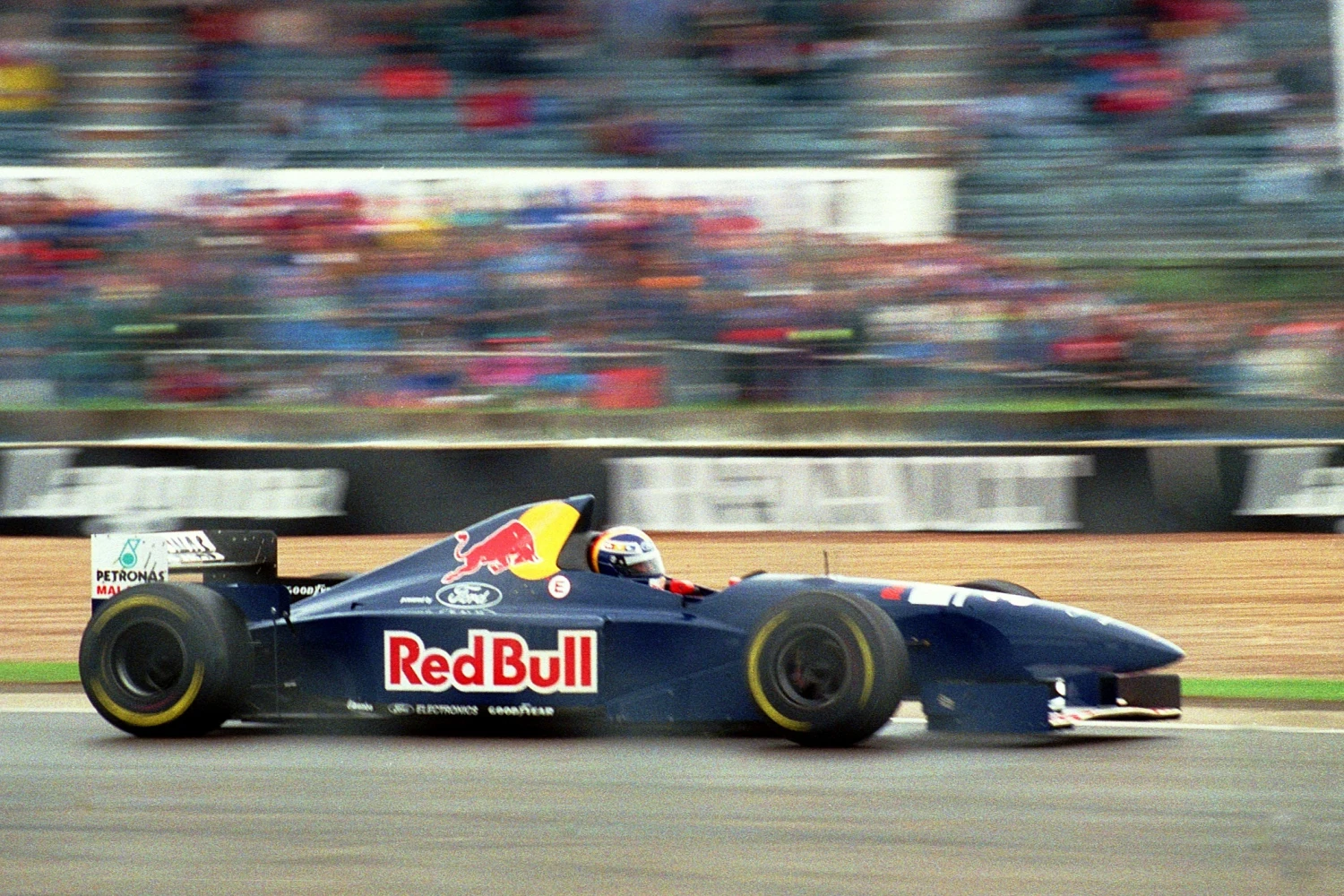
Ford and Red Bull have already been partners in F1. In fact, when Sauber was powered by Ford in 1995, Red Bull was the main sponsor of the Swiss team. A few years later, Red Bull will buy Jaguar to enter F1 as a team, and later acquire Minardi to become Toro Rosso (now AlphaTauri).
This return to F1 with Ford is therefore a return to the past for both entities that have already had the opportunity to associate their names in Formula 1.