FIA steps up F1 car inspections
From now on, after each race of the season, the FIA will randomly select a classified car and subject it to a higher level of checks and analysis than usual, focusing on particular areas. The aim is to ward off any attempted infringements.

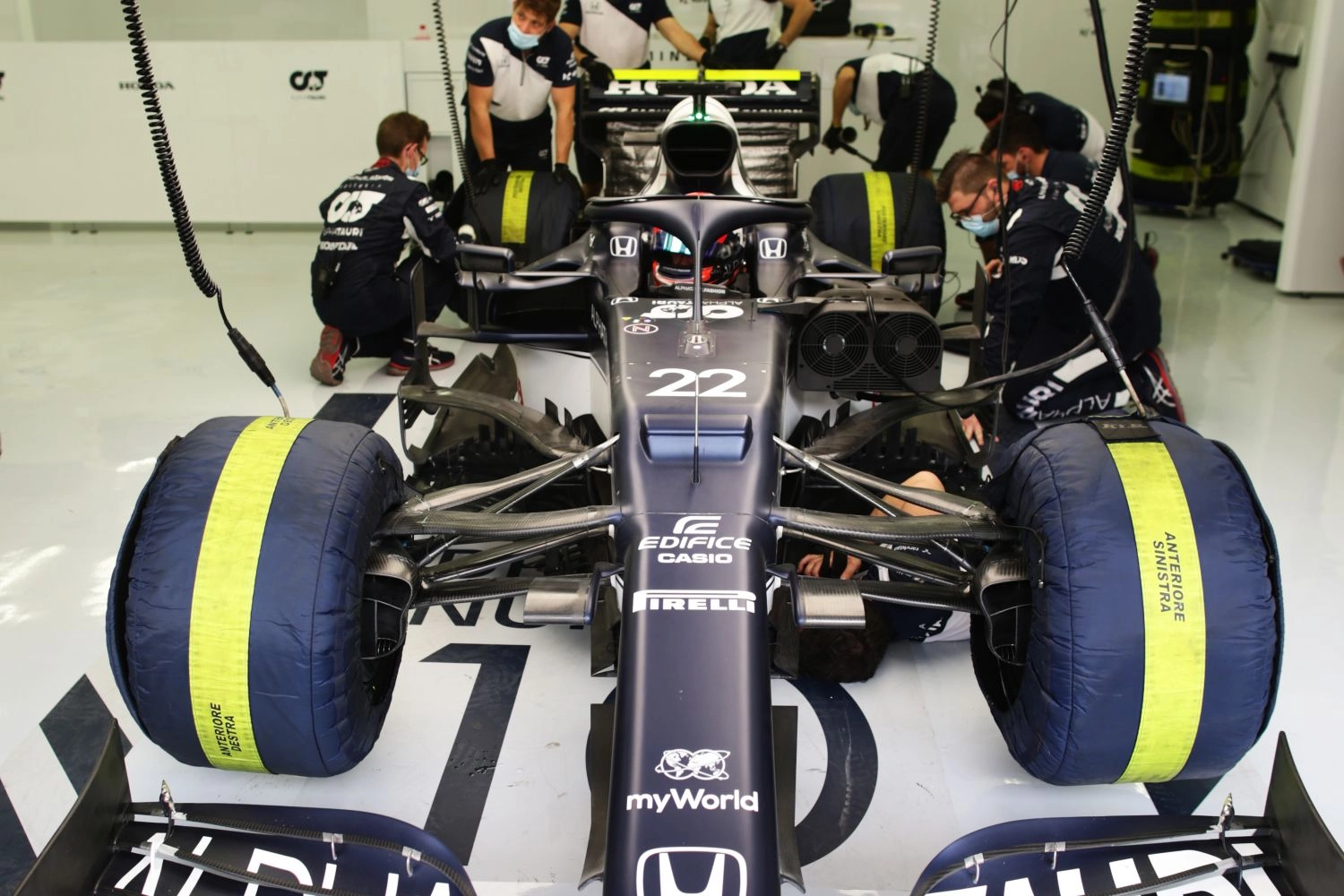
The sporting regulations of F1 state that « competitors must ensure that their cars comply with the eligibility and safety conditions throughout each practice session and race » and that « the presentation of a car at the first technical inspections will be considered as an implicit declaration of conformity ».
A new philosophy
Cars are not scrutinized in detail every weekend. For example, after the Bahrain race, all cars that finished the race were weighed, and all of them underwent a series of tests related to the parameters of how their power units were used during the race, a procedure that is out of the ordinary.
However, only the Red Bull of Sergio Perez and the AlphaTauri of Yuki Tsunoda were subjected to thorough checks of all possible dimensions. In addition, nine cars were specifically checked for oil consumption, and oil samples were taken from the Mercedes of Lewis Hamilton and the Red Bull of Max Verstappen. Hamilton’s car also provided a fuel sample.
This represents a total change in philosophy because until now, during post-race technical checks or at any other time during the weekend, the FIA used to go in depth by dismantling specific components for a more detailed analysis. The change is such that it was revealed to the teams in a technical directive, and then explained to the whole world through a note from the stewards of the Bahrain Grand Prix.
The reason for this process is that obviously cars have become more and more complex, and very difficult to disassemble, explains the technical issues manager of FIA single-seaters, Nikolas Tombazis.
« All teams are very suspicious of their competitors, and they think that team X or Y may be up to something. I’m sure that occasionally, certain things might have happened under our radar. We don’t have any suspicions or anything at the moment, but we thought it was a good practice to start checking the cars a little more thoroughly. »
To help with the process, the FIA added three staff members. One of the reasons for this pre-warning was to ensure that teams always have service engineers capable of answering any questions arising from inspections.
« On Sunday after the race, they must be able to rely on the necessary support at the headquarters, if needed,” explains Mr. Tombazis. We don’t want them to tell us: “John is having a barbecue, sorry, we don’t have the person we need.” We want this person to be available. »
« Obviously, we hope to never find any errors because we don’t want people to cheat, of course. But in the event that someone is cheating, we would like the team to tell us at the beginning of the check if the other car is identical or not. »
If we have suspicions about a car, we can always select any other car to do the same thing, it does not change our normal functioning at all. But since it is a random check, it can theoretically concern all cars at any time and, therefore, if someone had something doubtful, they will think twice about it.
« If someone had something to doubt, they will think twice about it »
On the other hand, these new checks are not intended to reveal what appears to be last year’s biggest technical scandal, the Racing Point brake duct copying case: « As for the copying aspect, we are conducting further checks for this. And we have already performed some, for example, this year, and these are separate. »
What are the steps of the process?
Essentially, a car number is drawn from a hat. This car will undergo the standard checks in the inspection lane and will then be returned to its garage.
« What generally happens is that the car is selected immediately after the checkered flag and communicated to all teams,” explains Tombazis. « This car will be given priority for passing through the platform, weighing, and the usual normal checks, so that it can return to the team’s garage as quickly as possible.
« Two or three people from the FIA will be there to start. Then, the FIA personnel who complete the normal post-race checks will join them. It will start with two or three and end with five or six people present.
The actual work of dismantling the car will be carried out by the team’s mechanics as they are the ones who best master their single-seater: « We do not have the necessary knowledge,” admits Tombazis. « We have at least two people in our team who are senior mechanics, or former mechanics. And we did this in order to have this higher level of familiarity with the cars. But cars are very specific today and you can’t just start dismantling them.”
The FIA staff will know in advance the elements of the car they wish to inspect: « We will divide the car into about twenty macro-zones,” explains the Federation representative. « And we will select two or three to check thoroughly each time. As we gain confidence and ensure that we can do it from a logistical point of view, we can increase this number, if all goes well.”
Extra-long Sundays
Inevitably, there will be a time pressure element. During the races, cars and equipment must be packed to be transported on Sunday evening. In Europe, it is always urgent to load the cars into transporters and leave. Now, teams will have to wait for the governing body staff to finish their work.
« There is no time limit. So if we find deeply troubling aspects, the worst-case scenario would be to tell the team: “Sorry, you have to stay here until we finish.” It is clear that we will try to be reasonable. And we do not want to disrupt the whole world by making them miss their flight in the cargo. And we have the option, if something is too complicated, to put it in a box and seal it, then check it later. We have not set a maximum deadline, but we will try to be reasonable, and not mess up everyone’s schedule. »
Highlighting the ceiling of costs
An intriguing aspect of the checks is that, although they mainly concern technical compliance, they will also provide the FIA with valuable information related to monitoring the cost cap: « We would do this work anyway, unrelated to the cost cap », says Mr. Tombazis. « However, what we are doing more thoroughly during this process is recording the car parts. »
Translate: « Teams must declare in their cost ceiling the stocks they use. It is clear that a car can contain 15,000 parts. We cannot verify 15,000 parts. But if a team says that these are the 15,000 parts that are on my car, we can verify 50 random components and check if they are on their list, and keep them honest this way. »
Therefore, through these new inspection methods, we can see that the FIA is doing everything possible to counter any attempt at cheating, in order to ensure compliance and fair play in a sport that is so technical.