Summary of upcoming changes in F1 in the next seasons
The 2021 season was supposed to be the first of a major evolution in F1. But the economic and health situation led to a one-year postponement of the implementation of the new regulations. Are you lost? Here is an overview of the changes coming in F1 in the coming years.

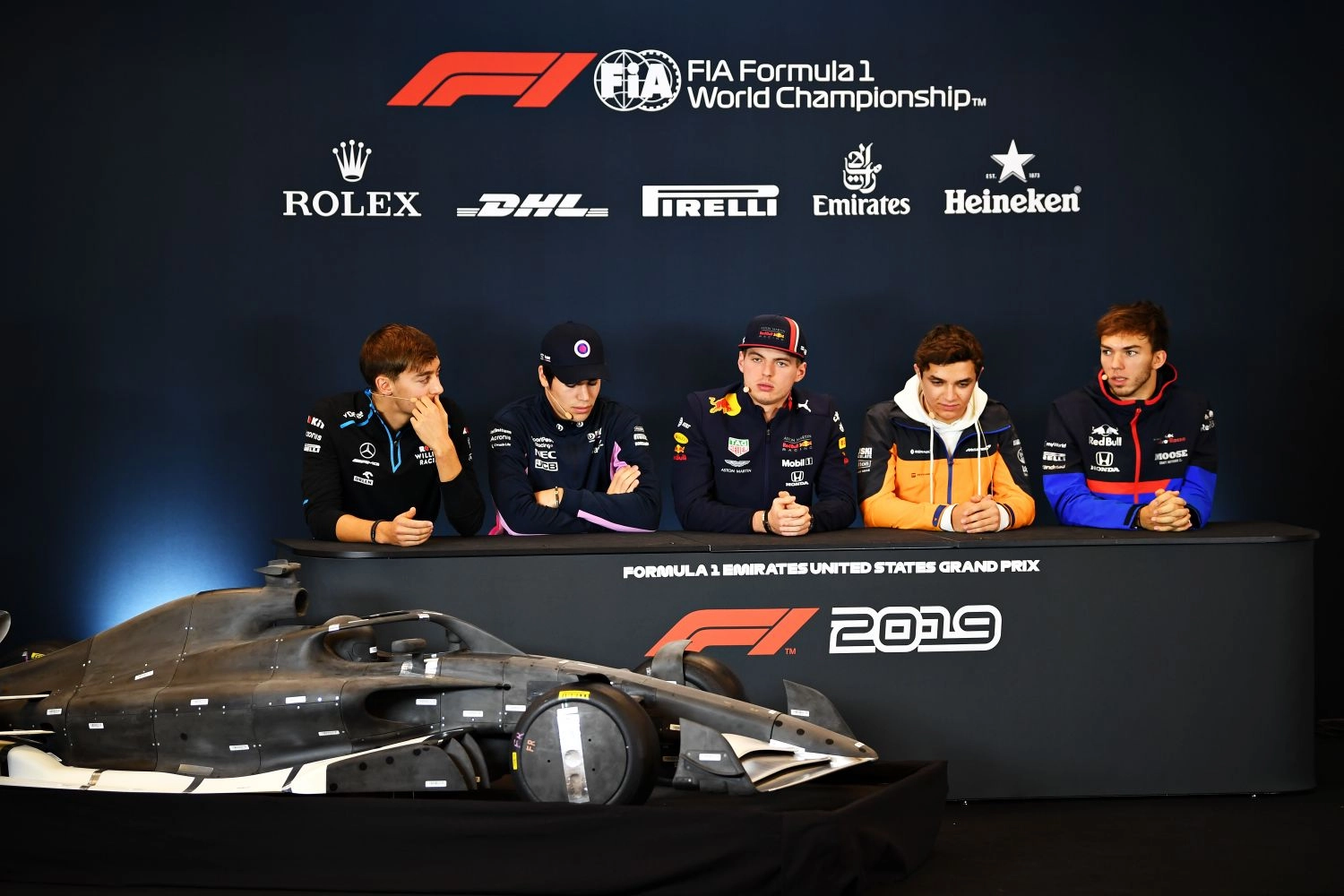
This winter, the Formula 1 Commission announced new measures for the upcoming years, including the engine freeze for 2022.
One of the flagship directives proposed by the FIA is the possible introduction of sprint races to determine the starting grid for the Sunday race, instead of the traditional qualifying session.
The aim pursued by F1 and the FIA is to attract new people and ensure a more exciting format: « All teams have recognized the major importance of engaging fans in new and innovative ways to ensure an even more exciting weekend format », as stated in the FIA and F1 statement.
We summarize the measures taken for 2022 and the following seasons.
OFFICIAL: Engine development frozen from 2022 to 2025.
This is one of the main measures taken. As of 2022, engines will be frozen, meaning that it will be impossible for an engine manufacturer to continue to develop and therefore improve its power unit: « A vote on freezing the development of power units was taken during the meeting, and the proposal was unanimously approved by all teams and power unit manufacturers. Thus, engine development will be frozen from the beginning of 2022. »
So looking for a new engine for 2022 due to Honda’s withdrawal, the Austrian team Red Bull will be able to keep the Japanese manufacturer’s engine until 2025, when new regulations changes are expected.
The Austrian team has thus decided to set up its own structure named Red Bull Powertrains to enable the supply of engines to the two F1 teams: Red Bull and AlphaTauri.
OFFICIAL: An engine that “evokes emotion” for 2025
Regarding the engine from 2025, a roadmap is on its way. The era of hybrid turbo V6 engines (introduced in 2014) will come to an end in 2025 and the leaders are already looking at the next power units that will equip the cars.
In a press release, the FIA and F1 inform about the main objectives for the upcoming power units:
- Environmental sustainability and social relevance to the automotive sector
- A fully sustainable fuel
- Create a powerful and emotional engine
- Significant cost reduction
- Attractiveness to new powertrain manufacturers
Strongly criticized, the noise of the current single-seater’s turbo V6 engines does not enchant the public, that is why F1 would like to establish a more attractive engine. These new engines would be less polluting and will be part of the carbon neutrality goal targeted by F1: The definition of objectives for the next generation of F1 cars and engines is of the utmost importance for the FIA and Formula 1, and with the teams and engine manufacturers, there is strong alignment on the general goals – especially the need to reduce costs and achieve carbon neutrality.
IN TEST: Sprint races to liven up the weekends
Friday is very uneventful for someone who wants to see some action in Formula 1. Saturday, the qualifying rounds add a bit of excitement, but are rarely spectacular. Ultimately, if you’re not a fan of F1, only the race could truly entertain you… so imagine a spectator who pays for their seat in the stands on a Friday. Watching 20 cars go by one after the other is not ideal, and Formula 1 has understood this well.
The teams have approved the test of a new weekend format this season, which will include a qualifying session on Friday evening to determine the starting grid for a 100km sprint race on Saturday afternoon. The result of this race will determine the starting grid for the main race on Sunday. F1 is thus achieving three goals in one go. Spectators on Friday, Saturday, and Sunday will all have a more significant spectacle and will therefore all have an interest in buying a ticket from the beginning of the F1 weekend.
Before approving this weekend schedule, 3 Grand Prix will be the scene of a real-life test as early as this 2021 season. The Grand Prix of Great Britain, Italy, and Brazil are concerned.
Formula 1 had at one point considered making weekends shorter, to only two days, thus allowing considerable savings for the teams. This idea was not retained, probably due to the financial loss associated with the lack of spectators at the circuits on Fridays of Grand Prix weekends.
OFFICIAL: No change of manufacturer until 2024
Pirelli has won the F1 tender until 2024. There will therefore still be only one tire manufacturer in the next 3 seasons. The tire compounds from C1 (Soft) to C5 (Hard) will also remain the same.
OFFICIAL: Larger wheels and tires allowing for longer attacks
One of the major visual changes concerns the tires. Formula 1 cars will indeed be fitted with 18″ rims. For comparison, currently Formula 1 cars are equipped with 13″ tires. It is therefore a very significant gap that aims to bring Formula 1 cars closer to road cars. F2 and FE already use these new rims.
To make them less impactful from an aerodynamic point of view and to somewhat disguise them, engineers are studying the possibility of putting wheel covers on the rear wheels in particular.
Pirelli has conducted numerous private tests in recent months and hopes to be able to provide in 2022 tires that will allow drivers to improve their performance while providing more excitement. The main issue with the current tires is their operating window. It is so narrow that when a driver is attacking behind another car for more than a few laps, he has to slow down. This obviously hinders the show, and this is an improvement that is planned for 2022.
OFFICIAL: A completely revised air regulation
A new style of Formula 1
This aero regulation will generally transform the look of F1 cars starting in 2022 with a more futuristic and fluid style. The halo is retained and no additional appendage is added to improve head protection for the driver. The front and rear wings are completely redesigned and, of course, subject to the precise interpretation of each team by exploiting the intentionally left gaps in the technical regulations.

More ease to overtake.
The objective is not only to bring a new style to Formula 1 but also and above all to improve the show in the race by allowing to reduce aerodynamic disturbances behind the Formula 1. Drivers will therefore be able to overtake more easily and catch a better slipstream.