This morning, Thursday, February 20, Mercedes is running a lot. Hamilton has already completed 91 laps by 12:15 PM and the team is not just adjusting his car. In fact, onboard camera footage (which we cannot show due to image rights) shows that a new system is being tested by Mercedes.
These images show Lewis Hamilton pulling on his steering wheel at the start of the straight on the circuit’s starting line, then pushing the wheel back a few seconds before the first corner. Similar to the DRS principle, this action should obviously reduce the aerodynamic drag of the W11 on the straight. However, for now, the explanations are hypothetical.
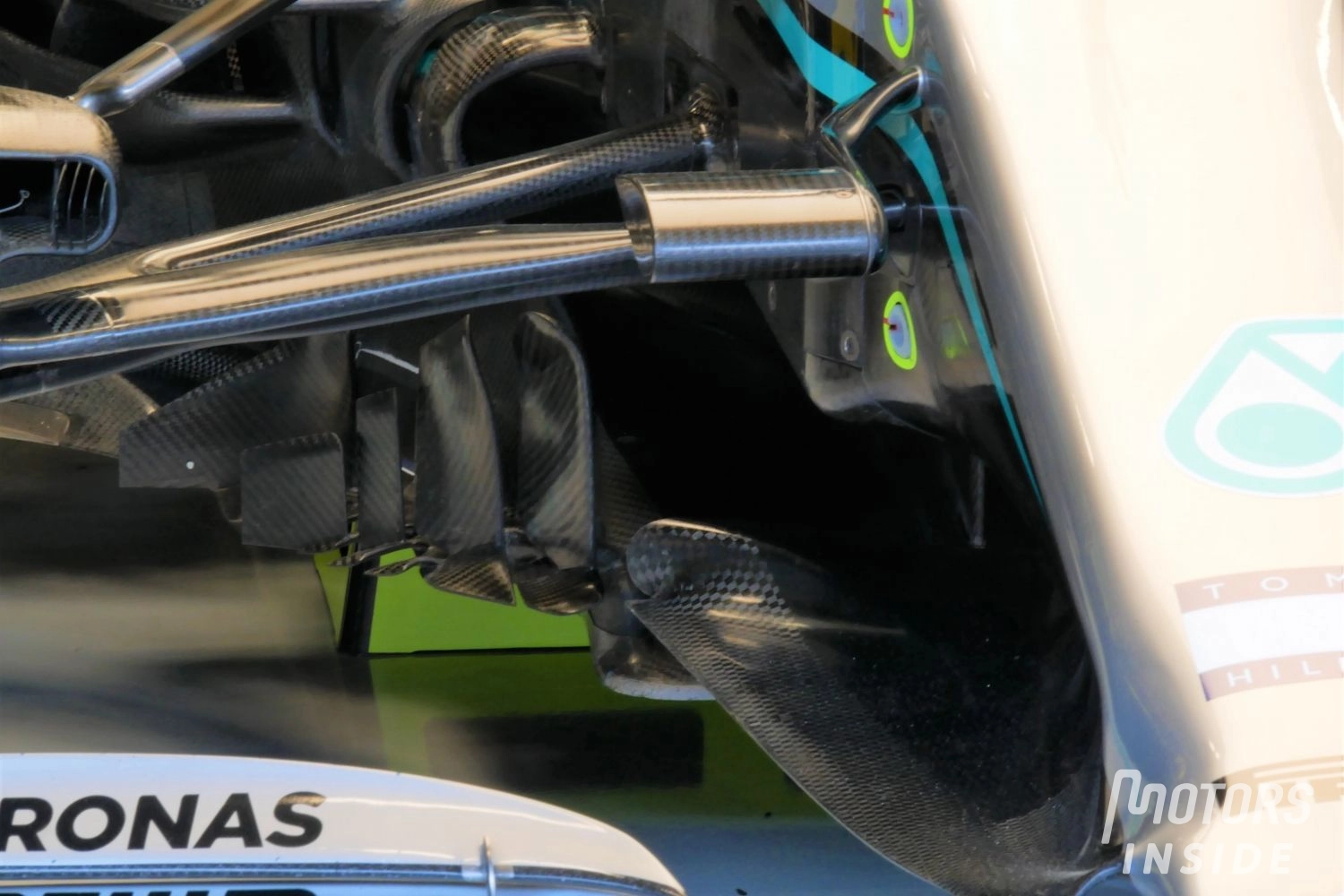
For some, pulling on the steering wheel causes a movement of the front axle, bringing the two front wheels closer together. According to the study of the images, it appears that the wheels indeed come closer at the top. Is the width of the front axle reduced? Are only the torsion bars displaced to “tilt” the wheel inward? It’s still too early to say given the limited information available at the moment.
Nevertheless, innovations of this type inevitably lend themselves to debate. From a regulatory standpoint, no dynamic movement should occur at the level of the wings or the suspension. Moving the wheels, therefore, can, depending on the interpretation, be part of this prohibition.
Obviously, if Mercedes is testing this system, it’s because after thoroughly examining the 2020 technical regulations, they believe it’s legal. If the test is successful, it’s likely we’ll hear about it very soon…