Update on the 2013 tires after Jerez
After the initial testing of the prototype tires in Brazil in 2012, Pirelli delves into the core analysis of its new components with four days of testing in Jerez, which seems to confirm more pronounced wear.

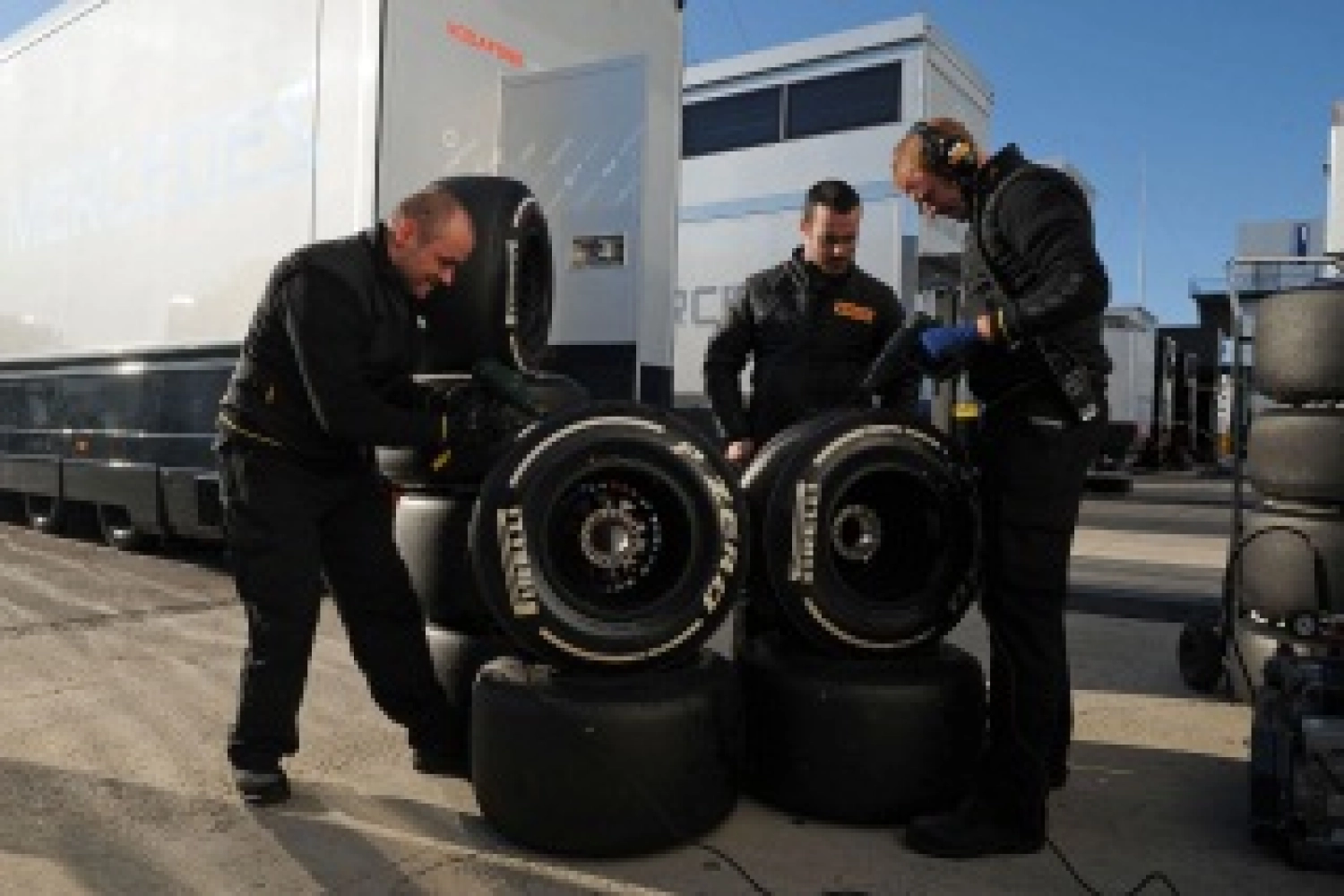
A few weeks ago, Paul Hembery, head of the sports division at Pirelli, outlined the characteristics of the 2013 tires for us. He was delighted to have been able to benefit from preliminary information with the use of prototypes during the first free practice session in Brazil in 2012. The four days of testing in Jerez were an excellent opportunity for Pirelli to gather as much data as possible on the behavior and wear of the new components.
First of all, here are some figures indicating the use of new tires during the four days, with a comparison to 2012 usage:
| Tires | Jerez 2012 | Jerez 2013 | |
| Soft | 57 | 33 | |
| Medium | 91 | 137 | |
| Hard | 33 | 74 | |
| Intermediate | 0 | 3 | |
| Rain | 0 | 1 | |
| Total | 181 | 248 | |
These figures provide some interesting information. On one hand, 37% more tires were used compared to last year. This last point seems to simply show, as promised, a more pronounced wear than in 2012. On the other hand, focusing on the longest uses of the same set of tires, the average of 24.3 laps in 2012 dropped to 18.6 laps in 2013. This information should obviously be taken with a grain of salt since many factors regarding testing conditions can greatly influence these figures. Nevertheless, they confirm the points announced by Hembery concerning the nature of these new tires.
The initial reaction from Pirelli is satisfaction with the performance of its new tires: « The four days spent at Jerez, with most of the new cars, gave us a good overall impression of the 2013 tires on track, with their new components and manufacturing processes […] It seems we are on the right track, and the changes we wanted to see were present: the tires are faster and have a narrower optimal usage window than last year, » indicates Paul Hembery. However, he admits that the testing conditions made it difficult to conduct a real in-depth analysis and qualification: « The conditions at Jerez were not ideal this year, with a very abrasive track – the most abrasive of all those we visited last year – and consequently, real conclusions were difficult to establish ».
Hembery and his team are now relying on the next two test sessions in Barcelona, starting from February 19, to refine the specifications of these new tires. This last circuit is expected to have lower temperatures than Jerez, as well as less abrasive asphalt.