Exclusive Interview with Jean-Michel Jalinier, CEO of Renault Sport F1
During the press conference organized today by Renault Sport F1, its CEO, Jean-Michel Jalinier, opened the doors of his office for an exclusive interview about Renault's strategy in F1.

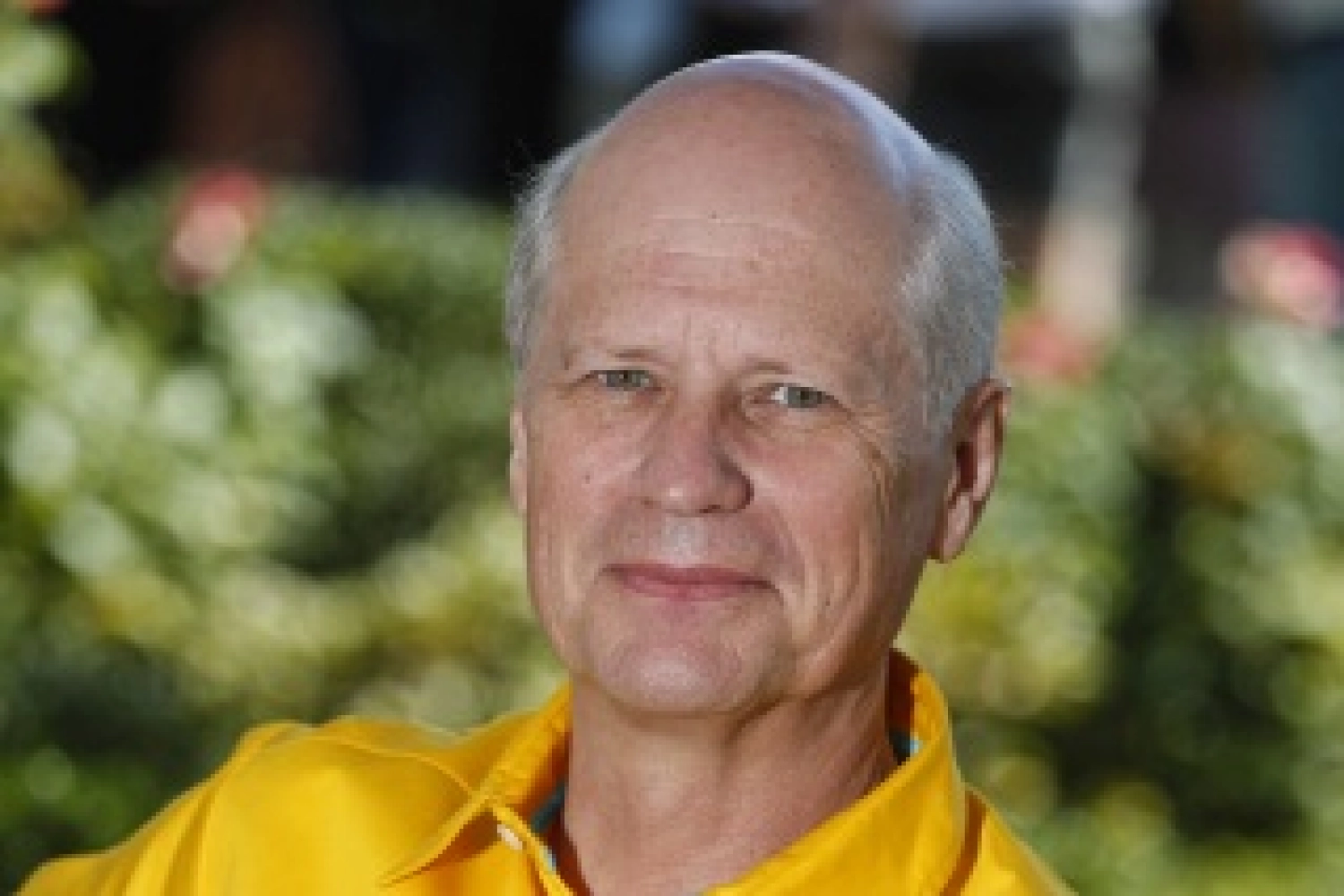
You took over the leadership of Renault Sport F1 a little over a year ago. Until the 2012 Abu Dhabi Grand Prix, Jean-François Caubet was by your side as General Manager. You have taken over the responsibilities that he had, occupying the positions of President and General Manager of Renault Sport F1. What has this changed for you, in your daily schedule, and in the organization of Renault Sport F1?
For a year, we divided the roles: I was the president and Jean-François Caubet was the general manager. Jean-François handled the daily operations, which allowed me the time to deepen my understanding of the F1 world, the apprehension of the Formula 1 environment, and the stakes of Formula 1. It was a good solution for my arrival in F1. So, since Jean-François’ departure, I have reorganized the general management structure. I have become the CEO but rely on a team of three people: Rob White for the technical side, Yves Arbeille for Business Administration, and Olivier Gillet for marketing. The roles are therefore distributed differently compared to Jean-François’ time: part of Jean-François’ activities have been divided among these three individuals, and I have also taken on part of the role but not 100% of his activities.
France has now switched to pay TV, with risks of losing audience. Is this a trend that worries you and impacts the media exposure you wish to generate through your investment in F1?
« It’s certain that the audience will change. Now we have a new partner who, I’m sure, is eager to have a very high-level coverage of F1. They will therefore contribute to the media exposure and awareness of F1. In addition, there is an open access magazine included in the contract. We are counting a lot on this magazine to reach a much wider audience. So we will live with this, we will get to know our new partner. The balance will certainly be different from the balance we had with TF1, but I am confident that we will find a very good balance. »
You report directly to Carlos Ghosn, the CEO of Renault. With respect to Renault’s board of directors, does Renault Sport F1 have a financial profitability objective or is it primarily a means of communication regarding the group’s engineering excellence?
Renault is primarily in F1 to develop the company’s image and reputation. The reputation because F1 is broadcast all over the world. It’s 900 million cumulative viewers for live broadcasts and two billion if we include replays. We have potential customers in the north of Brazil because they know Renault through F1 since F1 is broadcast by TV Globo everywhere, even in the most remote corners of Brazil. We have an image objective because F1 represents the pinnacle of sport, the pinnacle of technology. So if Renault is capable of competing at this level, Renault demonstrates its technological excellence, thereby enhancing Renault’s image and giving confidence to customers who might hesitate between two brands. They will come to Renault because Renault shows its excellence through F1. That’s why Renault is in Formula 1. To gain recognition, you need to be visible. To demonstrate technological excellence, you have to win, and to be visible, you have to win to get more airtime. So for Renault Sport F1, there is now only one objective, which is to win on the track.
From the profitability standpoint, there are costs on one side. These are the costs we have here at Renault Sport F1, which are 100% borne by Renault since we are a 100% subsidiary of Renault. In terms of revenue, there’s the fact that we sell the cost of the season’s engine supply to each of our teams. These revenues are lower than the expenses. So, there is a net expense on Renault’s part. The return on investment for this net expense is measured by the return in terms of marketing, notoriety, and image. We value this return. For every dollar invested, we have, depending on the countries, between three and five dollars of media returns. So, it’s a very profitable investment when you have a return of three to five. However, to be completely fair, Renault’s part of the investments is cash, whereas the return in image is non-cash. It’s image, it’s notoriety.
Renault signed a long-term contract with Red Bull Racing in 2011, ensuring the latter’s presence as your client during the 2014 regulatory change…
« Yes, we have an agreement with Red Bull. But it is an MoU (Editor’s Note: Memorandum of Understanding, a legal document that does not have the value of a contract), but we do not have a signed contract with Red Bull for the supply of an engine in 2014. »
You must ensure perfect confidentiality in your exchanges with the four teams you supply. How do you manage the proximity of Red Bull Racing to Toro Rosso, equipped with a Ferrari engine? Is it conceivable for Toro Rosso to come under the Renault umbrella with the regulation change in 2014?
« There is really a logic in Red Bull and Toro Rosso sharing mechanical components. In order to share these mechanical components or ensure synergies, within what the FIA sporting regulations allow, there is an interest and it can only be done if the engine is the same. So yes, it makes sense for Red Bull to ask us to supply Toro Rosso. If we keep our four current partners and add Toro Rosso, we reach five teams. We asked ourselves the question: we could go up to five teams. It’s really the maximum we can do because we really want to provide quality service to all our teams. We have already gone from three to four teams. With four, we know how to do things well. We learned it with Williams last year; they won. They have made a lot of progress. Following the same principle, we could go to five. Beyond five, we don’t want to go. It wouldn’t be reasonable. We don’t want more presence on the grid because we also have to be able to compete against other competitors. But if in the future, we go back to three teams, that’s fine with me too. Three teams are very good. It’s manageable and makes for a good balance. »
Carlos Ghosn is set to make an announcement tomorrow in Tokyo about the future of Nismo Motorsport, the motorsport division of Nissan. Can we imagine a Nissan entry into F1, or does the Alliance plan to continue relying on Renault’s presence as an engine supplier and as a sponsor with Infiniti at Red Bull?
« Today, we have this logic to avoid mixing images and to prevent confusion in the public’s mind, but nothing is set in stone. So every opportunity and possible synergy should be put on the table and remain open-minded about it. »
Let’s now move on to the 2014 V6 engine. With all the new features that this new turbo V6 represents, what is the ballpark figure for the development budget?
« The price of the season that we will sell to our teams is made up of three components: the engine price, the amortization of the entry fee, and the cost of on-track assistance. This makes up the season price. In the current dealings and negotiations, it is obviously a competitive element. So today, I cannot provide details on any of these three components without releasing information that our competitors could exploit. But I can give some rough figures. Today with the V8, the cost of a season for a team is about 15 million euros. It’s roughly ten million euros for the technical part and about five million euros for the electrical part and the on-track assistance. Instead of 15, we will be more in the range of 20 with the 2014 engine. That gives a rough idea. »
How is this engine financed? Is it funded through Renault Sport F1’s own resources, or have you been able to receive financial advances from your current client teams?
« Everything is directly funded by Renault. We will then recoup this initial investment through a portion of the price that we will charge each season to our partner teams. But all the initial financing is provided by Renault. There was no pre-financing scheme by our teams, which could have been a very good option but was not adopted. »
The new regulation is set for seven years. This was part of the manufacturers’ willingness to commit to such a duration. However, there is no longer the logic of freezing technical developments as we have seen in recent seasons. Was it necessary to commit to these seven years?
Seven years, that was the result of discussions among everyone, an agreement we reached with the FIA. It’s in our interest, it’s in the teams’ interest to amortize this entry fee over a longer period. It is clearly in the FIA’s interest to stabilize the sport and the costs within the sport. I think there is truly a common interest from everyone in stabilizing this entry fee.
We are dealing with a powertrain that is still very complex. It’s not going to be very good right off the bat. It will need to evolve. So we will have developments in the early stages of the engine’s life, the first year, the second year. Then, it will need to be stabilized. We must maintain a small possibility for evolutions because that’s what allows differences between constructors and fosters competition. But it must be kept within a well-framed and measured scope to maintain the overall costs of F1.
When we look at what’s happening in other disciplines, like the World Endurance Championship, we can see that several engine technologies are competing (hybrid gasoline with Toyota, hybrid diesel with Audi, gasoline for other engine manufacturers). Is this a concept you’d like to see in F1 in the coming years? Or do you prefer to show who is the best within the same technology?
« No, we do not want a technical regulation that is too open. Of course, it’s extremely tempting to have one because we could unleash our ingenuity. But if we do that, we open the door to costs that are totally uncontrollable. F1 wouldn’t survive that, and neither would we, because if costs increased, we could no longer afford it, and thus we would leave F1. So we have to control costs while being able to demonstrate technical superiority and therefore the possibility of developments that are well-regulated. It is possible to do that through regulation. »
Before the final adoption of the 2014 technical regulations with a V6, there were discussions around a four-cylinder. Renault was very much in favor of it. Is this a completely abandoned path?
« For the next seven years, it is set aside. In seven years, I don’t know what the discussions will be about. We were very interested in the four-cylinder because it’s even easier to bridge the gap between F1 and the production car that is on the street. Well, in the end, the engine is a V6, but for us, the important thing is the 1.6L displacement. Because 1.6L is the displacement of a Clio, a Megane, a Sandero that is on the street. So the 1.6L allows us to communicate effectively. »
So for you, the most important thing is the engine displacement rather than the engine’s architecture itself?
« The most important thing is that in F1, which is the pinnacle of motorsport, we are also focused on reducing engine size and, above all, on reducing consumption. To reduce consumption, we rely on energy recovery systems, which are the future systems for production cars.
Today, you talk a lot about the connections between the competition and the series. Can you explain these bridges to us? Is it more about exchanges on concepts or rather about personnel exchanges?
There are truly both aspects. There is a part that involves looking at specific engine components, such as the surface coating of the cylinder that comes from F1. And then, there is another part that is intangible but extremely important, which is the exchange. The exchange of engineers who come to Renault Sport F1, gain experience, and then return to the Renault world, bringing their expertise from Renault. This exchange is extremely important and happens in both directions. Regarding calculation methods, we had engineers who arrived with the latest advanced calculation methods from Renault. They returned with modeling expertise within these calculation methods that were more advanced than what was available here. This is a concrete synergy.
We know that Renault has undertaken a strong strategy towards electric vehicles, prominently featured in the new regulations. I assume there have been numerous discussions on the topic to gain expertise in this area.
« Yes, there is a very specific example, it’s the development of Twizy with a small electric motor. This small electric motor arrived at a time when Renault had just entered KERS and had just mastered KERS. We’re talking about small motors of the same type. The technical validation of the Twizy motor was done here at Renault Sport F1. It’s a direct crossover. »
To design this new V6 engine, were you able to benefit from studies carried out in the past, or did you have to start from scratch?
« We started from a completely blank sheet. However, we based it on our preliminary work that we had done on the four-cylinder inline engine because for the four-cylinder inline, we had to design a combustion chamber with direct injection and thus gain initial experience. Everything we learned from the four-cylinder, we applied to the V6, but the technology is very different from what was used when Renault first entered Formula 1 since direct injection didn’t exist back then. »
In terms of workload distribution between the 2013 V8 and the 2014 V6, where do you currently stand?
This year, we are on a continuous wedge. Of course, there is already a team that has been working exclusively on the V6 since last year. However, there are still people working on the start of the season, that is, the validation of all the engines for the beginning of the season. Gradually, people will shift since we will have fewer and fewer bench tests to perform on the V8 and more and more on the V6. It is therefore a progressive curve throughout the year. By the end of the year, we will be 100% focused on the 2014 engine before starting to work on the specifications for 2015.