Are women ready to see a female driver in F1?
On the occasion of International Women's Day yesterday, casinoenlignefrance.eu.com reflects on the possible arrival of a woman in Formula 1 in the coming years, giving the floor for once to the main people concerned: women. Faithful reader Jennifer responded to our questions, as did Sarah, a journalist particularly attached to motor sports.

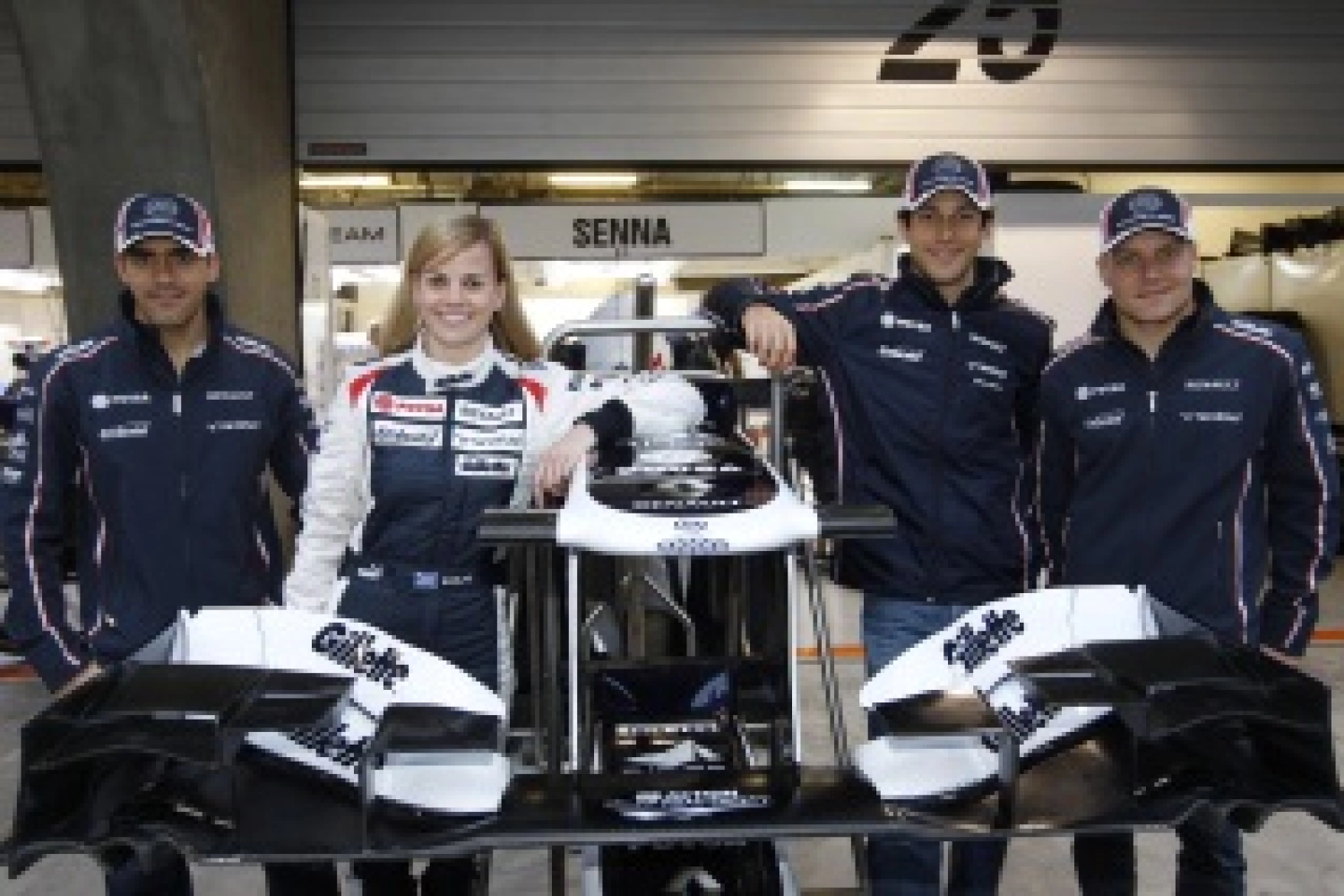
On March 8th, it’s traditionally International Women’s Day. Even though Formula 1 has had few female drivers in its history, it remains a mixed-gender sport. However, the idea of having a female full-time driver might seem strange. *casinoenlignefrance.eu.com* wondered how the arrival of a woman in Formula 1 would be perceived and gave the floor directly to those concerned… women. Sarah and Jennifer are F1 fans. They agreed to answer our questions.
When asked what they liked about F1, the two women are unanimous. The dangerous side of this sport, as well as the strategic aspect, are among the elements that make Formula 1 most appealing. Even for women.
« First, there’s the suspense of the race, then there’s the strategic and technical side of race weekends, and of course, the speed. Knowing that an F1 car can drive well over 300 km/h with everything that entails: the danger of going off track but also the adrenaline », Jennifer confirms to us.
Sarah also points out the strategic side of the sport: I have been immersed in it since I was very young in the sense that I watched races with my grandfather. At first, I watched without understanding much, then as I grew up, I realized the complexity of this sport, the strategies implemented, knowing how to manage the tires, all this requires a real investment, and it intrigued me. But Sarah also talks about the emotions: What I particularly love is the adrenaline it provides when I watch a race. Every start is always exceptional, whether there will be an overtake, collisions, who will make a good start. And then, nothing is predictable, a driver can lead the race for dozens of laps, then a wrong tire choice, for example, can change everything. That’s what’s great; you never know what to expect. Everything hinges on the detail, and if everyone is not coordinated or if a team member makes a mistake, it’s lost. But what I love most of all is the very distinctive sound of the cars.
Formula 1 appeals to women as well, and for the same reasons often cited by their male counterparts. It is also interesting to note that women are gradually making their mark in F1 each season: Monisha Kaltenborn has been leading Sauber for a few months, Susie Wolff has become a reserve driver, not to mention the numerous team press officers who are often women.
So all that’s missing is the arrival of a woman as a full-time driver to truly achieve parity in Formula 1. But this doesn’t seem to bother our two F1 enthusiasts who base their views on very concrete examples: There have been and still are young women in feeder series like GP3 or Formula 2. Or even in IndyCar and NASCAR with the great Danica Patrick, so of course it would be amazing for a woman to one day reach F1 as a full-time driver, explains Jennifer.
Sarah, for her part, expects even more. Seeing a woman drive an F1 car is great, but seeing her behind the wheel of a fast single-seater would be even better: « Obviously, it would be great to have a woman as a full-time F1 driver. What would be interesting is for her to have a competitive car because if she ends up with a backmarker team, she won’t be able to showcase her full capabilities. We’ve seen women as third drivers at Marussia, like de Villota or Susie Wolff, who could have moved to Williams, but I would like to see what they can do at the wheel of a Ferrari or a Red Bull, to at least have them test. They will probably have to prove themselves more than others, but people are ready to see a woman lead an F1, and it’s now up to the teams to give them this opportunity. »
Today, most sports offer segmentation between the sexes. Football, for example, has a women’s league and a men’s league, but this is also the case for most Olympic sports. Conversely, some disciplines like equestrian sports or sailing are more inclined to mix genders within the same competition.
Our two women then demonstrate different reasoning. Jennifer advocates for the creation of women’s championships, which would notably allow female drivers to gradually develop their skills: I have mixed feelings on this point. Perhaps if there were women’s championships in high-level motorsport, it would certainly open more doors to F1 and would allow new female talents to be discovered this time. She nevertheless believes that F1 is perhaps one of the rare sports where women and men can compete in the same division, and it would be nice to see the differences in terms of driving technique or strategy. Moreover, it would help silence all the misogynists with their favorite saying, “Women drivers, no survivors.”
Sarah’s opinion is more clear-cut. The F1 championship should be mixed and much more open to female drivers: « F1 is different from most other sports in the sense that drivers do not compete “physically” against each other; each has their own car but they do not crash into each other like in rugby or football, which is a key element. Therefore, I don’t think that a female division should be established. There are female drivers who do very well in motorsports like Danica Patrick in NASCAR, even if the level is not the same. There was also Michèle Mouton who won a world championship rally, a discipline that requires a lot of endurance and concentration. It would be a shame to let this world be entirely run by men. »
The physical aspect for a Formula 1 driver is nevertheless significant. Even today, with a V8, the impact and the pain are less compared to the V12 engines of the past, but drivers still come out sore from their Grand Prix races. The neck is one of the most affected areas. However, our two female F1 fans believe that women could have a sufficient physical level to drive in Formula 1: « I think a woman can have the level and the physical condition to drive an F1. A woman is generally lighter than a man, so from a technical standpoint, it’s an advantage. However, it’s certain that a woman must work harder than a man to have the necessary musculature », Jennifer confides in us.
For Sarah, the question is more complex than it seems: « It’s difficult to answer this question because there aren’t really any women in F1 to refer to. The few women who have participated in the championship have scored very few points. However, even if many drivers can’t imagine it being possible, I think it is. Today’s cars are much “easier” to drive than 30 years ago and women could manage physically. Moreover, when you put a woman in a simulator, she manages to achieve times comparable to those of men. It would surely require more effort, but with good training, it’s doable. »
Thus, Sarah believes that the only obstacle now to a woman entering Formula 1 is psychological: I mainly think that women should dare to pursue it, because F1 is often characterized as a male-dominated world, but more and more women are showing interest, so they should also be represented. It will probably take a few more years, but it will happen.
Thank you to Jennifer and Sarah for answering our questions.