LDC sells its stake in Marussia
As Marussia multiplies partnership announcements with Russian companies, the Russian sports car brand now holds 92.7% of the capital of the eponymous team following the sale of LDC's stake.

LDC, the Lloyds investment fund, has been associated with the Anglo-Russian team since its beginnings in 2009 as its £10 million investment took place even before the team took the name Virgin Racing, replacing Manor, before even the first lap of its first single-seater.
The Telegraph announced today that the bank has decided to terminate its investment by selling its stake in Marussia, the Russian brand that aims to rival Ferrari and McLaren not only on the tracks but also in the sports road vehicle segment. The new capital structure of the Leafield team is now relatively simple: Marussia holds 92.7% while the remaining 7.3% is held by current and former members of the team’s management.
A spokesperson for the British bank confirmed to the British newspaper: LDC sold its minority stake in the Marussia F1 Team to Marussia. Although the details will remain confidential, the terms of the transaction will allow LDC to recover its entire investment in the company.
Nevertheless, the investment of the bank, which is 43% nationalized, is not limited only to the ten million pounds of its stake. Indeed, it also granted a loan in 2011 worth 38.4 million pounds, which brought the team’s total debt to 77.7 million pounds.
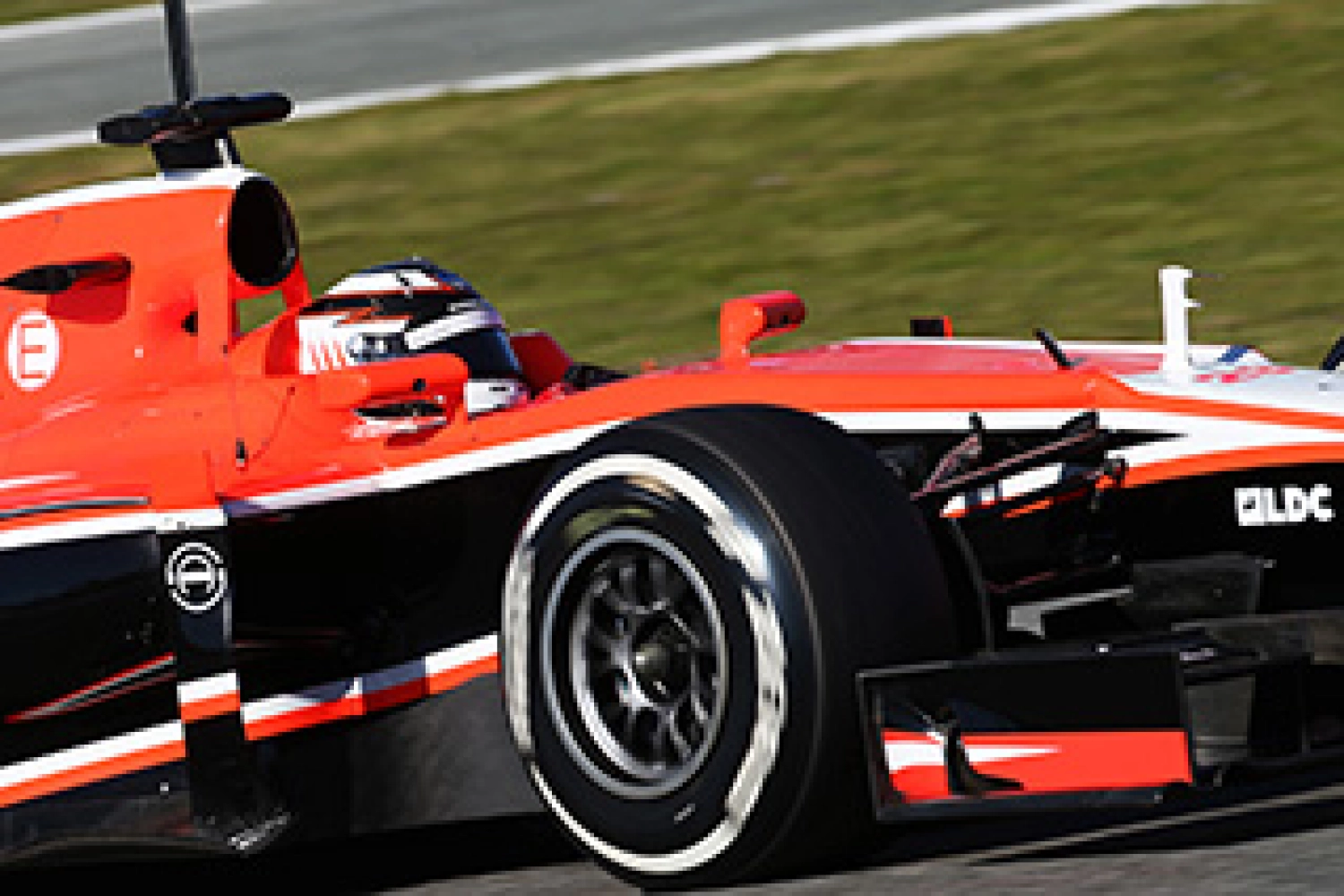
If the logo of the bank has disappeared from the cars of Jules Bianchi and Max Chilton, it is still present on their suit sleeves. But above all, as a good investment fund, LDC has implemented an interesting strategy regarding its presence with Marussia. The private bank has used the communication platform offered by F1 to highlight a number of its other equity investments. These companies have thus been able to appear on the red and black cars for varying lengths of time. Over the past three seasons, announcements have been made for Antler, musicMagpie, and UK2.Net.
This strategy continues this season as well since ATG Access is now present near the drivers’ heads, after LDC joined its capital last February, while Bifold has a prominent spot on the rear wing. All these appearances have therefore been a way for the bank to accumulate advertising output, which helps increase the valuation of its shareholdings.
This clearly shows that F1 is primarily a platform for conducting negotiations between companies in a privileged setting, which explains why consumer goods companies stayed away for a long time before making their appearance starting last season.
But the fact that the sale of the stake was made directly to Marussia shows that Andy Webb was not able to attract new investors, contrary to his ambitions last October. It therefore seems that Max Chilton’s father has not become a shareholder of the team, despite his tradition of doing so to support the motorsport careers of his two sons.
With the participation of www.Racingbusiness.fr