Japan: Figures and Technical Data
A brief overview of the technical constraints imposed by the Suzuka circuit in Japan on the chassis, engine, and tires of Formula 1 cars.

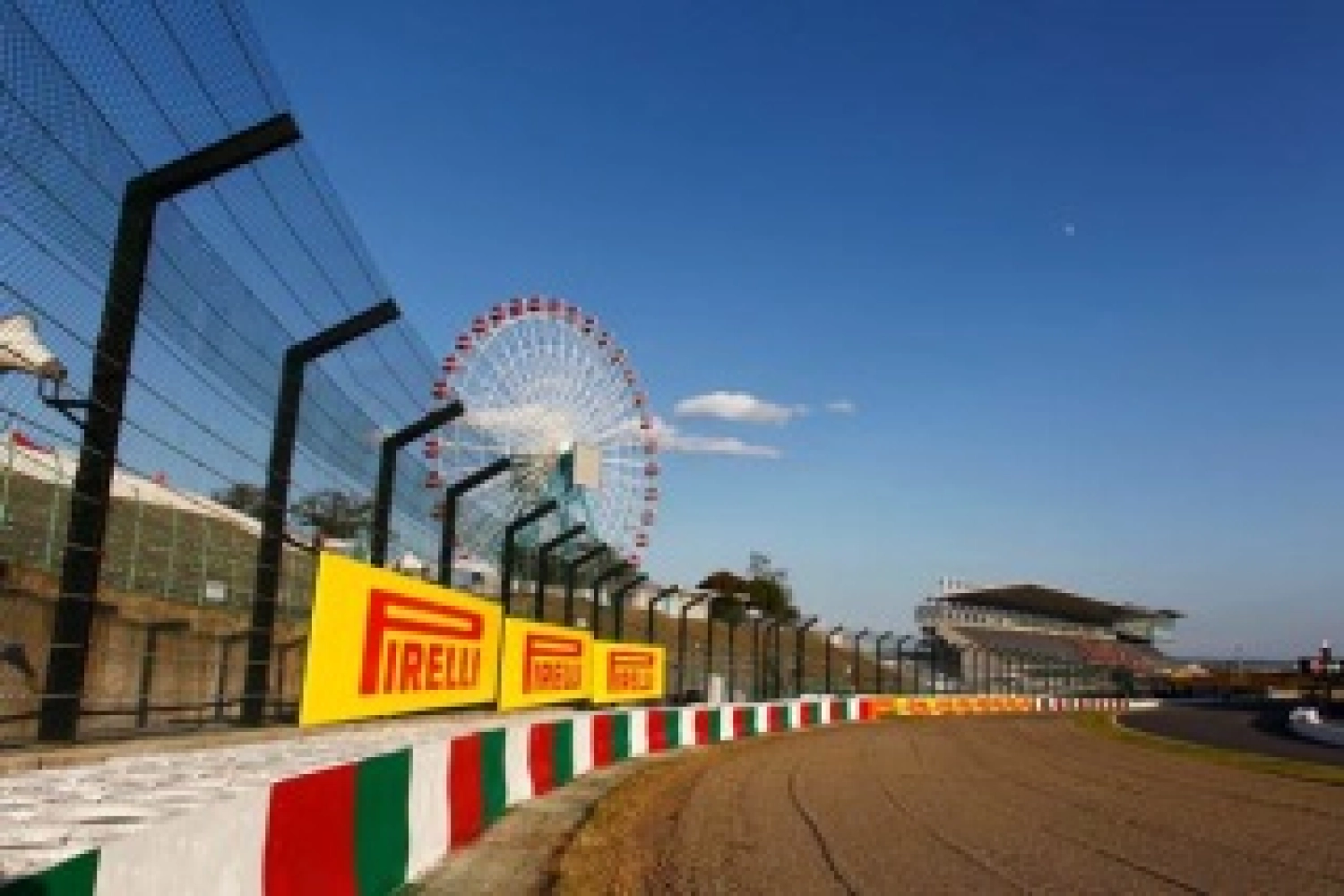
This weekend, the F1 paddock is heading to one of the legendary circuits on the Formula 1 World Championship calendar, Suzuka. The Japanese track is indeed a favorite among drivers and engineers. This year it hosts the 15th Grand Prix of the 2013 season, which could see Sebastian Vettel crowned. Indeed, if Fernando Alonso doesn’t finish better than 9th in the race and Vettel wins, he will clinch the title and become the equal of Alain Prost.
But before thinking about the title, it will be important to negotiate the practice sessions and qualifications which are crucial at Suzuka, where overtaking is difficult. Starting on the front row greatly aids in the quest for victory; indeed, out of the 24 races held at Suzuka, 20 have been won by a driver starting from the front row. In other cases, Fernando Alonso managed to win in 2006 starting from 5th place, Alessandro Nannini in 1989 and Nelson Piquet in 1990 from 6th place. The standout performance is by Kimi Räikkönen, who won the race in 2005 after starting from 17th place on the grid, overtaking Giancarlo Fisichella in the last lap to finish in the lead. To promote overtaking, the FIA has decided to implement a DRS zone this year at Suzuka, which will be located on the main straight.
The Suzuka track is a circuit where lateral forces are significant, particularly in turn 15 – called 130R – which is the fastest corner of the season, taken in 7th gear at nearly 310 km/h. The tires (and the drivers) particularly suffer by enduring a bit more than 3g in this curve.
On the weather front, the weekend should be sunny, although some showers can’t be ruled out. It is expected to be cooler than usual, which could bring some surprises from a tire perspective.
Suzuka on the chassis side
Tom McCullough, Head of Track Engineering at Sauber F1 Team:
« Suzuka is one of the most technically demanding circuits for both drivers and engineers. Knowing the best places for compromise is very important, especially in the first sector, as one turn leads directly to the next with many changes in direction. It is important to instill confidence in the driver regarding the car so that they can find a good rhythm. Most of the corners are taken at medium and high speed, with only two slow corners per lap.
The fantastic circuit and the enthusiasm of local fans make it one of the most enjoyable races of the season. The nature of the track makes things difficult for the tires, for which Pirelli brings its most durable compounds – the mediums and the hards.
Suzuka engine side
Rémi Taffin, Track Operations Director at Renault Sport F1:
« This circuit consists of high-speed sections, large curves, esses, and hairpins. This makes Suzuka one of the greatest challenges of the year for F1 engines. With its figure-eight layout, this circuit includes every type of imaginable corner.
First of all, the section from the first corner to Spoon includes the majority of turns. The engine must be responsive, with a smooth power curve, and provide the necessary torque level when the driver demands it. To achieve this, engineers work on the transition between using four and eight cylinders, injecting fuel at the precise moment when torque is requested. If the torque delivery is correct, it allows the driver to avoid slipping in low-grip situations.
90% of the second part, from the exit of Spoon to the end of the main straight, is at full throttle. We will proceed very carefully with the selection of gear ratios, seeking a compromise between top speed and the slower corners of the first part of the track. This challenge is made more difficult by the often unstable weather in Suzuka. It is not uncommon for the wind direction to change from day to day, and this parameter is very important in choosing gear ratios. With a tailwind, the engine will spend more time on the limiter. With a headwind, top speed will be penalized. Both situations can leave the driver defenseless at the end of the straights.
This is one of the most beautiful “motor circuits” of the season, but we expect even more enthusiasm, especially after our triple podium in Korea and the fact that Sebastian could win the Drivers’ Championship at the end of this Grand Prix. It is a race where we have often been very strong, and we approach it with the desire to achieve another very good result.
Suzuka on the tire side
The tires available for the drivers in Japan are as follows:
- Mediums (white sidewalls) ;
- Hards (orange sidewalls) ;
- Intermediates (green sidewalls) ;
- Rain (blue sidewalls).
Paul Hembery’s opinion, Pirelli Motorsport Director:
« Suzuka is one of the circuits where the levels of wear and degradation are the highest of the entire season due to the relatively abrasive nature of the track’s surface and particularly the significant energy loads that pass through the tires. This is why we have chosen the two most durable compounds from our range for Suzuka this season. However, it’s not all about fast corners, as there are also heavy braking zones and tight turns. It is therefore a track that is very demanding in terms of lateral energy and relatively forgiving in terms of traction, due to the very fluid nature of the layout, with each curve flowing into another.
The tire strategy is expected to play an important role again. Last year’s race was decided on two pit stops, when we designated the soft and hard compounds. Suzuka is a circuit appreciated by drivers due to the high-speed corners. In Japan, it’s all about pure speed: the tires designated for this weekend must enable drivers to demonstrate this, much to the delight of the extraordinary Japanese fans.
The opinion of Jean Alesi, Pirelli ambassador:
The Japan circuit is one of my favorite tracks and the Land of the Rising Sun is one of my favorite countries: it has everything! A bit like Spa and Monza, it’s a really exciting track for drivers and it has a fantastic “flow,” with so many fast corners! But that’s not all: there’s also a great atmosphere thanks to the Japanese spectators, who are so enthusiastic and knowledgeable: they are truly crazy about Formula 1! I also have good personal memories of Suzuka, but if I had to choose just one, it would be 1994, when I was driving for Ferrari. I had a fantastic battle there with Nigel Mansell and finished on the podium under a downpour; Damon Hill won the race. It’s the kind of rain you only get in Japan from time to time, which presents a whole different challenge.
The choice of hard and medium tires is the best for Suzuka: a lot of energy goes through the tires, and we expect a lot of wear. There may therefore be two or three stops. My career has spanned many types of regulations—from “qualifying” tires to grooved—and we can go up to three stops from my perspective. Beyond three, it can start to become disconcerting, but this has happened only on one or two occasions so far, which is a good thing.
Suzuka in numbers
| Length of Suzuka Circuit | 5.807 km |
| Number of turns | 18 (10 right and 8 left) |
| Average speed | 216 km/h |
| Top speed | 319 km/h |
| % of a lap at full throttle | 62 |
| Fuel consumption | 2.70 liters per lap; 67 l/100km |
| Lap record | 1:31.540 (Kimi Räikkönen, McLaren, 2005) |
The 2012 Japanese Grand Prix
Pole position.
Sebastian Vettel (Red Bull Racing) in 1:30.839
Podium:
1 – Sebastian Vettel (Red Bull Racing)
2 – Felipe Massa (Ferrari)
3 – Kamui Kobayashi (Sauber)
Fastest lap in the race:
Sebastian Vettel (Red Bull Racing) in 1:35.774
[From the press releases published by FIA, Pirelli, Renault Sport F1 and Sauber F1]