Regulation 2014: “Not Formula 1” for Di Montezemolo, “Not acceptable” for Ecclestone
The president of Ferrari clearly reiterated the official position of the Italian firm regarding the 2014 regulations. He emphasized that what we are seeing this year is not F1. On his end, Bernie Ecclestone believes that changes must be made without penalizing Mercedes.

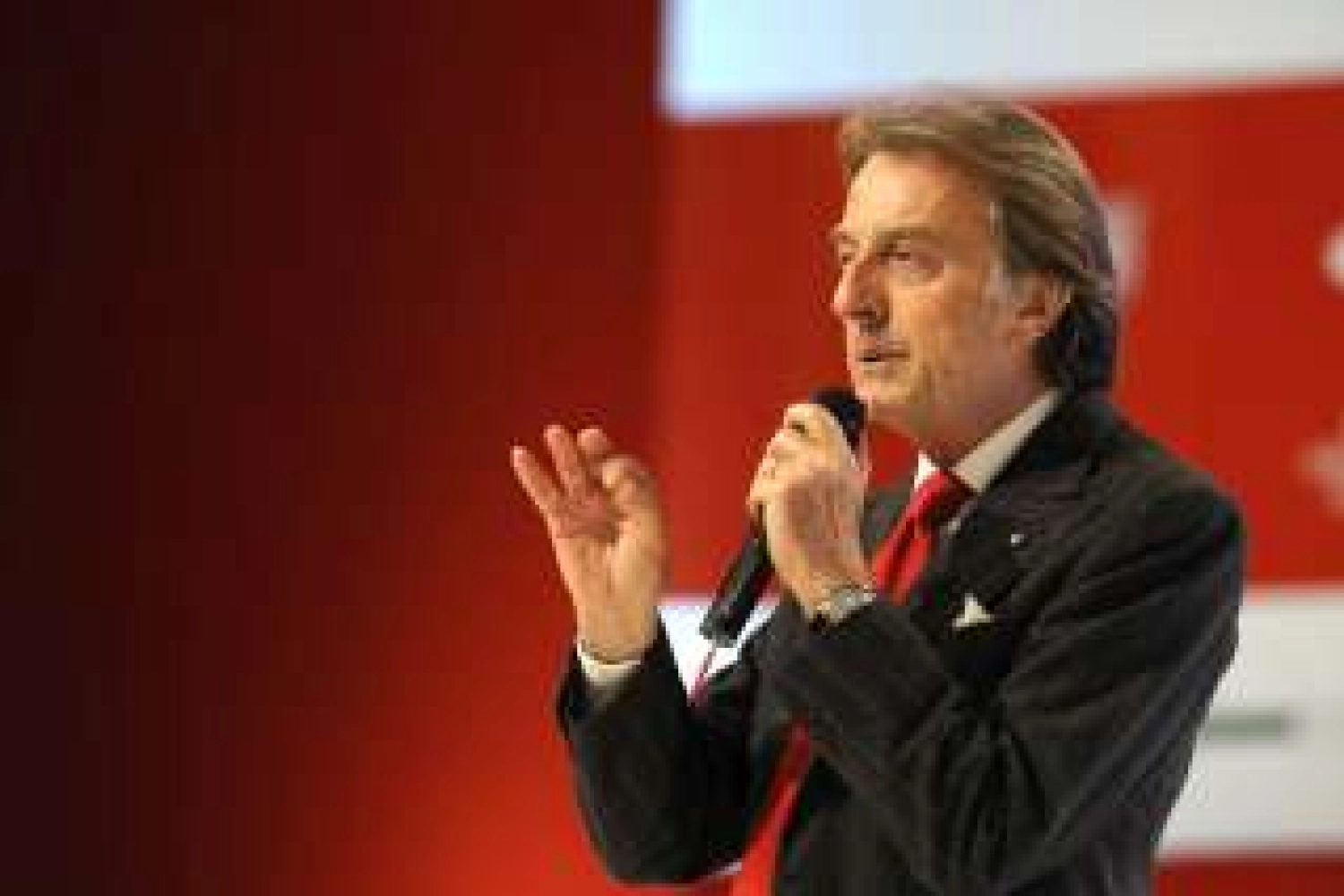
During a press conference held in Bahrain, the president of Ferrari made a point to remind everyone of what one of Formula 1’s historic teams thought about the current regulations.
Di Montezemolo: « This is not F1 »
« At Ferrari, we stated a few months ago that we were against the fuel limitation, that’s not F1. Last Christmas, I stated in front of all the journalists that I was afraid the new regulations would turn drivers into taxi drivers, » he declared.
He believes that public protests must be heard: « We must take into account public comments to consider the future and change something without interfering with today’s regulations. I think when a team dominates like Mercedes, it’s completely normal not to change anything immediately. »
For him, the direction taken is not in the interest of the flagship category of motorsport: « My position has been clear for several months: forcing drivers to save fuel and tires is not F1. We want to increase the passion and success of Formula 1. We cannot have an F1 based on energy and fuel savings. We need to attack from the first to the last lap. »
Luca di Montezemolo highlights three points of the regulations that, in his view, are problematic: « If the engine consumes less fuel, then great, it means you can use less fuel if you want. But that’s a problem. The public doesn’t want a taxi driver who has to conserve fuel, that’s not F1. »
« The second problem is the music of Formula 1, not the noise but the music. The third is that the rules are too complicated, especially for the people working on the circuit. How can they understand the flow meters? It’s really complicated, » he states.
Ultimately, according to him, changes must arise from consultation between the different stakeholders: « So we need a less complicated formula, for now, it’s better not to change anything. But perhaps we can share some good ideas to improve the situation because I don’t even want to consider the possibility of a decline in Formula 1. »
Ecclestone: « Unacceptable for the public »
On Bernie Ecclestone’s side, the approach is also one of change, especially for the public: « I think we owe it to them, of course. I don’t think things are acceptable for the public right now. People buy tickets to come here or elsewhere expecting to get what Formula 1 used to be. »
The opposition is nevertheless fierce, particularly from Mercedes, which clearly dominates this new era but must not suffer from potential modifications: « Mercedes, I think they will be in favor; they will be the leaders. We can do things without [them losing their advantage]. Mercedes, without a doubt, has done a better job. And they should not be punished for that, we must not change the rules to punish them. »
On what needs to be done, Ecclestone recalls the points of discord since the start of the season: « I think they can do something about the noise, and if they need 10 more kilos of fuel or whatever… I think everyone will agree. » And shortening the race distances, as Di Montezemolo often advocates? « No, it’s not necessary. »
Ultimately, the president of the FOM believes that the technology does not align with his vision for F1: « The engines are, without a doubt, incredible. The amount of power they produce compared to the amount of fuel, but I don’t think that’s Formula 1. They should be in touring cars, but not in Formula 1. »