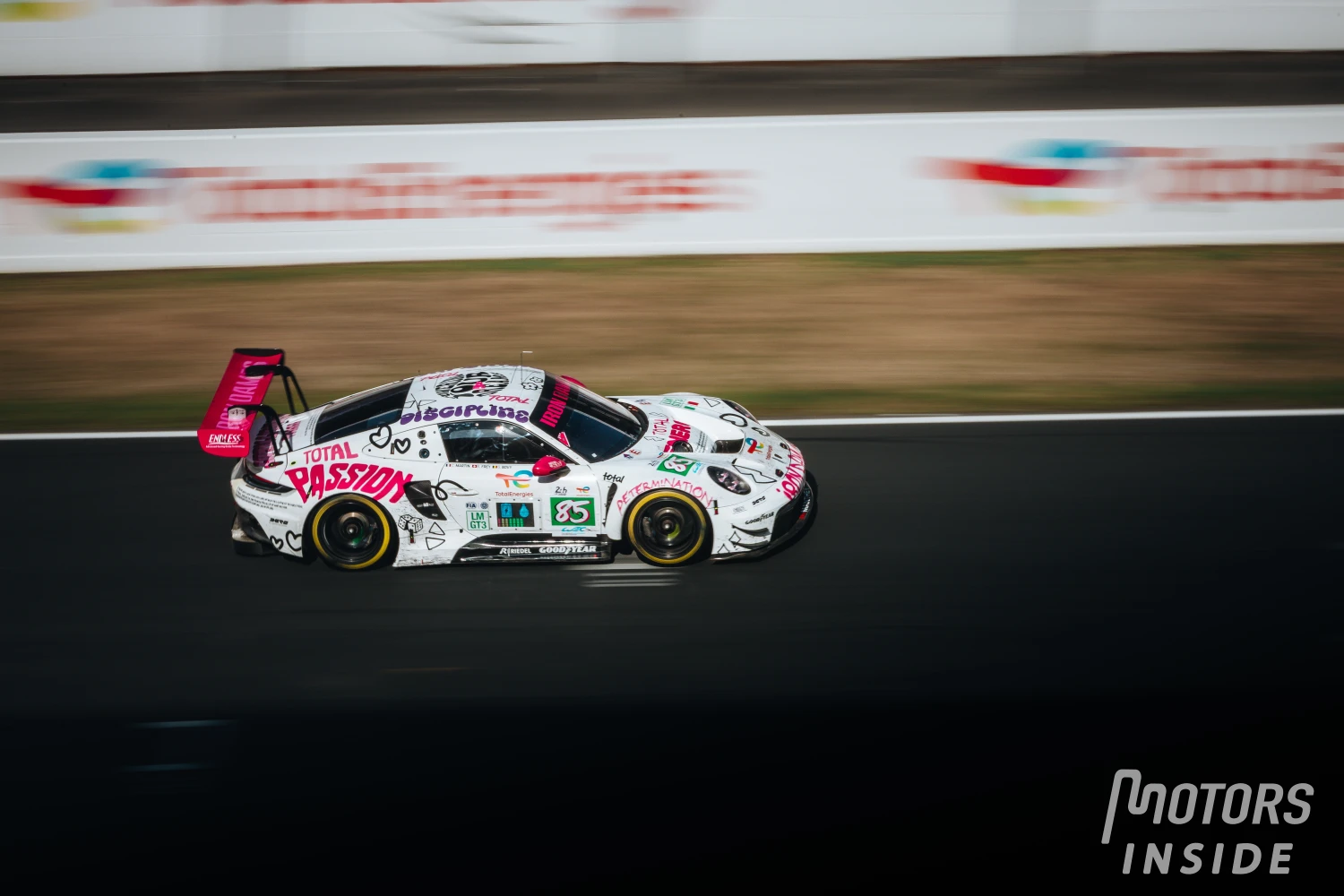
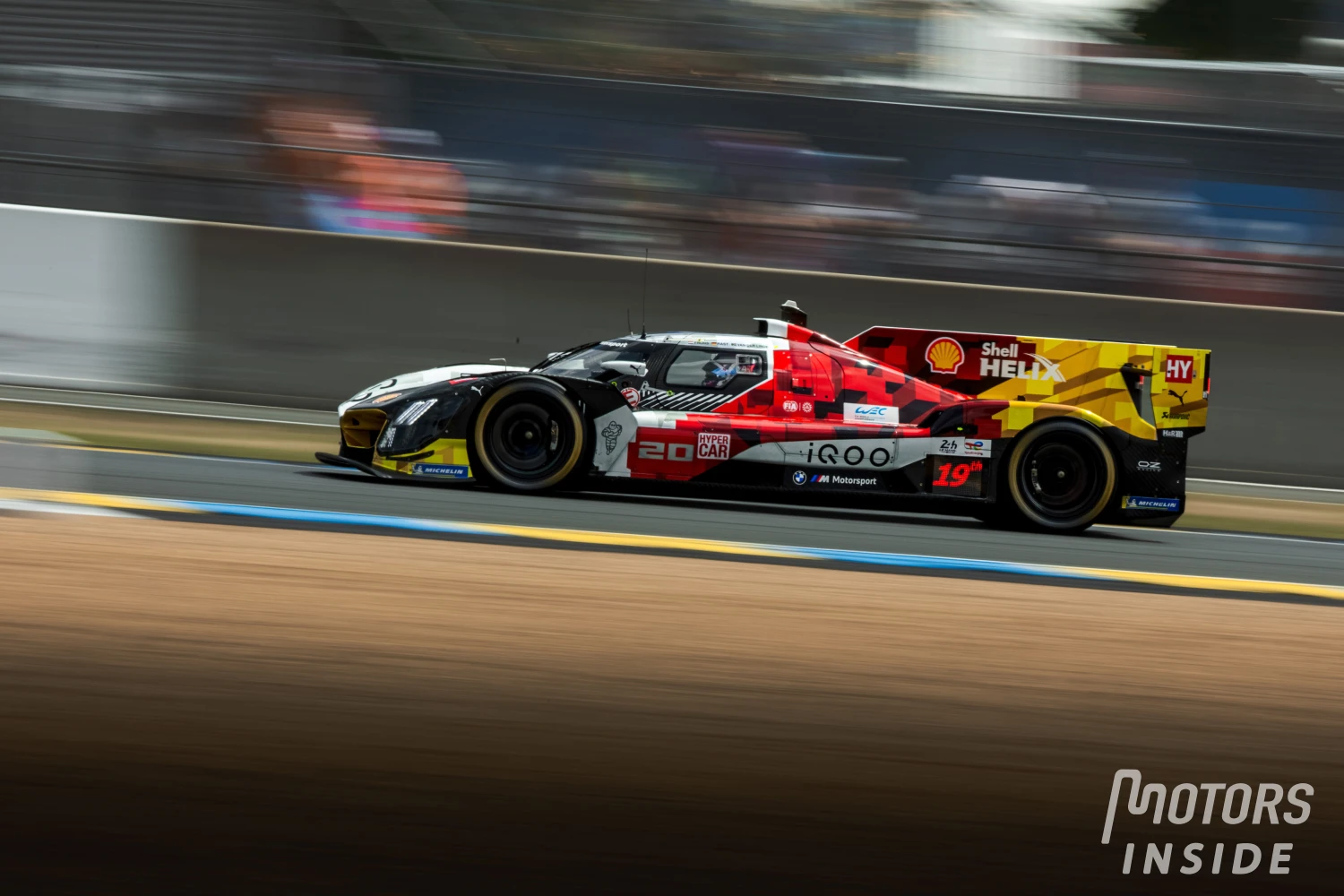
Bruno Michel, the director of GP2, presents his strategy to us
The GP2 has established itself as the preferred training series for accessing F1. We wanted to understand its economic aspects by being welcomed into the office of Bruno Michel, the director of GP2 and GP3 since their inception.

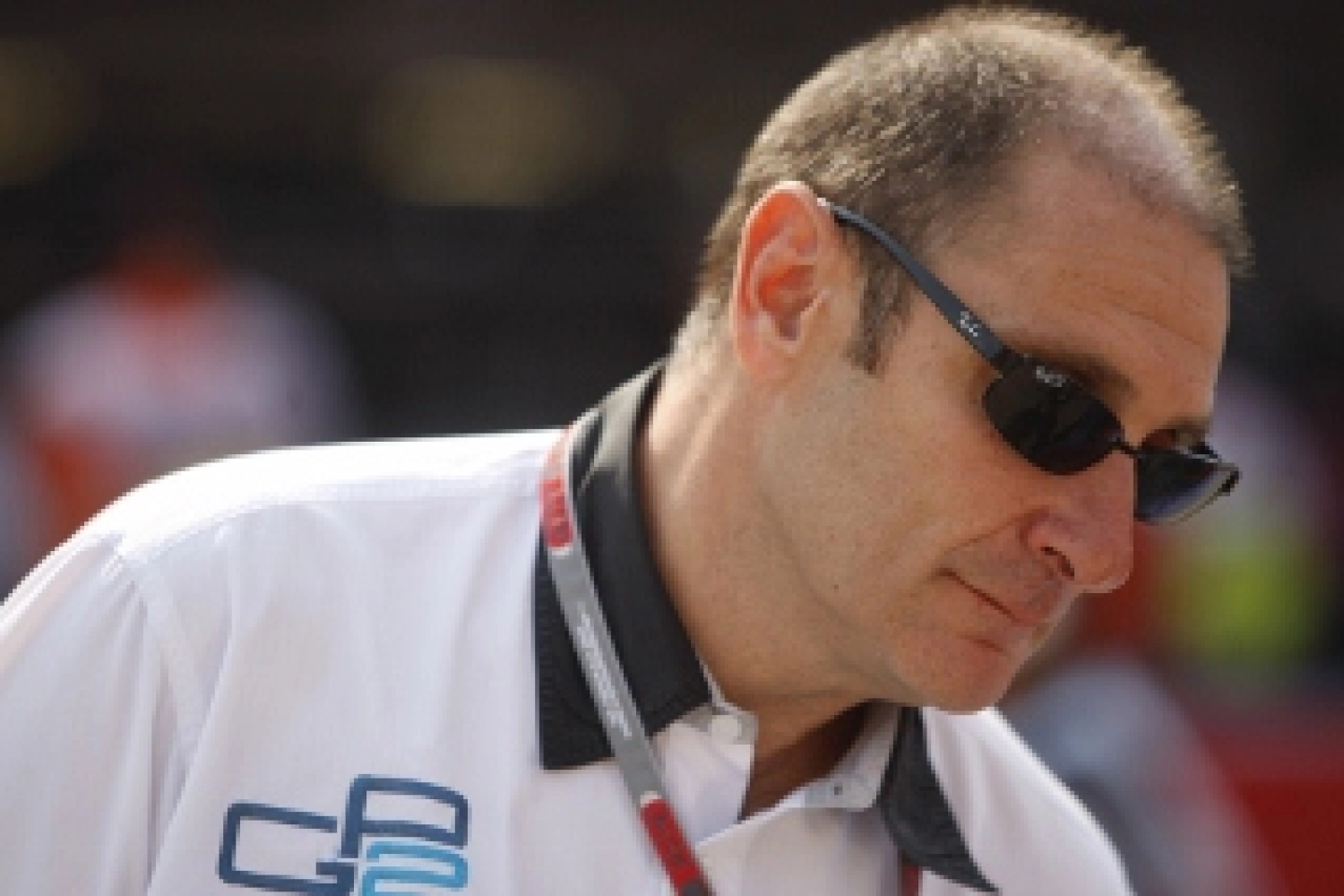
First of all, three weeks ago, the GP2 began its tenth season of existence. What assessment do you draw from this decade?
« The main pride is having so many drivers who have transitioned from GP2 to F1. We have seven champions who have moved up to F1. More than half of the F1 grid has come through our ranks. What made it possible is the definition of the GP2 concept from the start, which is to allow young drivers to drive single-seaters that are extremely close to F1, in front of the F1 world, with fundamental similarities, notably in terms of tires, to prepare them as best as possible for the transition to F1. There is also a similarity in the circuits used, which makes comparison easier. We have always chosen to have a car that is difficult to drive to highlight the driver and to ensure that the races are beautiful because, fundamentally, that is what makes the success of GP2 today. »
Precisely, the GP2 has positioned itself as the feeder series closest to F1. However, with the new engine regulations in F1, we can see that drivers of the caliber of Sebastian Vettel or Kimi Räikkönen have struggled to adapt to the driving required with a hybrid engine. Is GP2 considering, for its next generation, steering towards this type of technological solution?
The technology in GP2 is also evolving. Therefore, it will evolve in the future. It turns out that, for the first time in the history of GP2, since we are working on three-year projects, we have decided not to evolve either the engine or the chassis. The reason is obviously economic. GP2 must be attentive to its market, and its market consists of the drivers. They are currently experiencing significant difficulties in financing themselves. Teams also have their own sources of revenue, but the majority of funding comes from the drivers. Therefore, we are forced to be extremely careful with costs. So, for the next three years, we have not prioritized technological evolution but have instead focused significantly on cost control. This is what allows us to still have 26 cars in GP2, 27 cars in GP3, while all other categories are struggling terribly. So, we are extremely cautious on this matter.
« That being said, when days are better, we are already working on defining the single-seater from 2017. We are also working on defining the car for next year because there will be an evolution to avoid having a completely fixed car. However, today, the top priority remains costs. Once we can set this aspect aside, as we were able to do for years when there was a lot of money coming into motorsports, we will be ready. »
« We will not be able to go as far as what F1 does because what it does is extremely complex and therefore expensive. However, we will move in that direction. »
When you announced the freeze on the single-seater specifications, you mentioned the possibility of introducing a new aerodynamic kit to resemble F1 cars. However, these are criticized for their unattractive design. Where are your thoughts on the matter?
To start, if I wanted to make a kit, I wouldn’t know which one to choose since no two have the same look! So we’re waiting a bit to see the F1 settle, knowing that for now, we don’t really want to resemble their current chassis! So we’re considering a number of things for next year.
« This year, for the GP3, we did something that isn’t very noticeable to those not in the know. We realized that the GP3 cars weren’t overtaking enough last year because they have an exceptional engine, with a 400 horsepower engine on a lightweight car. So, we made modifications to the front of the car, both in terms of aerodynamics and tires, to ensure that the rear of the car degrades faster, making the races more interesting. This is the type of kit we created to allow teams not to have to completely change the front end. In return, we removed the skirts. So, in the end, it doesn’t cost them more, and they can use the stock of spare parts they had, which was the main thing. »
« So for the GP2, all topics are on the table: aesthetics, aerodynamics, mechanics, electronics. »
Is it this same logic of cost reduction that led you to lower the price of spare parts you charge to the teams?
« Firstly, the teams did not need to buy a new car, which makes a big difference since it would have required putting up cash immediately. We didn’t want to burden them with this additional charge. »
Secondly, this allowed us to provide them with a credit on spare parts because we renegotiated with our partners, Dallara, Pirelli, and Mecachrome. We also asked them to make efforts because at some point, you have to know if you want to continue operating or if you want to stop. It was truly in this sense that the question arose. Everyone played along, which allowed us to significantly reduce a number of bills.
We have also revised the schedule so that freight costs less. Therefore, there are tons of things we can do to limit costs, whether from a technical or sporting perspective or through suppliers. The teams are very satisfied because the budgets have significantly decreased.
Since 2012, GP2 has merged with GP2 Asia since the two grids were almost identical in terms of teams and drivers. For 2014, you decided to abandon the Asian races (Malaysia and Singapore). Is this in line with a cost reduction strategy for the teams or due to a lack of economic potential in the region for the teams and drivers present?
« The first thing is that it’s true we created the GP2 Asia to bring in more Asian drivers. It must be acknowledged that the potential wasn’t there or was less than what we hoped for. We had also planned to significantly develop the GP2 Asia, with six to eight races per year, at a time when there were budgets to do so. We realized that teams could no longer find 600,000, 800,000 euros in budget to complete a winter season. So we scaled back GP2 Asia to the point where we ended up with four races in Asia and eight races in Europe. We then decided it was better to have a twelve-race championship and to align it with F1 since GP2 Asia had only one or two races in common with F1. »
« Today, we have eleven races. Depending on the economic context, next year we could have ten races or twelve. But, in any case, we want to limit freight costs. »
If the first seven GP2 champions all raced in F1, it is observed that the last two (Davide Valsecchi and Fabio Leimer) did not have this opportunity. Thus, the top three of the 2013 championship (Fabio Leimer, Sam Bird, and James Calado) were forced to turn towards the WEC. How do you explain this?
« First of all, it comes from the context of F1. Apart from the few constructor programs that exist, those of Red Bull, Ferrari, and McLaren, getting into F1 is even more complicated than before. So it’s mainly about being able to assemble a sufficient budget, even if the driver has won the GP2 championship. We have clearly suffered from that. »
« That being said, I think that if Fabio Leimer didn’t make it to F1 despite having a budget, there’s also a political aspect; personal connections also make a difference. We must also recognize that we have had GP2 grids that were stronger in some seasons than others. Perhaps Davide Valsecchi and Fabio Leimer were considered a bit less interesting than Nico Hülkenberg, Lewis Hamilton, Nico Rosberg, or Romain Grosjean. »
At the same time, three of the four GP3 champions have moved to F1, including two (Valtteri Bottas and Daniil Kvyat) who even skipped the GP2 stage. Do you think this is a deep trend?
« I think that this is also circumstantial. Each case is different: Esteban Gutiérrez went to F1 but only after going through GP2. Valtteri Bottas went directly to F1 but only after a year of testing where he was prepared by the Williams management to make his entry into F1. He therefore preferred to have a year where he did a lot of driving rather than a season in GP2. »
The case of Daniil Kvyat is still a little unique. It’s clearly a good choice. He was incredibly impressive during the second part of his GP3 season. I had a long discussion about it with Helmut Marko because I thought he had real talent. Then Red Bull made this decision, which was somewhat risky, a bit marketing-oriented, but fundamentally a good decision because he was ready! Knowing this beforehand, one must be humble because you can never be sure. But he is already faster than Jean-Eric Vergne even though he didn’t do any driving this winter. That’s what’s most extraordinary: he was the victim of numerous technical issues during winter testing. So, he barely drove. Yet, he still managed to be immediately competitive on circuits he didn’t know. Now that we are coming to Europe, on circuits he knows, it will be very interesting to follow.
However, more and more GP2 teams have strong ties with F1 teams, such as Caterham, ART Grand Prix with McLaren, or Hilmer with Sahara Force India. Would you like to see even more partnerships of this kind, or do you prefer to have independent teams?
« That’s a good question. Let’s say that at the beginning of GP2, I wasn’t too favorable towards it because I thought it was better to maintain some form of independence, which allowed F1 teams to have a wider array of choices from different GP2 teams. Now, on the contrary, since drivers are struggling so much to gather the necessary budgets to make it to F1, I’m glad it’s taking this direction. I think it’s great that McLaren is placing Stoffel Vandoorne with ART Grand Prix, even if it’s not really a junior team, and that Ferrari is working with Racing Engineering. The reality is that to be more certain of bringing drivers towards F1, it’s more reliable to have strong ties. »
From a communication standpoint, we can see that you organize a lot of activities aimed at the fans, particularly through a magazine sent out after each race weekend. Why is it important for GP2 to have this engagement with the fans?
This is part of the overall concept of GP2. From a general point of view, the general public is not the client of GP2. The clients of GP2 are the drivers and the teams. However, they, at their level, need exposure to the general public to show that it is showcased, where it’s broadcast, that there’s a dedicated magazine. This is part of the support we provide to them for their business.
The GP2 and GP3 belong to the Formula One Group. Are the television rights for the three categories negotiated together?
« That’s not the question of GP2. There are channels that completely play the game. We have extraordinary coverage on Sky. There are other countries where we have excellent coverage on free channels. It’s true that this is not the case in France. Not because it doesn’t interest the French but because it doesn’t interest the channels. All television rights are held by FOM. So it makes the GP2 and GP3 images available, but broadcasters are not obligated to use them. Honestly, those who don’t, I find it a bit hard to understand. »
From our special correspondent in Barcelona