Chevrolet vs Honda, the “aero-engine” face-off
The two manufacturers are already spicing up the 2015 IndyCar season even before the first race. They are now competing over the aerodynamics of the cars they power...

These past 3 years, the manufacturers Chevrolet and Honda have competed against each other with their engines in the IndyCar championship (we can forget about Lotus, which was a big flop in 2012). Although the 2013 champion, Scott Dixon, was powered by Honda, it’s Chevrolet that took the spotlight with the other 2 driver titles and especially the 3 manufacturer titles! It’s a triumphant comeback for the American brand.
Honda is not ridiculous for all that. The performances of the two competitors seem very close. Each year, the engines evolve in small steps while respecting the base of the 2.2-liter V6 bi-turbo engine (see the article on technical specifications).

© Honda HPD HI14TT
A regulation that rewards reliability
The engine manufacturers accumulate championship points with the drivers who finish in the top 5 in qualifying and in the race. Additional points are awarded for each engine that surpasses the 2500 miles (approximately 4000 km) mark without being changed. Conversely, points are deducted for engines that are removed before the 2500 miles or when the quota of 4 units per year is exceeded.
Chevrolet engines are developed by the British company Ilmor, which also designed Mercedes engines in Formula 1 until 2005. Honda engines are developed internally by the American department HPD (Honda Performance Development). HPD has a strong history in developing chassis and engines for Endurance, rally, Grand Touring, and Formula 1.
The Era of Builder Kits
For 2015, the management team of the North American championship decided to allow the development and manufacture of aerodynamic kits by the two manufacturers. They have well-defined areas of freedom. The Dallara DW12 chassis remains common to all the cars.
These single-seaters have 2 different kits, depending on the types of races: one is designed for city races, road circuits and short ovals (requiring aerodynamic downforce) and the other is suited for speedways, the large ovals like Indianapolis with low downforce, prioritizing speed.

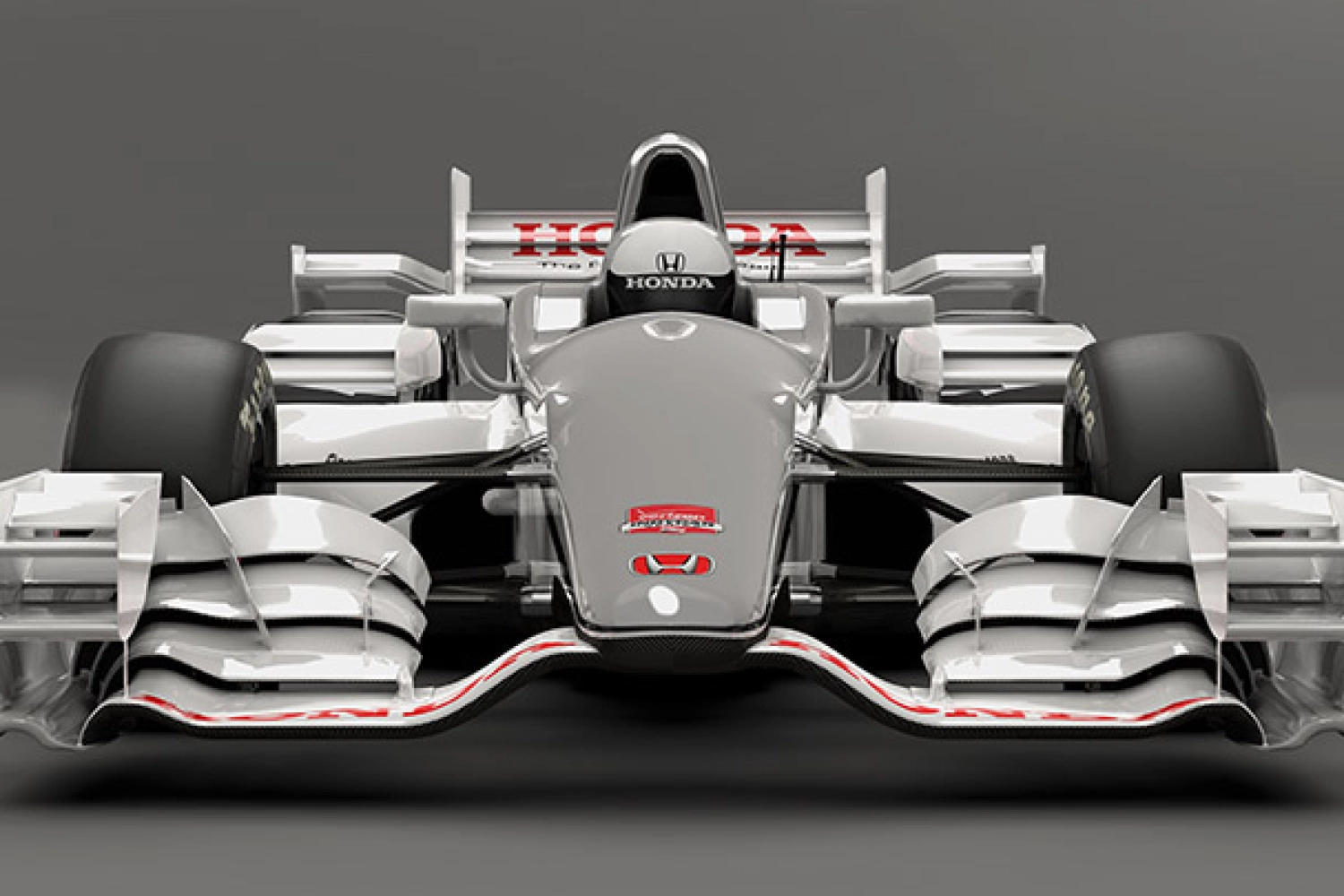
© IndyCar – Les kits “routiers” Chevrolet et Honda pour la saison 2015 d’IndyCar
“Chevy” went for a visually basic solution, likely prioritizing low drag. On the other hand, the Japanese manufacturer developed an impressive “road” kit with numerous winglet stages.
The American and the Japanese did not go about it half-heartedly: they both used computer-aided design and airflow simulation tools. They completed this with wind tunnel tests on reduced-scale models, then full-scale, before conducting validation tests on the track.
The bet made by the IndyCar organizers to visually differentiate the two manufacturers has already been met. As for the performance question, the early races of the year will provide valuable insights into a potential dominance by one or the other. Bets are open.