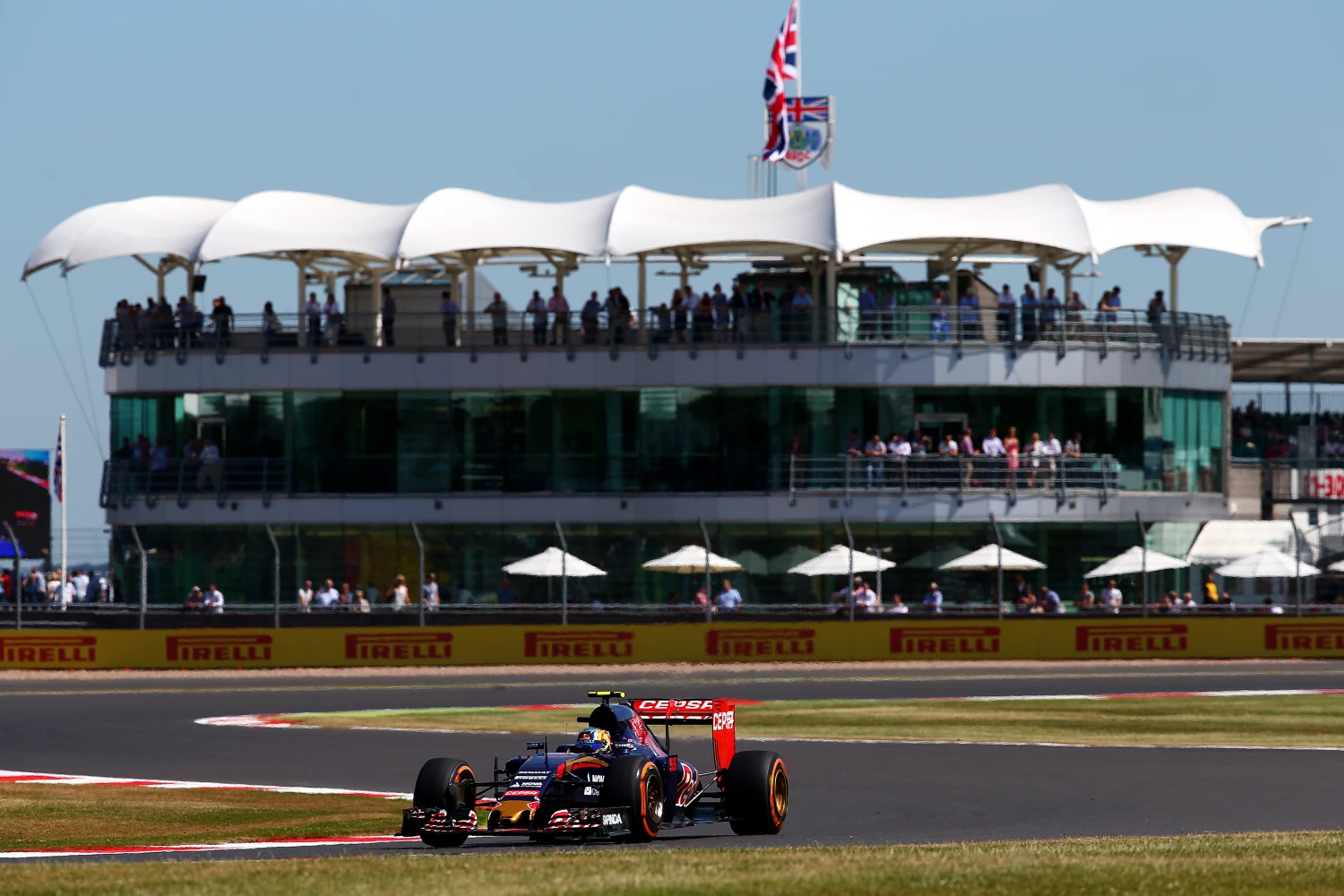
The future of Silverstone is not guaranteed
Despite a 17-year contract, Silverstone has struggled to cope with the rising costs to pay the FOM. The British circuit might therefore not be able to continue hosting Formula 1.

Another historic F1 event is therefore under threat. Indeed, this year, Germany was unable to organize its race because the costs were too high for the Nurburgring, and Hockenheim did not want to take on the organization costs again, while the manufacturers did not allow Mercedes to pay the bill in order not to set a precedent that would push Honda or Ferrari to do the same for their national events.
Similarly, Monza has been the subject of much speculation for several months, but a solution should be found thanks to the intervention of the Italian public authorities. However, Silverstone does not have this leverage as it is one of the only circuits on the calendar (along with Suzuka) that does not receive any government assistance.
In an interview with the Daily Telegraph, Patrick Allen, the new director of the circuit, acknowledged that he was not certain he could meet the terms of the contract with the FOM: « Can I guarantee the future? No, I cannot. Can I say hand on heart to Mr. Ecclestone: “Don’t worry, your money is absolutely secure for the next ten years? No, I cannot… »
However, it is precisely to avoid this kind of situation that a long-term agreement had been signed for a duration of 17 years so that the circuit could implement the necessary investments for its long-term survival. Nevertheless, the fears are now very real: Ending the contract would be sad for Silverstone. It would be sad for motorsports, and it would be very sad for Great Britain.
Financial arrangements have already been made with Bernie Ecclestone, as he explains: “They will pay this year’s fees next year because I allowed them to do so. Otherwise, they would have already closed.” But such a situation means that the circuit must obtain a letter of credit from its banks to secure its presence on the F1 calendar.
This is where we realize the limitations of the F1 financial system. Indeed, the popularity of the event is not in question since it is one of the most popular of the year despite prices already being the highest of the entire season. Upon his arrival, Patrick Allen decided not to continue the inflationary trend of past seasons, even though the contract negotiated with F1 provides for a 5% annual increase throughout the contract. In the long run, it becomes very difficult to make such an event profitable.
The solution considered by the British leader is, in fact, to find a new owner with significant financing capabilities. Indeed, the circuit belongs to the club of British drivers, which includes Jenson Button or Lewis Hamilton: « What we really need, in my opinion, is to have someone who wants to buy an asset they can showcase and who is ready to invest a lot of money into it. We need someone who has a lot of money, who loves motorsports and wants to run Silverstone profitably but who has the capital to inject into the balance sheet and can therefore remove the risks. »
The future of Silverstone goes well beyond contractual obligations with Formula 1. It is indeed the entire business model of the circuit that is being called into question…
With the participation of www.racingbusiness.fr