From the high technology of Formula 1 to the production car
After walking through the aisles of the Geneva Motor Show, *Motors Inside* stopped to talk with *Nicolas Espesson, Head of Performance Optimization at Renault Sport*, and discuss how Formula 1 helps improve our everyday lives in the cars of the average person.

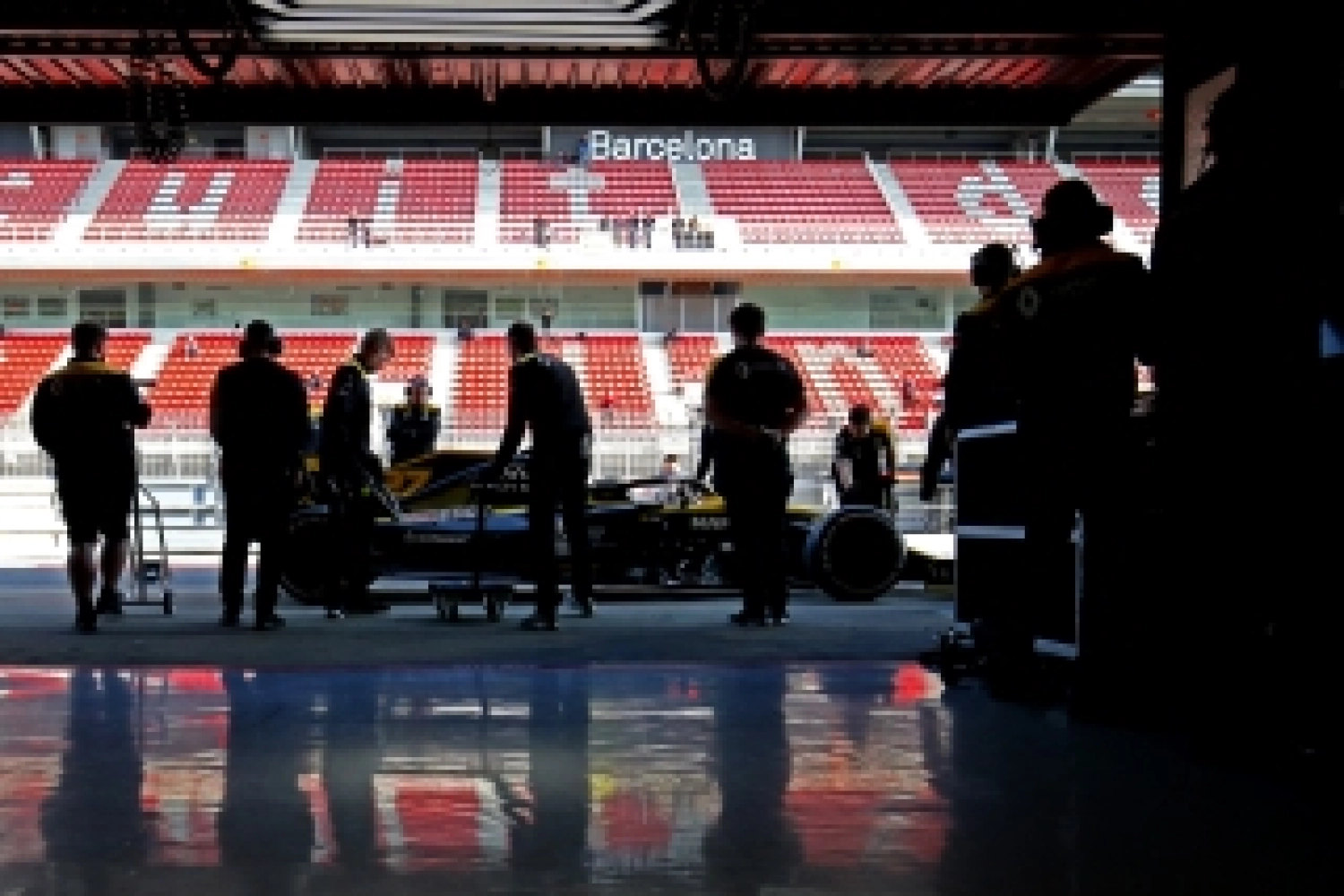
Formula 1 is often the spearhead for hypercar manufacturers. This is the case for Ferrari, McLaren, and even Mercedes, all of which have highly performant cars in their lineup that align with the image of Formula 1. So sometimes one might wonder what the benefit is for more generalist manufacturers like Renault or Alfa Romeo to enter Formula 1.
Beyond the marketing aspect and the impact on brand image, the technology used in Formula 1 also serves everyday cars. With Nicolas Espesson, head of performance optimization at Renault, we will detail some important elements of recent technologies that have transitioned from F1 to production cars.
Hybridization
In terms of electrical energy, most mainstream manufacturers have adopted strategies ranging from fully electric to more or less severe hybridization. Toyota, for example, focuses on hybrids, whereas BMW is expanding its lineup to exclusively electric models. In Formula 1, internal combustion engines, along with their turbochargers, have benefited from a hybrid system, the KERS (Kinetic Energy Recovery System).
Renault was already explaining to us [how the KERS works](https://example.com/f1/actualite/7564-le-kers-vu-et-explique-par-renault.html) in /f1/actualite/7564-le-kers-vu-et-explique-par-renault.html.
But since /f1/actualite/7564-le-kers-vu-et-explique-par-renault.html, things have really changed. « Today we have 3 different energy sources in Formula 1. The internal combustion engine, the large electric motor, and the rear brakes. We will have the same thing on the new Clio. We will have these same 3 energy sources, » Nicolas Espesson explains to us.
The next Renault Clio hybrid will clearly benefit from Renault F1’s experiences and technologies. The braking on the rear brakes can thus be done entirely with the electric motor. This generates energy stored in the battery for acceleration phases.
Unlike the first production hybrid cars that had two distinct engines with the electric motor used exclusively for low-speed driving, we now benefit from energy provided by the electric motor coupled to the crankshaft simultaneously with the combustion engine.
Aerodynamics
Formula 1 cars race at very high speeds in corners and, to be maintained on the ground, require a significant amount of vertical downforce. Tests are thus conducted in wind tunnels, first on scale models and then at full scale. Production cars are also tested in wind tunnels. The same software will be used, and the principles and learnings from F1 also benefit engineers during tests on production vehicles. However, unlike Formula 1, the idea is not to increase aerodynamic downforce but to reduce the drag area in the air. We work, for example, to ensure that the hood covers the windshield wipers to prevent them from slowing the car down, Nicolas Espesson tells us. We especially make efforts on the mirrors. It may not be visible to the naked eye, but the passenger-side mirror is smaller than the driver-side mirror on our models. The goal is, of course, to reduce the air drag coefficient of vehicles and thus consume less fuel.
The sensors and telemetry
More than 200 sensors transmit telemetry data to Renault F1 engineers during a race. These data are collected at different frequencies. Some sensors, like the engine speed, are sent to telemetry several times per second, while others are transmitted less frequently. They are then used to calculate other data and set alert thresholds, explains Nicolas Espesson. These sensors help prevent a breakdown and ensure the driver enters the pits before causing too much mechanical impact.
Production cars already benefit from sensors, but Renault is heavily inspired by this philosophy in its future models.
The F1 Steering Wheel
The steering wheels of Formula 1 primarily allow the driver to adjust parameters. The steering angle, the suspension, the braking force, the downforce, etc. Renault is introducing on the Clio 5 a new driving mode that allows parameters to be adjusted via the steering wheel, for example, the deceleration force of the electric motor when not pressing the accelerator. Electric cars tend to decelerate significantly to recover kinetic energy. This option will allow the driver to tailor the deceleration force according to their preferences.
Formula 1 is certainly a marketing showcase but also a fundamental contribution to the way production cars are designed. It’s up to manufacturers to draw inspiration from it to benefit as many people as possible on a daily basis.