Safety in F1: The driver’s equipment
The Formula 1 driver's gear must be at the peak of safety, representing in a way his armor. Over the years, this equipment, from head to toe and in several layers, has been developed to be at the forefront of safety.

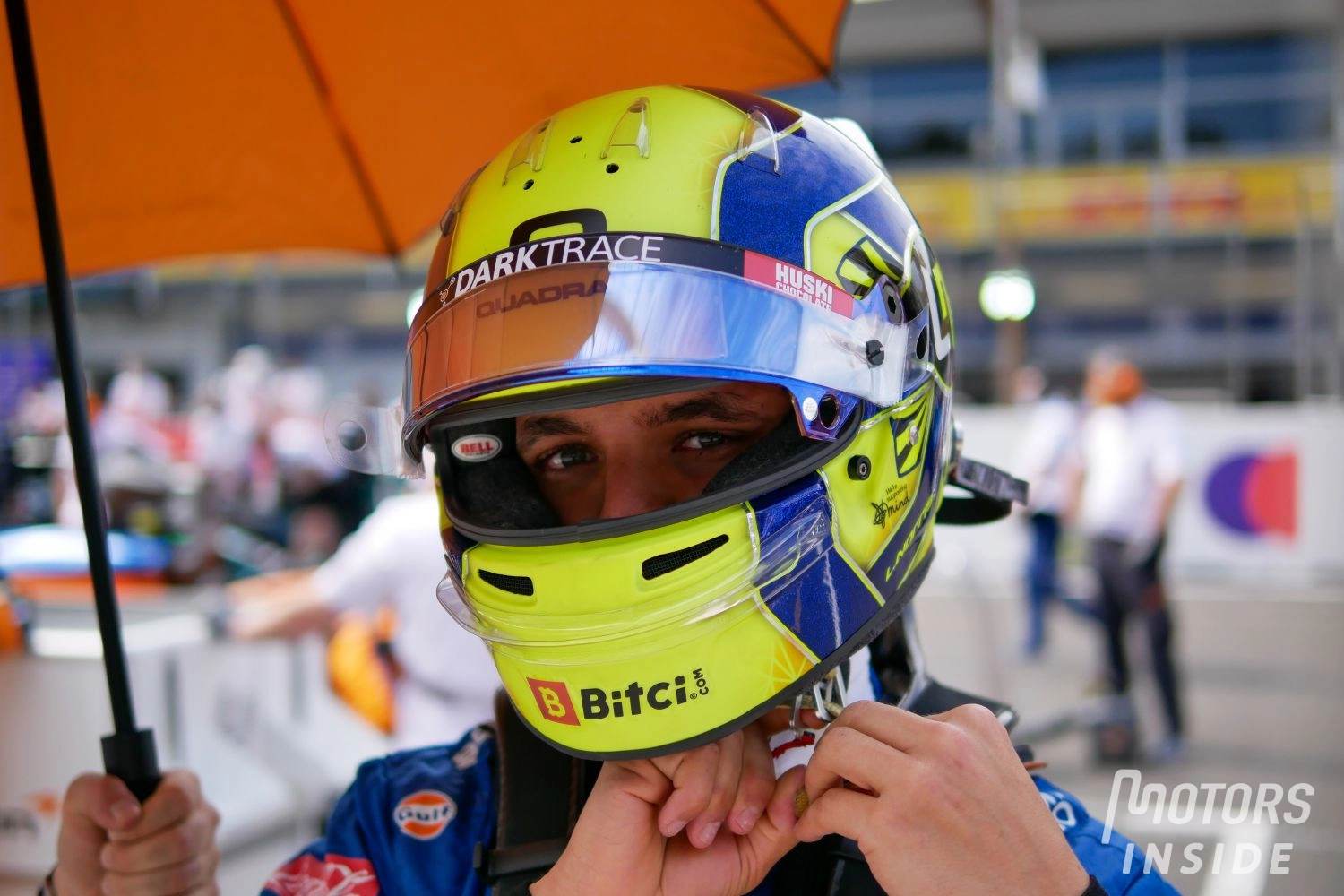
The helmet
Since 2019, the FIA has made a new standard mandatory for Formula 1 helmets. Named FIA 8860 – 2018, it is intended for helmet manufacturers and describes the construction and testing requirements that they must meet to provide equipment for the FIA’s top series. Throughout the development process, FIA researchers have worked closely with F1 helmet manufacturers such as Stilo and Bell Racing, who now produce helmets based on the new standard. This project was inspired by the loose spring that struck Felipe Massa’s helmet during the 2009 Hungarian Grand Prix. This standard is therefore the result of ten long years of research.
From now on, Formula 1 helmets must undergo different tests. They must withstand impact:
- from a 225 g metal disk launched at 250 km/h,
- to a 10 kg weight dropped from 5m;
- to an air rifle shot on the visor;
- to exposure to a flame at 790°C.
They must therefore, indeed, be ultra-resistant.
In short, the FIA indicates that this standard includes the following changes for Formula 1 helmets:
- A lowered visor top by 10 mm to incorporate advanced ballistic protection, which allows for unprecedented levels of safety in the event of impact with debris.
- Extended side protection zones to offer optimal compatibility with the latest single-seater headrests, and with the integrated head side protection systems in the seats, ensuring proper energy management at the headrest level.
- Helmet shell construction with advanced composite materials to guarantee not only its sturdiness but also its crush and penetration resistance.

These helmets are now ultra-protective, which seems logical, covering the most sensitive part of the driver, especially considering that Formula 1 cars have neither roofs nor windshields like the aeroscreen used in Indycar. Therefore, a protection is needed against debris that can pass through the halo.
The HANS system
The HANS system is the abbreviation of Head And Neck Safety in English, which means the safety of the head and neck. This system became mandatory in F1 from 2003, although it already existed across the Atlantic.
The objective of this system is to keep the driver’s head during frontal impacts and thus prevent neck fractures. The HANS is intended to be 80% effective at this level. However, contrary to what one might think, the HANS is not effective against lateral impacts. Indeed, when the head is projected to the side during a lateral impact, there is not a rotational movement, but a translational movement; the straps tighten even less since they are not on their working axes. Whereas in a frontal impact, the head moves forward and therefore the straps tighten, preventing excessive movement. Head movement is reduced by half.

The HANS is a solid body made entirely of carbon fiber, with a weight ranging between 500 and 650 grams. It consists of three main elements:
Straps: Flexible straps connecting the HANS collar to the helmet and designed to transmit to the HANS device the load exerted by the helmet and the driver’s head in the event of an impact. There are two of them and they are attached to the helmet by clips.
Collar: corresponds to the part of the HANS located behind the driver’s helmet and is intended to transfer to the HANS frame the loads exerted by the HANS strap anchorages in the event of a collision.
Frame: it is the part of the HANS in contact with the shoulders and chest of the driver. The frame of the HANS is intended to transmit the normal and frictional forces that appear between the shoulder straps and the driver’s torso in the event of an impact.

Clothes.
Formula 1 drivers must wear fireproof clothing, subjected to tests carried out in direct contact with flames. However, since 2020, the new regulation 8856-2018 has become mandatory, aiming to strengthen the safety of drivers by improving the protection of many elements by 20% and ensuring that all clothing, including underwear and socks, is tested. It is mainly the brand AlpineStars that provides drivers’ clothing, subjecting their products to thorough testing. Indeed, the company verifies the mechanical resistance of their products with tests to determine to what extent the material bends and stretches under load. There is also the flame resistance test of the yarn to determine the resistance of the sewing thread when exposed to a flame.
The same test base was nevertheless retained. Clothing is exposed to a flame of 700°C for ten seconds, after which the flame is removed and the clothing must not burn for more than two seconds and must not show any holes or debris. However, the FIA has reinforced the coefficient of thermal transfer, measuring the heat penetrating inside a material.
In short, the machine uses a thermocouple placed in contact with the innermost layer of the garment in order to measure the time required for its temperature to increase by 24°C compared to the initial point. To simulate the fire, a burner at over 1000°C is used.
We were able to learn more, notably thanks to the French company Chamatex, which creates flame and heat resistant fabric for brands of suits such as Alpinestar. Here is a flame test in a laboratory in Ardèche:
The material is tested to see how it behaves when it is fixed to a surface and stretched, and then subjected to heat.
In terms of flame resistance duration, coveralls must withstand at least 12 seconds, instead of the previous 10 seconds. Gloves and shoes must withstand 11 seconds, with a nuance for the glove palm needing to resist for eight seconds. Finally, the least directly exposed clothing items, such as the balaclava, socks, and underwear, have been included in these tests for the first time and must each withstand more than 5 seconds of flames. However, for underwear, the material is tested to see how it behaves when fixed on a surface, stretched, and then subjected to heat. For gloves, the flame resistance of the glove finger seam is also tested.

« Standards require us to test each layer of fabric separately, with flames, and then to test the entire sandwich of the 3 layers for heat resistance,” Sandrine Navarro from Chamatex explains. « Our challenge is to ensure that the fabric is breathable and light enough to be comfortable for the driver to wear, while still providing protection.”

- The suit
- The under layer
- The pilot’s undergarments
- The gloves
- The inside of the helmet