Two years ago, the F1 cars were faster in Baku
The Azerbaijan Grand Prix did not take place last year because of COVID-19. This season, upon returning to Baku, it is hard to ignore that the F1 cars have lost performance even compared to two seasons ago.

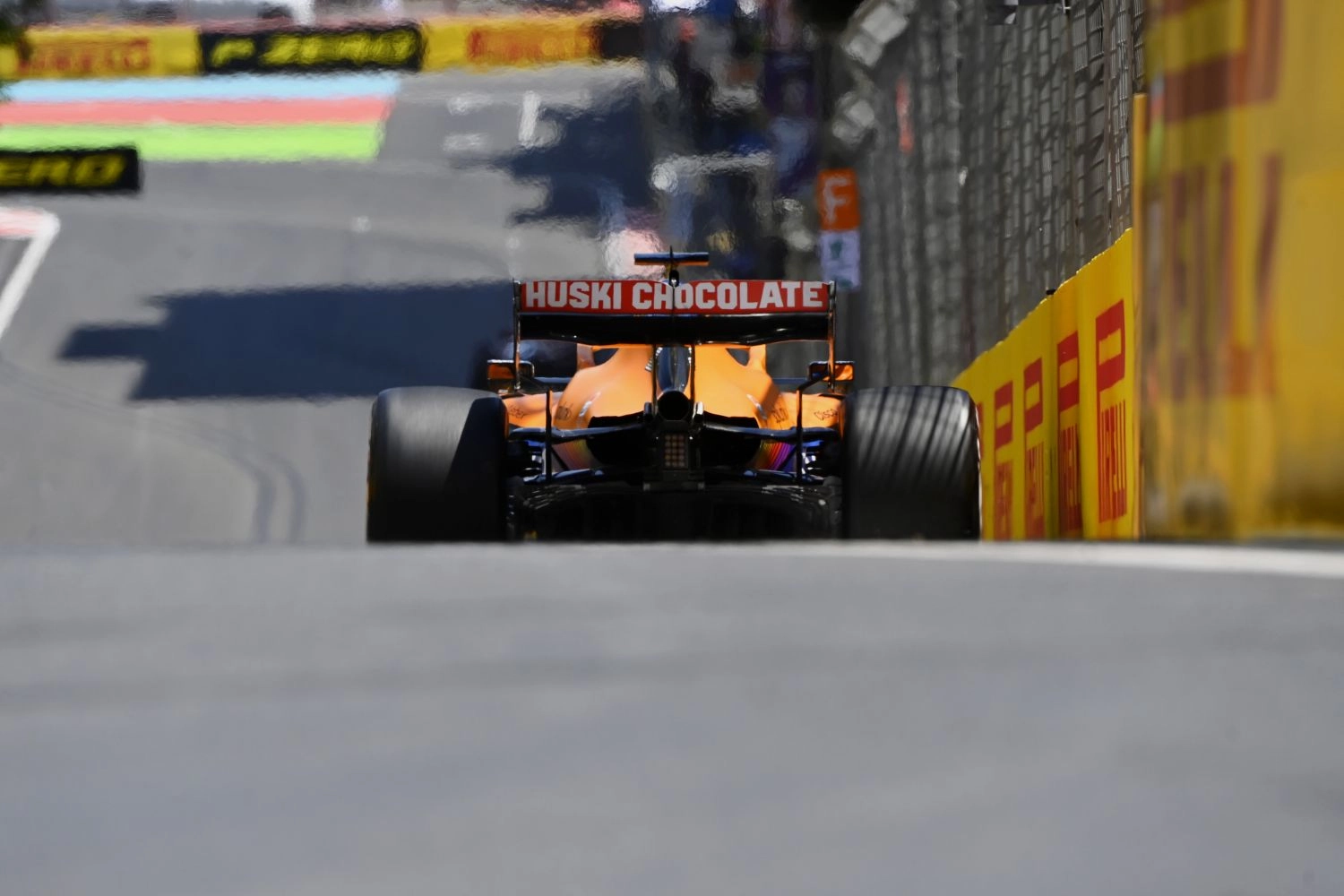
Formula 1 is the Holy Grail for any driver. It is the constant pursuit of performance, and yet this season, with the technical regulation changes, we knew that the cars would lose speed.
This is the case here in Baku, as it was already the case in the early races of the season. Compared to 2020, the F1 cars are much slower, as we explained to you a few weeks ago. Some teams have lost more than others but if we stick to comparing pole lap times, it is even more noticeable.
In Baku, the reference pole time was set by Bottas in the Mercedes in 2019: 1min 40.495.
The pole time set by Leclerc this Saturday is 1 minute 41.218, which is 723 milliseconds slower. Almost a second lost and we are talking here about a comparison with 2019 – 2 years earlier.
Even worse, turn 8 has been shortened to gain more speed entering the old town. This turn would allow to go 15 km/h faster than in 2019 and therefore gain a few tenths.
In Monaco, for example, Leclerc’s pole was 2 tenths slower than the time set by Hamilton in 2019.
Comparison of a few circuits between 2021, 2020 and 2019:
| Grand Prix | Pole 2019 | Pole 2020 | Pole 2021 | Difference 2021 – 2019 | |
| 1 | Bahreïn | 1:27.866 | 1:27.264 | 1:28.997 | +0.131 |
| 2 | Monaco | 1:10.166 | Pas de course | 1:10.346 | +0.180 |
| 3 | Azerbaïdjan | 1:40.495 | Pas de course | 1:41.218* | +0.723 |
| 4 | Espagne | 1:15.406 | 1:15.584 | 1:16.741** | +1.335 |
The turn 8 has been shortened and should help save some time
The turn 10 has been redesigned and seems to have slowed down the F1s.
Formula 1 cars had regained performance in recent seasons, notably thanks to aerodynamics, engines, and tires.
The 2021 regulations were supposed to revolutionize the aerodynamics of single-seaters to optimize their ability to follow and therefore overtake. This regulation has been postponed to 2022 because of the crisis linked to the pandemic, and the FIA had thus proposed a smooth transition with a reworked regulation in 2021. This regulation involved a significant loss of downforce, particularly on the underfloors and rear diffusers.
The consequences are less speed when going through corners – where a Formula 1 car is compared to any other rolling object the best. It is therefore logical to lose time on a timed lap. The 2022 F1 cars are expected to be slower as well.