Mercedes’ secret technology. Cheating or genius?
The battle between Red Bull and Mercedes is approaching its peak. During this season, the two teams have repeatedly exchanged mutual suspicions of using illegal technical solutions.

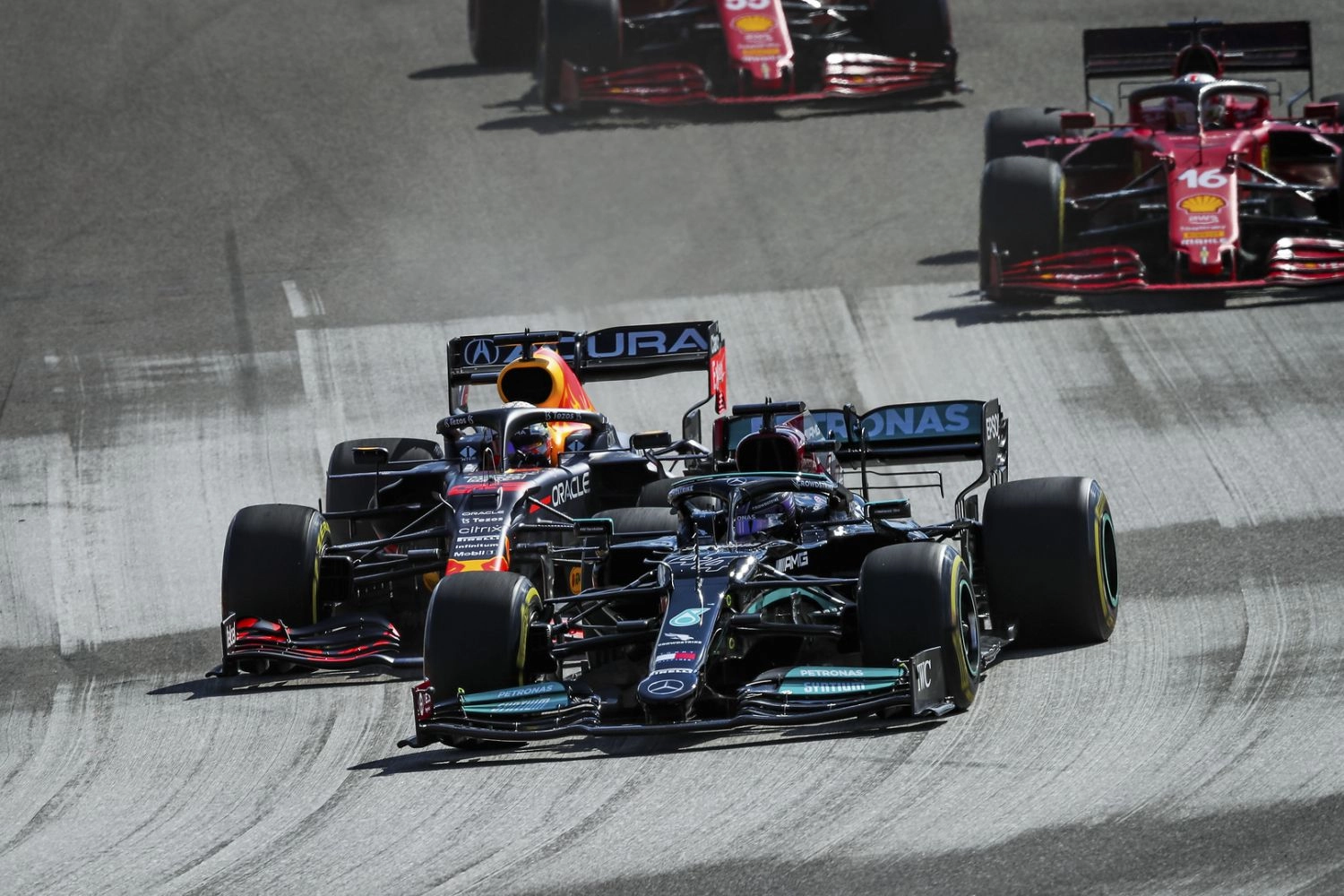
After the British Grand Prix, there was a lot of talk about the increase in power of the Mercedes engines. But it seems that the German team was able to increase its speed not only thanks to the efficiency of its engines. One of the new technologies could be seen during the practice sessions before the United States Grand Prix. This reminded many people of active suspension, which has long been banned in Formula 1. But since the team is using it, it means that it has been created according to legal rules. Let’s try to understand what engineers have found new in the rear suspension of Mercedes cars.
Let’s start by determining what the rear diffuser is. Its work is based on what is called the Venturi effect, which implies that when gas passes through the narrowed part of the pipe, its pressure drops. Take a bottle as an example. It has a neck and a main part. If you blow into it, according to the law, the air passing through the neck will have a much higher speed and lower pressure than the main part. So, if we continue the analogy with the bottle, the area under the car is the neck and its main part is the diffuser, which is just a raised area at the back of the car.
<img class="rounded-sm shadow-3d" src="/images/photo/article/f12021/c-copyright-mercedes-w12.jpg" alt=
But the engineering’s freedom of thought is limited by the pilot’s safety and technical regulations. Therefore, it is only possible to modify the size of a part within a certain range. But what happens if you find a way to dynamically modify the position of the diffuser on the track, even within a limited range. Apparently, this is exactly what the engineers at Mercedes have managed to achieve.
On straight lines where aerodynamic grip is not so important, the rear of the car’s ground clearance decreases, which means that downforce becomes much less important, allowing the car to reach a higher top speed. But as soon as the driver begins to brake, the diffuser returns to its initial position, increasing its effective surface and increasing the downforce required for cornering. It is fundamentally important to understand that a change in the diffuser’s position should only occur at the right moment, otherwise it will only result in significant losses. In fact, this solution is a kind of analogue to the active suspension banned many years ago.
<img class="rounded-sm shadow-3d" src="/images/photo/article/f12021/c-copyringht-williams-fw14b-1992.jpg" alt=
As before, Mercedes continues to surprise its rivals. Two years ago, everyone was amazed by their DAS steering system, but now we see a sort of legal version of the active suspension. What will be next? Obviously, thanks to this system, Mercedes is becoming the favorite in the championship race. Their main rivals from Red Bull probably won’t be able to replicate this technology, as their car has a very high rake, meaning they would have to completely revise the entire aerodynamics. It’s not practical to do this five races before the end of the season.
Maybe Adrian Newey also has his own wild cards. In any case, if the Austrian team still wants to compete for the championship, then it’s time to play them.