Is the Aston Martin AMR23 as inspired as they say from the Red Bull RB18?
In Bahrain, some observers commented on the fact that the Aston Martin AMR23 bore a strong resemblance to the Red Bull. Several connections can be made to explain this similarity, but despite what one may believe, the AMR23 is also unique and much more than meets the eye.

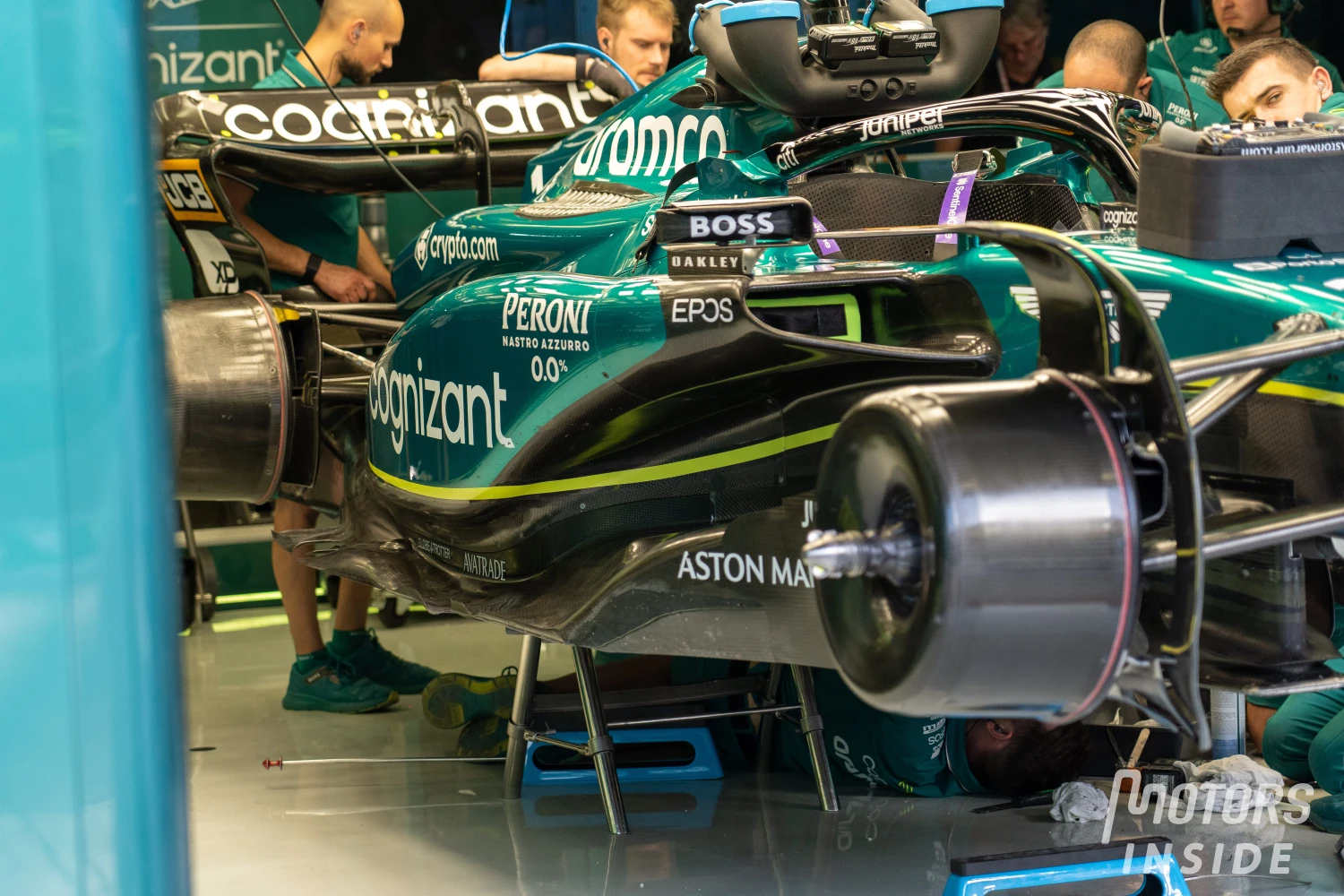
Compared to 2022, Alonso explained that the Aston Martin was 80% new and therefore still had a lot of untapped potential. It’s true that the AMR23 doesn’t really resemble the AMR22. But it also doesn’t resemble last year’s best car, the Red Bull RB18. The AMR23 remains a car entirely designed by Aston Martin and its new technical director, Dan Fallows.
In 2020, Racing Point, which will become Aston Martin in 2021 following Lawrence Stroll’s acquisition, received a huge fine of $630,000 for copying a part of the Mercedes. The so-called “pink Mercedes” looked identical to the 2019 Mercedes in every way. And for good reason, in addition to the aerodynamics, Racing Point was also a customer of Mercedes for its engine, gearbox, and rear suspension. One could truly speak of a resemblance.
In 2023, however, if the Aston Martin resembles more the 2022 Red Bull than the Mercedes or Ferrari, there are indeed technical differences that make this car a unique construction.
Big differences

This solution involves having a different rear train management, which is influenced by the gearbox and powertrain that are also completely different at Red Bull compared to those installed on Aston Martin, which is still equipped by Mercedes.


Big resemblances
Overall, even though the aerodynamic concept is similar, all the parts seem very different. However, the chosen aerodynamic principles appear to be the same. The air intake of the side pods takes the same shape as that of the Red Bull. This implies that the front wing and suspension arms must redirect the air in the same way.
Once the air reaches the level of the pontoon, it is redistributed in the same way on both the RB18 and the AMR23. We can observe identical proportions at the level of the pontoon, although the curves are adjusted.

Engineer under the direction of Adrian Newey at Red Bull, he joined Aston Martin this winter and perfectly understands the aerodynamic concepts that need to be applied. He doesn’t just reproduce them, but rather adapts them effectively.
Thus, the AMR23 has surprised its opponents this season due to its ability to not overheat its tires and therefore better preserve them throughout a race stint, making the AMR23 one of the best cars currently in the race.