The technical directive on the flexibility of F1 elements sets the limits of innovation
During the Singapore Grand Prix, the FIA implemented a new technical directive on the flexibility of wings. After two races, the impact does not seem to have been related to the teams' performances but concerns innovation in the future.

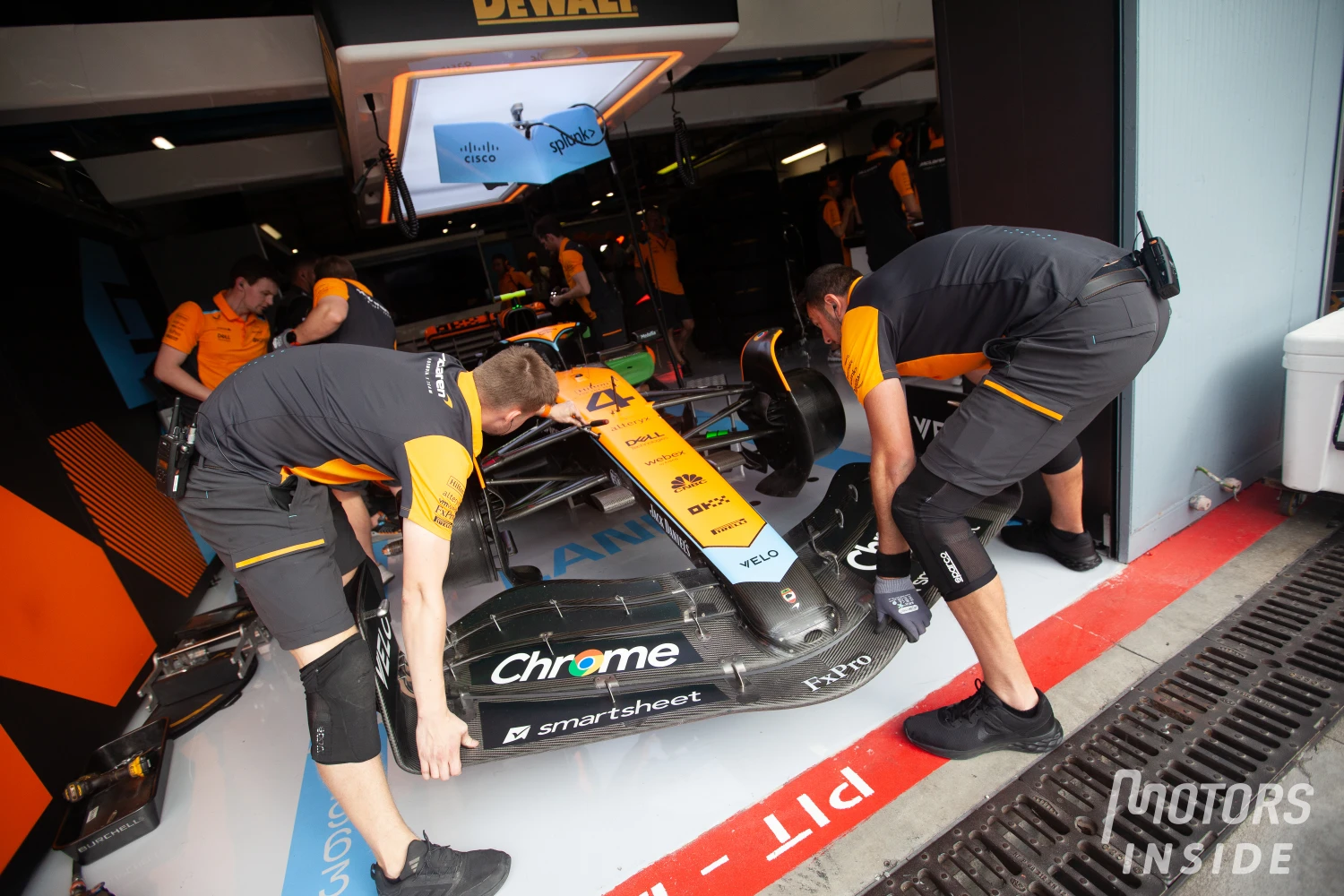
During the Dutch Grand Prix and then at Monza, various comments from teams and the FIA implied that it would be necessary to control the flexibility of certain elements on Formula 1 cars to ensure compliance with regulations. After several races, the FIA – Fédération Internationale de l’Automobile, came up with a new technical directive freezing the flexibility of parts placed on a Formula 1 single-seater.
This directive aims to clarify the regulation and prevent that « talented engineers get out of the regulation and everyone understands the regulation and its limits in the same way. » explains Tim Gross, in charge of the technical direction of single-seaters within the FIA.
« Recently, we have seen too much freedom regarding the design of aerodynamic components. »
What does the technical directive TD018 say?
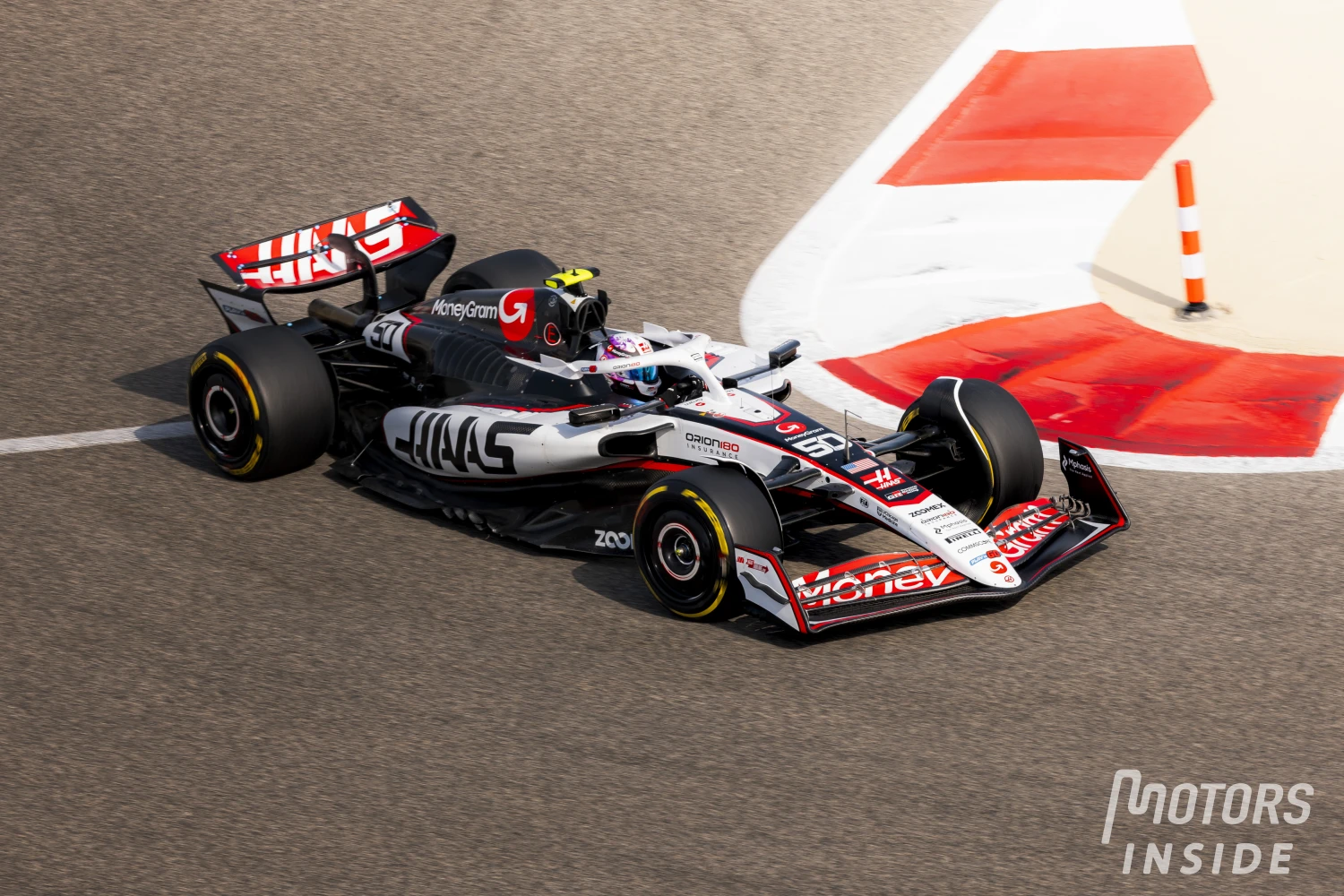
This technical directive aims to solidify the flexibility of the bodywork elements covering the Formula 1 cars, and in particular the flexibility of the front and rear wings, which are the most exposed to bending. Indeed, depending on the resistance of the air, some carbon pieces placed on the single-seaters are very flexible. This is for example the case of the upper part of the F1 nose, where we notably find the drivers’ numbers or certain sponsors. This is one of the parts that does not need rigidity since the air is redirected to the sides and therefore requires little carbon.
« The FIA has been informed that some body parts (particularly the wings) are in compliance with article 3.15 of the technical regulations but go against article 3.2.2 because they “exploit areas of movement between certain components”. » details Tim Gross in the FIA statement.
« For us, it is important that all aerodynamic or body elements, having an influence on the aero, are rigid and solidly attached without moving as they are supposed to be at a stop. »
« We know well that everything cannot be perfectly rigid and fixed. So there is a test range of deformation in relation to the imposed load that allows us to control how an element deforms. It seems that teams are trying to play with this weight limit during the tests. The technical directive must ensure that everyone understands how a part should behave, even if it passes the FIA’s weight test. »
The FIA had put in place a new technical regulation in 2022 with, to limit the teams’ interpretations and eliminate the gray areas, a “spirit” in the regulations. The idea is therefore no longer to measure everything, but to judge whether an innovation brought by a team goes against the spirit of the regulation. The spirit of the 2022 regulation is to reduce the drag caused by single-seaters for their pursuers in order to facilitate movement without the devices like the DRS.
The technical directive establishes itself as a complementary principle, ensuring that the spirit of the rigidity of F1 parts is applied without necessarily being able to measure everything.
« What we don’t want to see, for example, is that the articulation of the rear fin and the vertical fin at its end is multiplied in one way or another, so that it gives the impression of revolving around an axis, or that it can move laterally or up and down. » explains Tim Gross.
No stable specifically targeted
« We did not see a particular car or innovation, or a common element across the entire grid. But it particularly targets the place where the front and rear wing elements join the central part, or the rear impact structure or the end of the rear wing. And there have been several cases where teams have tried to make the most of the flexibility by allowing some elements to start moving relative to each other. […] We clearly state that this is not in compliance with being uniform, solid, rigid and constant. » he concludes.
During the Singapore Grand Prix, where this directive was applied for the first time by the FIA, the hierarchy was upset. But at the Japan Grand Prix, Red Bull took the reins again. Therefore, this directive, after two races, does not seem to have had a significant impact on the teams’ performances.
Moreover, Pierre Waché, the technical director of Red Bull estimates « the impact of the flexibility of the parts » to be roughly a tenth.
Stifled innovations?
Innovations in F1 had a golden age in the 80s and 90s when the regulations were much more lax. If in 2007, a loophole in the regulations allowed Brawn GP to make the most of the F1 capabilities, in recent years, any loopholes exploited in the gray areas of the technical regulations have been systematically stopped by the FIA.
The technical regulation therefore imposes constraints but it is now the philosophy and spirit behind this regulation that takes precedence.