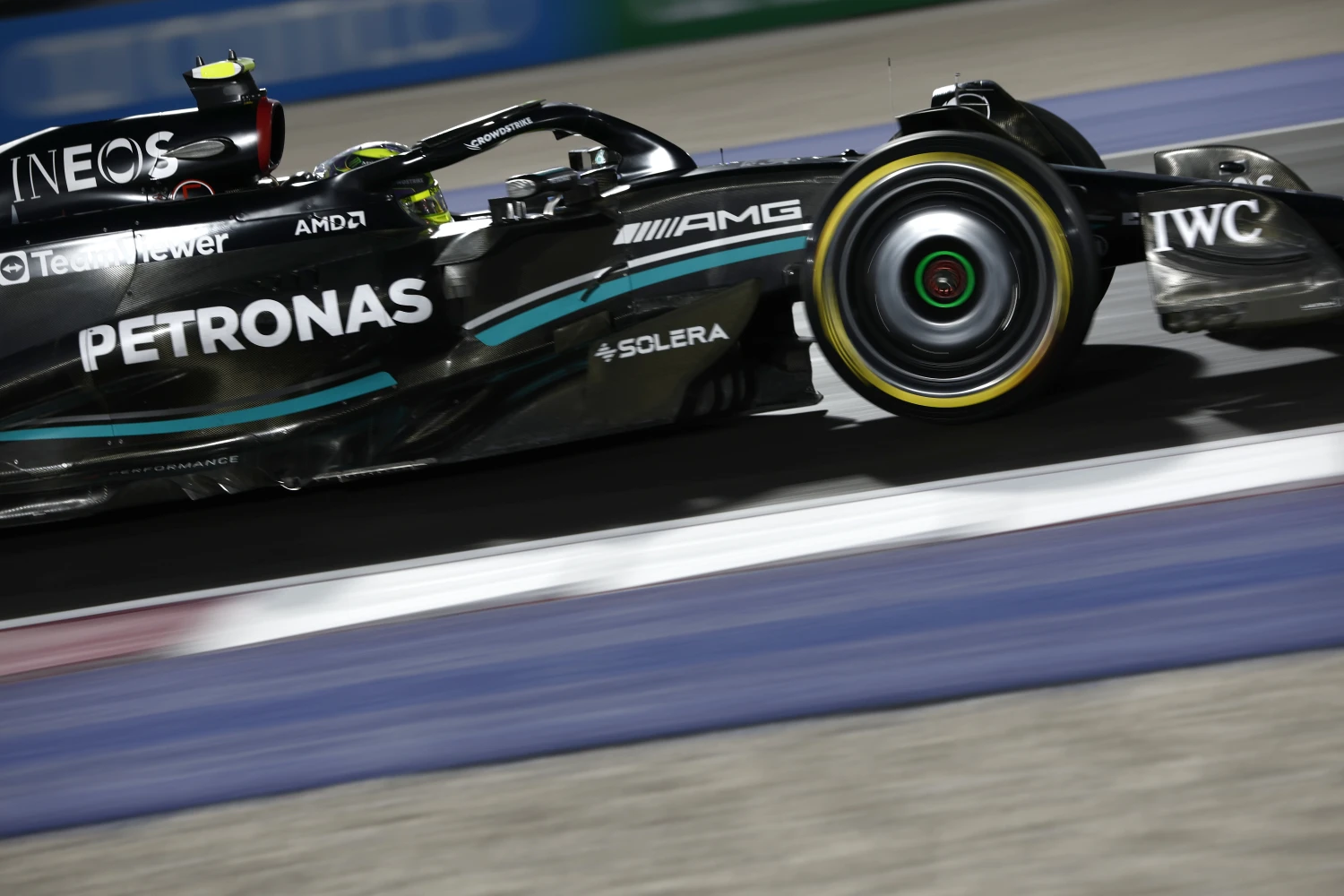
Pirelli has warned the teams of a problem of « separation in the sidewall between the compound and the carcass on many checked tires ». This problem was noticed after Friday’s free practice sessions.
Pirelli particularly noted that this problem was getting worse with the tires that had run the most laps. « A significantly higher number of laps on these tires could lead to major damage and a loss of pressure. Tires analyzed with fewer laps show a reduction in this problem. »
The vibrators in question
The FIA explained that the type of kerb used here, 5cms high on this circuit and pyramid-shaped, was one of the causes of this problem. The very strong abrasiveness of the asphalt is another. The heat of Qatar and the expected 40°C on track are a factor further degrading the tyres here.
Pirelli thus recommends to the teams not to exceed 20 laps with new tires. The sprint race is shorter than these 20 laps and therefore should be able to be done without a pit stop. However, the race, which will last 57 laps, will need to require, based on this principle, at least three stops per driver.


A lamination not seen for a long time
This risk highlighted by Pirelli ahead of a session or a race is a first in F1 since the 2005 and the USA Grand Prix, at Indianapolis required the withdrawal of the single-seaters fitted with Michelin tires. Indeed, the Michelin tires were not designed to withstand the inclination of turns as pronounced as on the Indianapolis oval.
Apart from this particular event, Pirelli has already experienced delamination on certain Grand Prix with numerous unpredictable punctures at the start of Pirelli as the sole manufacturer of F1. This phenomenon had notably almost caused a red flag during the 2013 British Grand Prix.
Since then, Pirelli has strengthened its structures and the last notable problems with the tires date back to the 2021 Azerbaijan Grand Prix, with several punctures occurring in a straight line, due to debris from an accident.