Cosworth promises to deliver high-performance V8 engines
In a statement, Cosworth sought to reassure the teams that it will deliver high-performance engines. The Cosworth V8 blocks will be good and reliable despite the 18,000 RPM limit imposed by the regulations. Many new things are coming in 2010. Of course, three new teams will be part of the event, but to supply them, […]

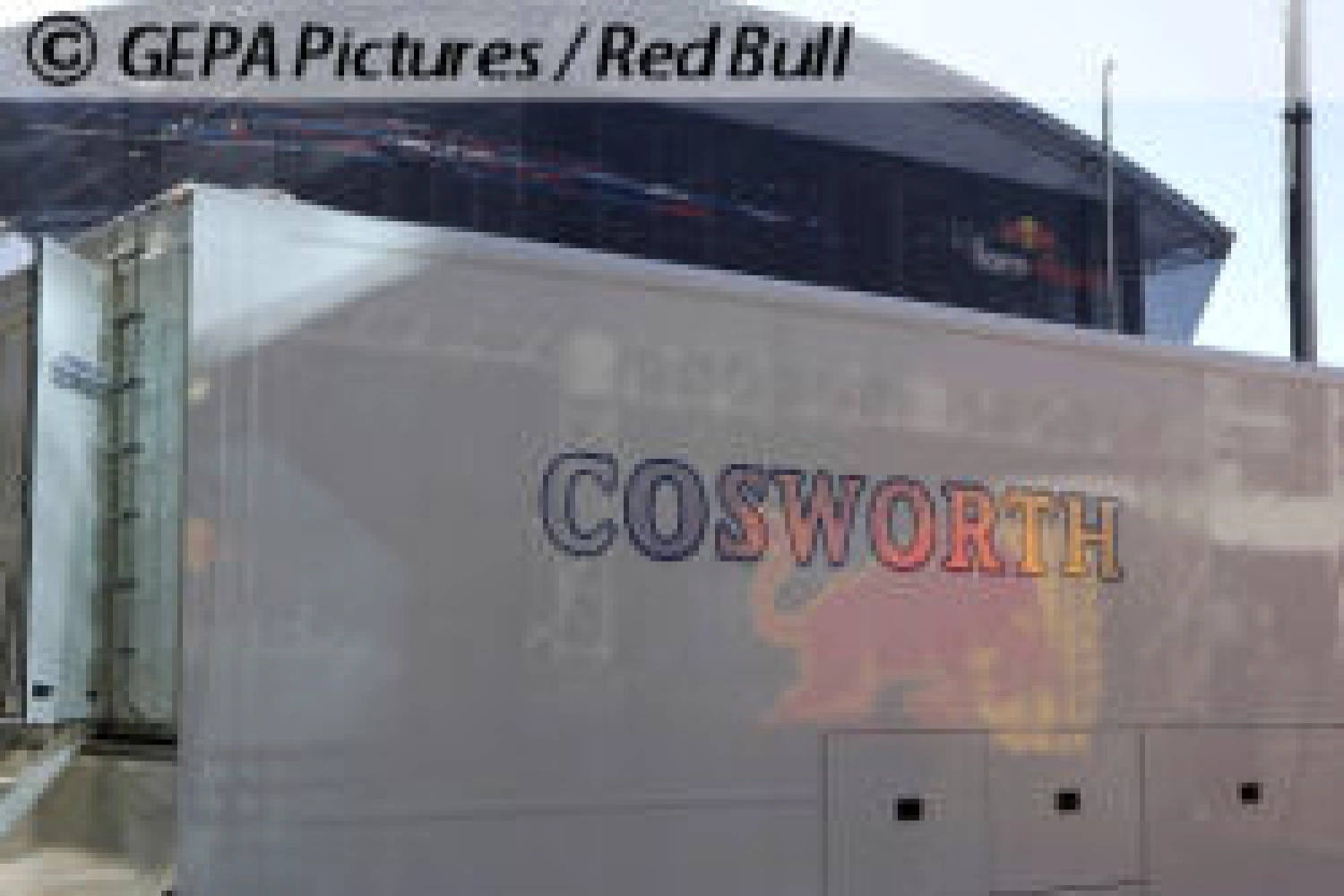
In a statement, Cosworth sought to reassure the teams that it will deliver high-performance engines. The Cosworth V8 blocks will be good and reliable despite the 18,000 RPM limit imposed by the regulations.
Many new things are coming in 2010. Of course, three new teams will be part of the event, but to supply them, an engine manufacturer is making a return to Formula 1. The company Cosworth has decided to make its comeback in Formula 1 after leaving by default in 2006. At the time, Williams signed with Toyota and Red Bull with Renault.
The American engine manufacturer will supply engines to four teams next year, including USF1, Campos META, Manor GP, and an unknown team, probably Williams. As a newcomer, some may worry about Cosworth’s performance, but the engineers were keen to reassure the skeptics. The V8s supplied by the factory will be high-performing and will operate at a maximum of 18,000 revolutions per minute. The FIA had indeed made a ‘gesture’ allowing Cosworth to run up to 20,000 rpm. The leaders refused for reasons of fairness towards other engine manufacturers and teams.
« We proposed to limit the engines to 18,000 rpm to eliminate potential tensions that could arise from a contractual point of view. We know that our engines will be fully developed and competitive. In fact, we will start supplying them to our customers quite early. » Comments Tim Routsis, Director of Cosworth.
« I don’t think this limitation will affect the teams’ performance, but on the contrary, it could help them in other areas. For example, the engines will generate less heat and therefore can be cooled by smaller radiators: saving weight and space. »
« Furthermore, if the engine runs faster, it consumes more and needs more oil to cope with significant friction. According to our simulations, there is no reason to be less efficient than our rivals. We should be as efficient as most of them. »
Speaking about the longevity and reliability of the V8 engines, Routsis nonetheless confirms wanting to keep eight engines per season, instead of five as initially planned by the 2010 regulations.
« We are satisfied with the concept of lowering the maximum revs to 18,000 rpm but due to the lack of time, we will not be able to improve engine reliability to supply only 5 per year. We therefore need to remain at 8 engines per season. » He explains.
The FOTA has also expressed its desire to maintain a maximum limit of eight engine blocks per season, as in 2009.