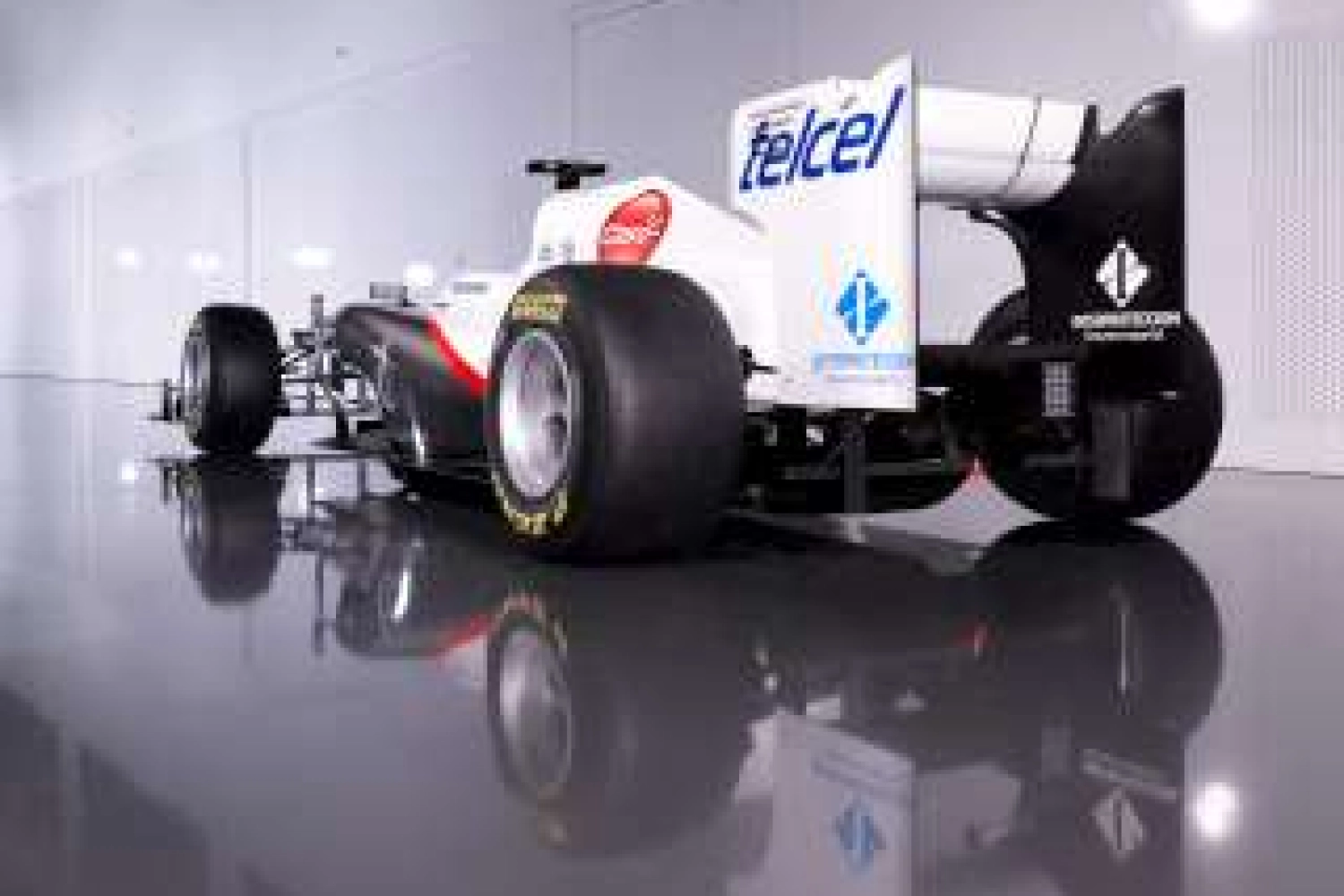
Of all the changes introduced by the 2011 technical regulations, the most exciting is undoubtedly the new movable rear wing. An element designed to promote overtaking during the race and thus enhance the spectacle for the audience. This interesting concept presents teams with a significant technical challenge and will likely be one of the main topics of discussion for the season.
New approach
The arrival of these movable rear wings is accompanied by the disappearance of movable front wings, which never met expectations, as explained by Technical Director James Allison: « The movable front wing was introduced to try to improve overtaking opportunities. But in practice, it never delivered that benefit. It was mainly used to optimize the car’s balance during the race when the tires began to degrade and the fuel load decreased, making the car lighter. That’s why teams voted to abandon the movable front wing and launched a new initiative with the rear wing for the same purpose. »
The concept
If adjustable front wings didn’t bring any benefits, why would it be different with rear wings? It all comes down to the different ways in which changes in the angle of the front and rear wings affect the car’s overall drag. By adjusting the angle of the front wing, you influence the car’s balance, but the aerodynamic drag remains almost identical and consequently the top speed is unchanged. On the contrary, a change in the angle of inclination of the rear wing affects aero drag and significantly increases speed. « If you allow the angle of this wing to decrease, you lose drag, somewhat similar to last year’s F-duct system » explains James. « So if two cars are following each other, the one that can adjust its rear wing in this manner will be able to drive faster in a straight line than its competitor. »
A precise set of rules
Of course, if all cars adjusted their wings at the same time, no advantage would be gained. That’s why great care has been taken in stating the rules to best encourage overtaking. Thus, these rules describe a set of circumstances during which it is possible to adjust the angle of this rear wing.
« Drivers have complete freedom to reduce the inclination of the rear wing during free practice and qualifying, but there are restrictions on its use in the race », explains James. « Its use is only permitted when a car is less than one second behind the car in front. In this case, its driver can reduce the wing angle on a designated straight during a lap. Furthermore, the teams and the FIA have worked to ensure that this system provides just the necessary assistance to make overtaking possible. No one wants a system that turns overtaking into a formality. »
During the race, the system will be managed electronically by the FIA. The starting setting is on inactive mode. But after two laps of a Grand Prix, it becomes potentially active, from the moment the cars meet the conditions for its use. A diode will automatically light up in the cockpit of the driver authorized to use their wing, which will be operated by a button located on the steering wheel.
The science of adjustable fins
In terms of mechanics, the possible adjustments are linked to the two elements of the wing: the main plane and the flap. The main plane remains fixed, but the new rule allows for a rotation of the flap up to 50 mm from the fixed plane. This creates a situation where these two elements no longer act in harmony and where the airflow around the wing splits. This condition of separated flow is called « stall » and is accompanied by a significant loss of downforce as well as aerodynamic drag. The effect produced on straight-line speed is similar to that of the F-Duct, but much more powerful.